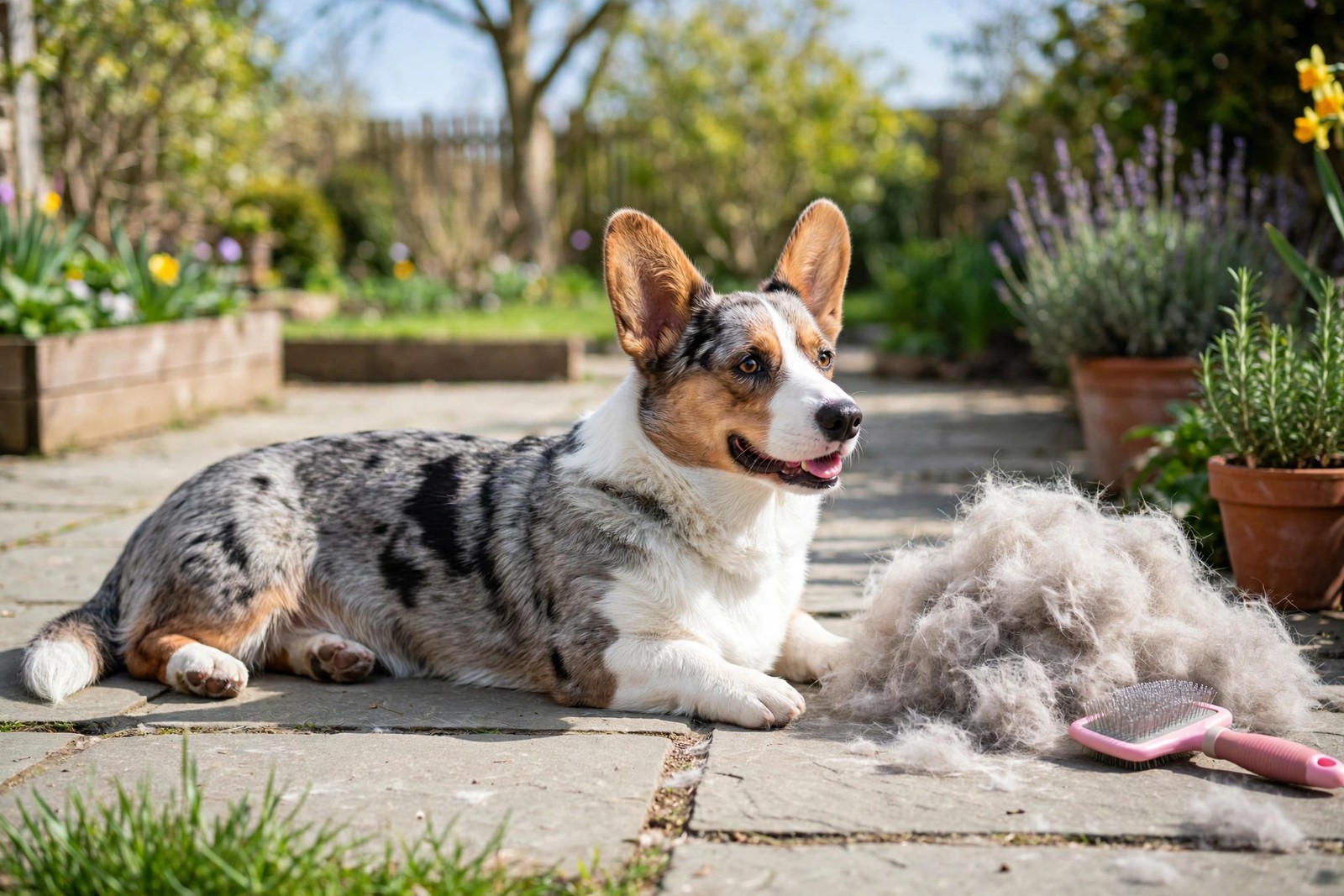
Yes, honestly and heavily. A Corgi's coat was designed for Welsh weather, not for tidy homes: a thick, insulating undercoat sits beneath a longer, water-shedding outer coat, and the two layers together keep the dog warm in winter rain and cool in summer sun. The price of that engineering is hair — a constant light shedding through the year, punctuated by two major coat-blows when the undercoat comes out in soft grey drifts that collect in corners, on stairs, and woven into every dark item of clothing you own.
The Twice-Yearly Coat-Blow
Most Corgis blow their coat as daylight and temperature shift, typically once heading into warmer weather and once heading into colder weather, and the heavy phase lasts roughly two to four weeks. During a blow you can brush the dog thoroughly in the morning and still pull another handful out by evening; that is normal, not a sign of illness. Brushing daily through the blow, outdoors if you can, removes the loose undercoat before it migrates to the sofa, and a bath partway through helps release hair that is ready to go. Birds in the garden will happily line nests with whatever you brush out on the lawn.
The Weekly Brushing Rhythm That Works
Outside coat-blow season, two or three proper brushes a week keep a Corgi coat under control. Work in layers rather than skimming the surface: a slicker brush lifts loose undercoat, and an undercoat rake reaches the dense layer near the skin where shedding actually starts. Five unhurried minutes done often beats one long wrestling match, and most Corgis learn to enjoy sessions paired with treats and a set spot. Check behind the ears and around the collar while you brush, because the longer feathering on the legs and chest mats first in those friction spots.
The One Rule: Do Not Shave a Corgi
Every summer someone asks whether shaving the coat down would stop the shedding and cool the dog. It does neither well. The double coat insulates against heat as well as cold, and shaving it exposes skin to sunburn, removes the dog's own temperature regulation, and often grows back patchy or softer in texture. You still get shed hair, just shorter. If your Corgi is overheating, the answer is shade, water, rest in the heat of the day, and a vet check — not clippers.
Keeping the House Livable
Treat hair management as a small system rather than a battle. Keep a lint roller by the door, choose washable throws for the seats the dog actually uses and wash those rather than wrestling the whole sofa cover, and vacuum high-traffic areas briefly and often instead of staging a monthly deep clean. Feeding a complete, good-quality diet and keeping up parasite control supports skin health, and hair loss that comes with bald patches, itching, redness, or a sour smell is not normal shedding — that pattern earns a vet visit.
Shedding is the Corgi cost nobody can negotiate away, but a rota turns it from one person's chore into a shared habit. With KinsLe's Care Teams, the twice-weekly brush, the daily sessions during a coat-blow, and the weekly wash of the dog's throws can each be assigned to a different household member, so the coat work that keeps a Corgi home comfortable never depends on a single pair of hands.