
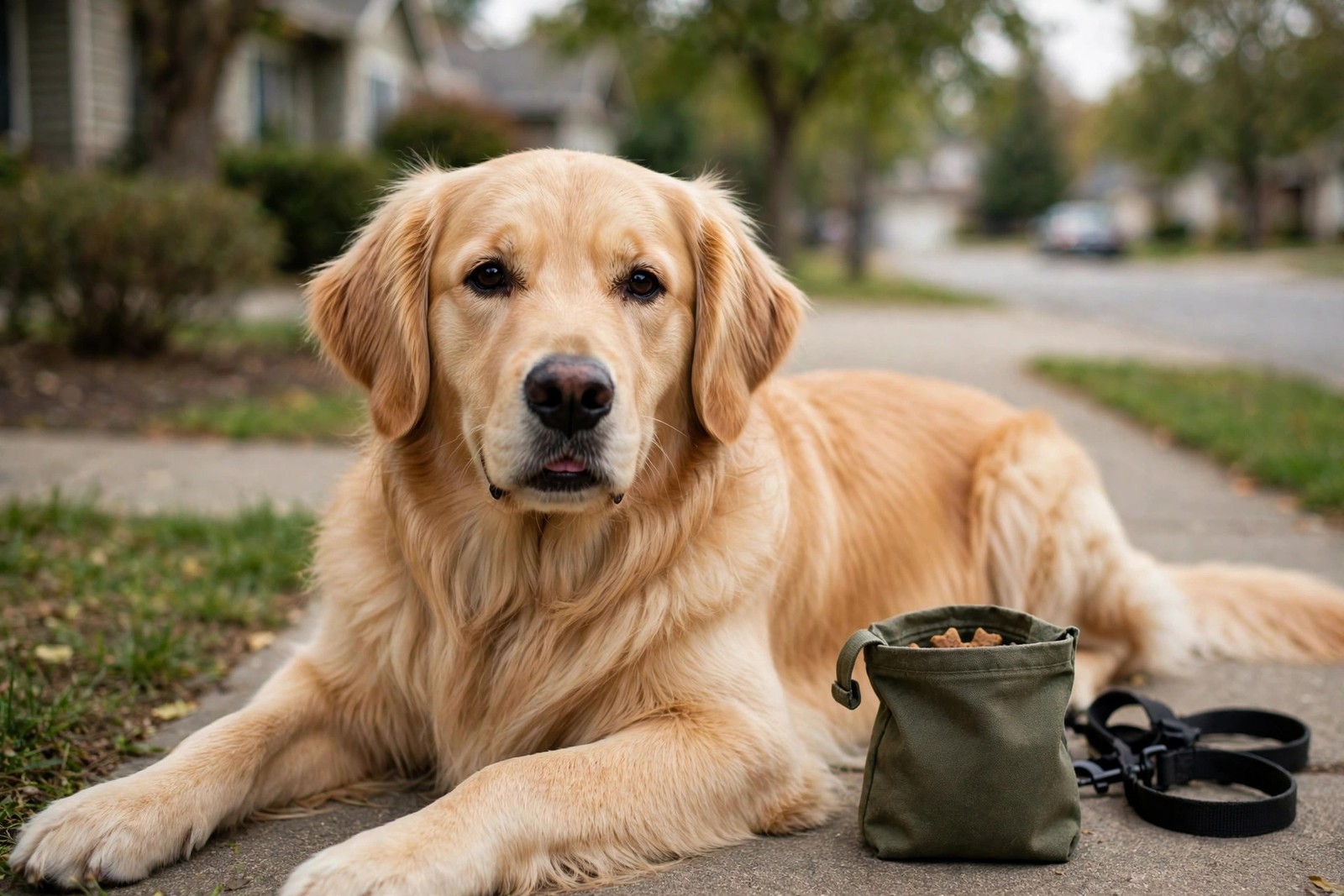
Yes, a lot, and without any real off-season. A Golden Retriever's beautiful coat is a working double coat, and it behaves like one: steady shedding through the whole year, plus a major clear-out in spring and another in autumn when the undercoat lets go and pale, downy tumbleweeds roll across hard floors daily. If visible hair on clothes, carpets, and car seats is a serious problem for you, be honest now — a Golden will test that limit every single week.
Two Coats, Plus Feathering
The topcoat is long, straight or slightly wavy, and water-repellent, built for a dog bred to retrieve from cold water. Underneath sits a dense, soft undercoat that provides the insulation — and provides most of the shed hair. Then there is the feathering: the longer fringes on the chest, the backs of the legs, the belly, and that proudly carried tail. Feathering does not just shed; it tangles. Left unbrushed, it mats behind the ears, in the armpits, and along the belly, and tight mats pull on the skin and hide damp, irritated patches underneath.
Colour makes no difference. The fashionable pale cream dogs shed exactly as much as deep gold ones; the pale hair simply shows more on dark clothing and less on light carpets, and the reverse is true for darker dogs. Puppies mislead again here — the soft puppy coat sheds little, and the full double coat, with its shedding, arrives through the first year to eighteen months.
The Brushing Rhythm That Keeps Up
Two or three thorough sessions a week is the working minimum for an adult Golden, rising to a quick daily brush during the spring and autumn blows:
- Work in layers with a slicker brush, lifting the coat to brush from the skin outward, section by section. Brushing only the surface leaves the undercoat to felt.
- Follow with an undercoat comb or rake through the thickest areas — neck, chest, hindquarters — until the tool comes through clean.
- Comb the feathering out carefully and check behind the ears with your fingers; that fine hair mats fastest.
- Rinse, rather than fully bathe, after swims, and dry the coat thoroughly. Goldens dive into any water offered, and a coat left damp is a coat that smells and mats.
Never shave a Golden to cut shedding. The double coat insulates against both cold and heat and shields the skin from sun; clipped Goldens still shed, now in short sharp hairs, and the coat may regrow unevenly.
When It Is More Than Shedding
See a vet for bald patches, symmetrical thinning, flaky or greasy skin, recurrent ear trouble alongside coat change, or a Golden who is scratching, chewing paws, or rubbing its face as hair falls. Allergies and thyroid problems both appear in this breed's story and both can present as coat and skin change first. A senior Golden whose coat thins as energy drops deserves blood work, not just a better brush.
Regular brushing doubles as a health check in a breed prone to lumps: run your hands over the whole body weekly, note anything new, and mention changes at vet visits while they are small.
Living Happily With Golden Hair
Washable throws where the dog naps, a vacuum built for pet hair used little and often, a lint roller in every car, and brushing outdoors in shedding season keep most homes comfortably ahead. Owners consistently say the same thing: the hair is relentless but the dog is worth it, provided you went in with open eyes. The routine is easier to sustain when it is shared, and KinsLe Care Teams shares it by letting you assign your Golden Retriever's brushing, feathering checks, and post-swim rinses to named family members, each duty timestamped when it is done.