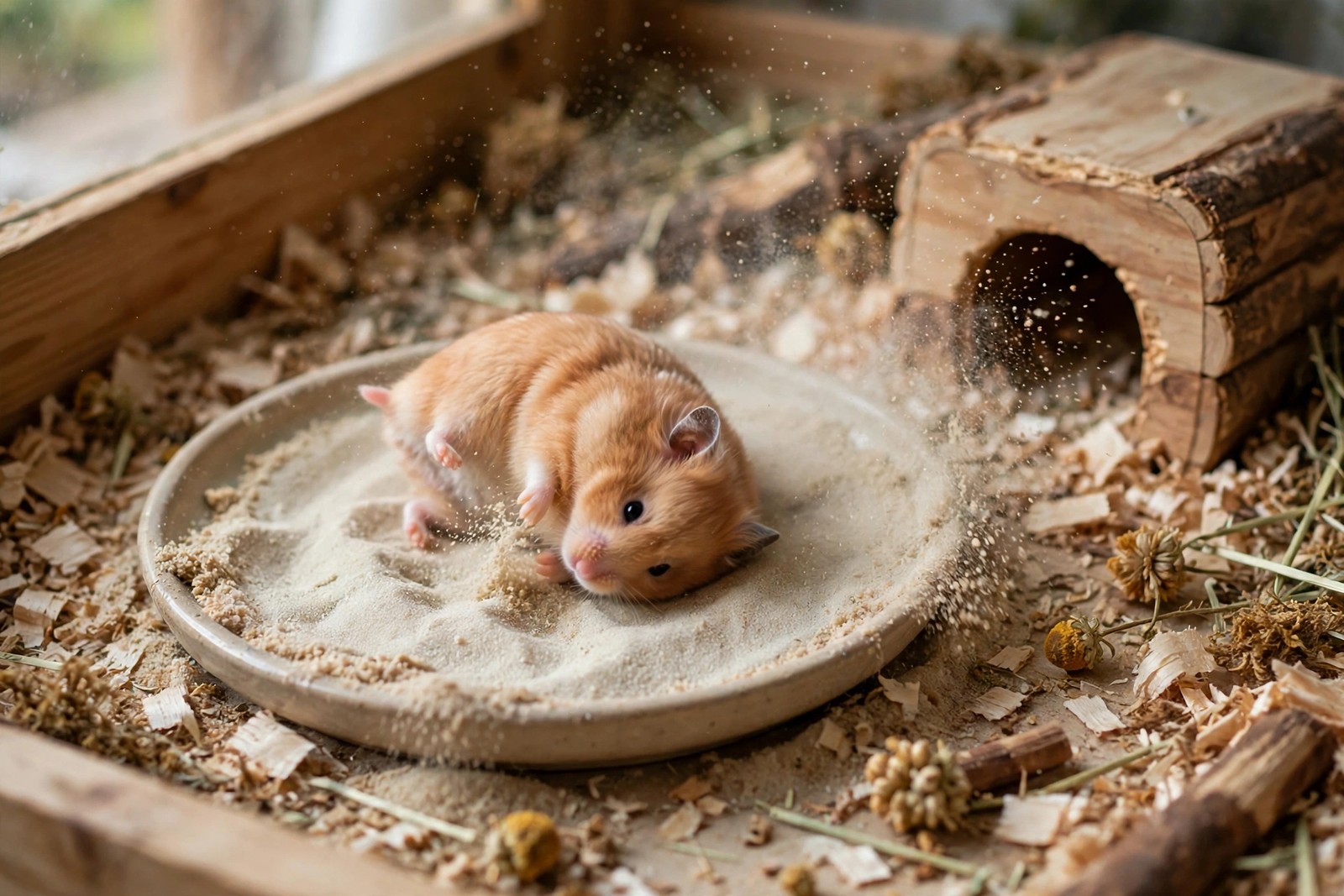
No water baths — ever. This is one of the clearest rules in hamster care, and it is also one of the most commonly broken by kind owners who assume a small pet works like a small dog. A hamster's coat, skin, and body temperature are all managed by the hamster itself, and a tub of water interferes with every part of that system.
Why Water Is the Wrong Tool
A hamster grooms meticulously, washing its face with its paws and working through its coat many times a day, much as a cat does. Its coat carries natural oils that keep the fur in condition and the skin beneath it healthy. Immersing or soaking a hamster strips those oils away, leaving skin dry and irritated and fur that no longer insulates properly. The second risk is size. A hamster weighs very little, so a wet body loses heat fast, and chilling can slide toward dangerous hypothermia in a small animal that cannot tell you it is cold. Add the stress of an experience hamsters instinctively fear — they are prey animals, and being held in water is frightening — and a bath creates three problems while solving none.
What a Sand Bath Does Instead
Offer a sturdy, shallow dish of bathing sand made for hamsters, wide enough for the animal to climb in and roll. Rolling in fine sand works through the coat, lifting grease and loose debris while keeping the oils where they belong, and most hamsters clearly enjoy it — dwarf species in particular will roll and dig with enthusiasm. Leave the dish in the enclosure or offer it during play sessions several times a week, depending on how much your hamster uses it. Choose bathing sand rather than fine dust, since very fine airborne dust can irritate a hamster's airways, and avoid scented products. Replace the sand once it is soiled or clumped, and wash and dry the reusable dish itself before refilling it — sand is disposable, the dish is not.
The Rare Cases That Need More Than Sand
If something sticky lands on one patch of coat, dab that spot only with a barely damp cloth, keep the hamster warm and dry throughout, and never soak the whole animal. If the coat is contaminated with something you cannot identify, matted around a wound, or the skin looks sore, skip home remedies and see a veterinarian promptly — a hamster in that state needs examination, not a wash. The rule protects the hamster only if everyone in the house knows it, including a child or a pet sitter who has only ever kept dogs, which is why KinsLe's Family Sharing feature lets you share your hamster's profile and care rules, sand bath included and water bath ruled out, with every family member and helper before they take a turn at care.