
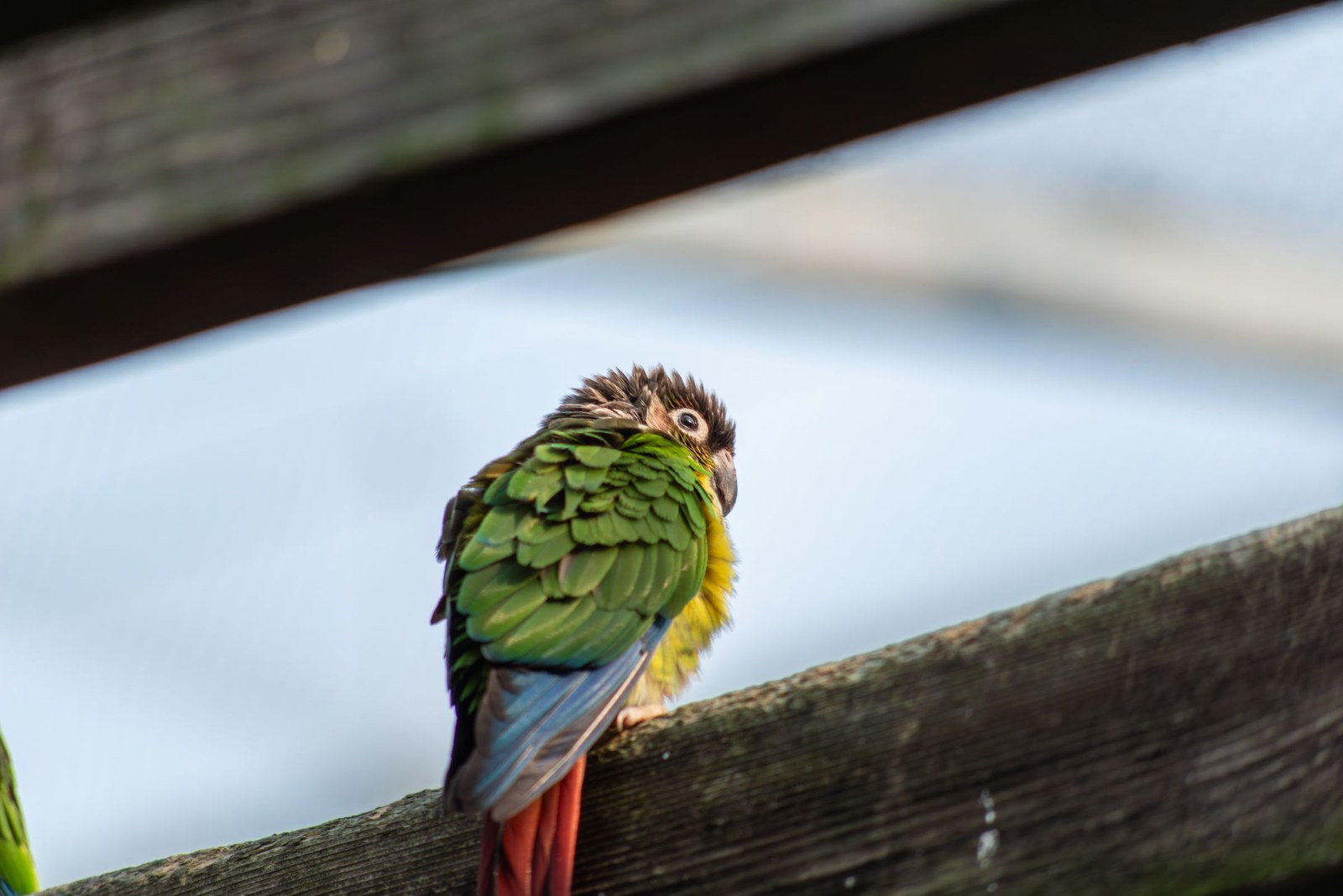
Yes — turn the ceiling fan completely off, and wait until the blades have stopped, before your bird comes out of its cage. A spinning fan is one of the most serious hazards in a bird room, because a bird in flight may never spot the moving blades clearly, cannot judge their speed, and has almost no chance of surviving a direct strike uninjured.
Why Fans Are So Dangerous for Flying Birds
Birds evolved to navigate trees, branches, and open sky — not a set of wide blades sweeping through the air dozens of times per minute. To a small budgie, cockatiel, or conure, the blur of a fast fan can look like open space, especially if the bird is startled and flying quickly toward a high perch, a window, or you.
Height makes the risk worse. Many pet birds love the highest point in the room, and ceiling fans sit exactly in that favorite airspace. A clipped bird is not automatically safe either — birds with trimmed feathers can still glide or flutter upward on a draft, and owners are often surprised by how much flight a determined bird can manage.
Injuries from fans are rarely minor. A blade strike can break a wing, cause head trauma, or injure a bird internally. Even a near miss matters — a panicked bird veering away may crash into a wall or window instead.
The Fan-Off Rule, Step by Step
Make fan-off part of a short pre-flight check you run every single time, in the same order, so it becomes automatic:
- Fan off at the switch, and look up to confirm the blades have fully stopped — not just slowed down.
- Doors to the room closed, and windows closed or covered by intact screens.
- Other pets out of the room, with the door shut behind them.
- Open water, hot drinks, and cooking hazards removed or covered.
- Only then open the cage door and let your bird choose to come out.
Say the check out loud if it helps. Many multi-person households use a simple call-and-response — "Fan off? Windows closed?" — before anyone opens a cage. It sounds small, but that verbal pause is what catches the one time someone forgot.
What About Fans in Other Rooms?
A bird does not respect your floor plan. If your parrot can fly down a hallway, an out-of-sight fan in the kitchen is still a risk. Either keep the bird's room door closed for the whole session, or turn off fans in every room your bird could reach. Pedestal and desk fans deserve the same respect — move them out of the flight room entirely.
If an Accident Happens
If your bird does hit a fan or falls hard, keep them warm, dark, and quiet in a small carrier lined with a soft towel, and contact an avian veterinarian right away. Do not assume a bird that can stand or chirp is fine — internal injuries may not be obvious. Avoid extra handling, and never offer food or water to a bird in shock unless a veterinarian tells you to.
Making the Rule Stick for Everyone
The hardest part is rarely remembering yourself — it is making sure a partner, child, house guest, or pet sitter follows the same rule when you are not there. Write it down where care happens, in plain language: "Ceiling fan OFF and stopped before the cage opens. No exceptions."
That is where a written rule, kept where care happens, matters more than memory or a note on the fridge that falls behind the magnets.
KinsLe Family Sharing gives selected family members access to its profile, keeping that access with relatives you have picked rather than with visitors outside your chosen family.