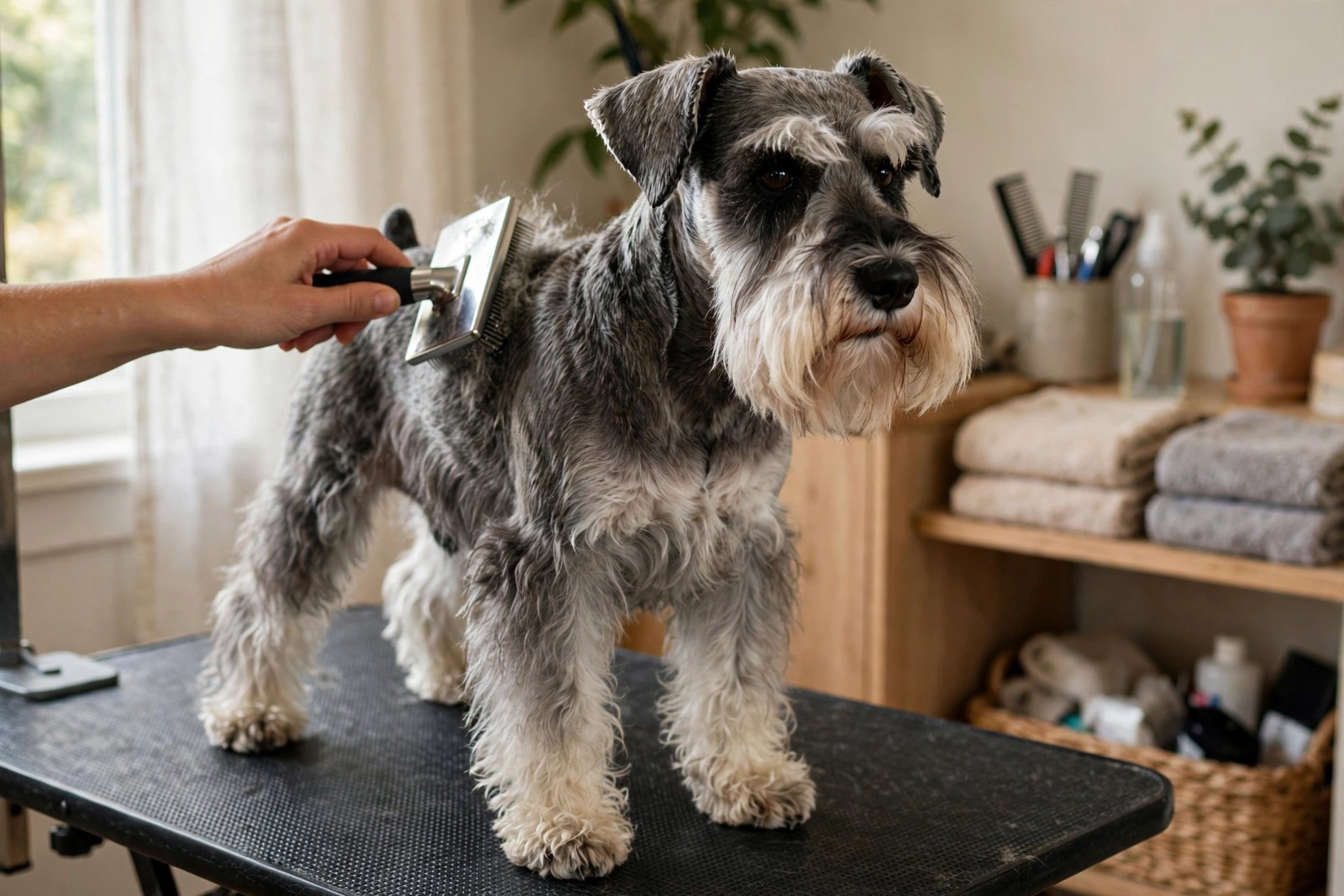
Miniature Schnauzers are genuinely low-shedding dogs, and for many owners that is the breed's headline appeal. The wiry double coat — a hard, weatherproof outer layer over a softer undercoat — holds on to its dead hair instead of dropping it on floors and furniture. That hair still has to come out somehow, though: it leaves during brushing, bathing and grooming appointments rather than on your clothes. Low-shedding therefore means low household hair, not low maintenance, and a Schnauzer whose coat is neglected will mat, smell and become uncomfortable while still technically shedding very little.
Where the Hair Actually Goes: Coat and Furnishings
The short coat on the body is the easy part; the furnishings are where the work lives. The longer hair on the legs, chest, belly and face tangles readily, and mats form first behind the ears, in the armpits, where the collar sits and through the leg feathering. Brush the furnishings two or three times a week with a slicker brush, working in sections down to the skin, and follow with a comb — if the comb glides through, the section is genuinely mat-free rather than smoothed over on top. A matted Schnauzer often has to be clipped very short at the groomer's to free the skin, which is why ten relaxed minutes at home beats one long salvage session.
Clipping Versus Hand-Stripping, and What Each Does to Shedding
How the coat is trimmed changes both its texture and how it sheds:
- Hand-stripping pulls dead outer hairs out by hand or with a stripping knife, keeping the hard, wiry texture and the coat's rich colour, and stripped coats release very little hair between sessions.
- Clipping cuts the coat instead of removing dead hair, and over repeated clips the outer coat typically grows back softer, paler and more cotton-like, releasing slightly more loose hair.
- Show dogs are stripped; many pet owners choose clipping for cost and convenience, and either is fine as long as the schedule holds.
- Whichever method you choose, book grooming every six to eight weeks — longer gaps let furnishings mat and undercoat pack down.
The Beard: A Schnauzer-Specific Daily Job
No account of this breed's upkeep is complete without the beard. Those distinguished whiskers act as a mop at every water bowl and a net at every meal, and a beard left damp and food-flecked develops a sour smell and can leave the skin beneath sore. Wipe the beard with a damp cloth after meals, comb it out as part of the regular brushing sessions, and wash it properly with the bath. Keep drinking water fresh and consider a bowl design that lets the beard drain rather than soak, and dry the beard after wet walks. Owners are often surprised that visitors notice beard smell long before they notice any hair in the house — with this breed, odour control matters more than lint control.
The Household Picture, Honestly
On clothes, sofas and car floors, a maintained Miniature Schnauzer leaves very little trace compared with heavy-shedding breeds, and many allergy-conscious households choose the breed for exactly that reason, though no dog is completely allergen-free and time spent with the breed before committing is wise. Budget the effort rather than the cleanup: brushing two or three times a week, grooming every six to eight weeks, and beard care woven into feeding times. Puppies start with a softer coat that changes as the adult wire comes in, so begin gentle brushing early, in short sessions paired with treats, so the adult routine is already a habit. Households where coat care belongs to one named person, rather than to whoever notices a mat first, keep Schnauzers looking sharp year-round, and KinsLe Care Teams supports that by letting you assign the brushing sessions and grooming bookings as recurring duties, each marked complete with a timestamp when done.