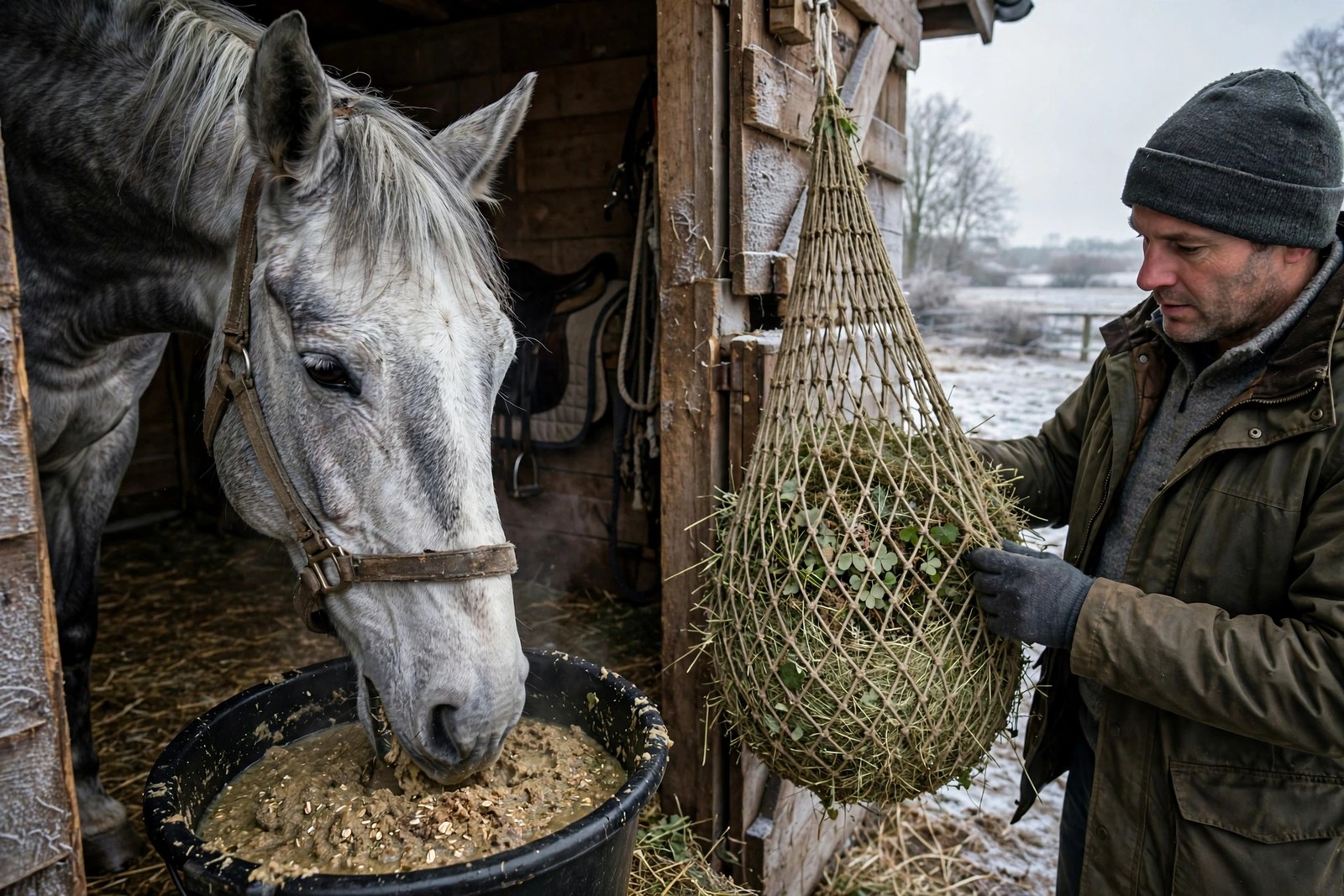
Most older horses do need their feeding changed, but the trigger is not a birthday — it is the state of the teeth and the gut behind them. A horse's molars erupt slowly through life to replace what grazing wears away, and by the mid-twenties many horses are running out of tooth. The grinding surface flattens and smooths, chewing becomes slower and less complete, and fibre that a younger horse would have processed passes through only partly used. The ration has to adapt to the mouth it lands in, which is why two horses of the same age can need very different buckets.
The Signs the Current Feed Is Failing
Watch the horse eat, not just the bucket empty. The classic sign is quidding: the horse rolls chewed hay into a ball, works it, and drops it, leaving damp wads around the hay net and stable floor. Add slower eating than herdmates, whole grain or long fibre visible in the droppings, gradual weight loss despite the same ration, and feed being dunked in the water bucket to soften it — a horse telling you the hay hurts or defeats it. Any choke episode, where partly chewed feed sticks in the gullet and the horse stretches, coughs, and dribbles, means the forage form has to change and a vet should be involved.
What Senior Feed Actually Does Differently
Senior feeds are built for this exact problem. They use highly digestible fibre sources and are processed so the horse extracts energy without grinding everything itself, and many are complete feeds, meaning forage is built into the bag for horses who can no longer manage hay at all. Served dry they are already easier than plain grain, but most owners soak them into a soft, sloppy mash with warm water — easier to chew, easier to swallow, and a useful way of getting extra water into a horse in cold weather. When hay still works, choose the softest, leafiest bales you can find; when it does not, soaked hay cubes or pellets and chopped forage give the gut the long fibre it needs in a form worn teeth can handle.
How the Feeding Day Changes
Feed a senior little and often rather than in two large meals, because a worn digestion does better with steady work. Weigh the feed instead of scooping by eye, so changes are real rather than guessed. If your horse lives out with others, feed it separately or give it a head start: a slow eater turned out with brisk younger horses gets politely robbed of exactly the calories it needs most. Soak mashes fresh for each meal — a soaked feed left standing in a warm stable sours quickly — and rinse the bucket after feeding, since old mash residue puts sensitive eaters off.
Weight and Teeth: The Monitoring That Matters
Run a hand over the ribs and crest weekly and look at the horse from behind monthly; photographs taken from the same angle make slow drift obvious in a way memory never does. Book dental checks at least once a year, and twice a year once teeth are known to be worn, because hooks, loose teeth, and gaps that trap food all change what the horse can eat. Weight loss in an older horse is not automatically just age — conditions affecting hormone balance and gut function are common in seniors and change how a ration should be built, so unexplained loss, a suddenly ravenous or fading appetite, or a coat that turns long and slow to shed all earn a vet visit and, often, blood tests.
A senior ration only works if everyone who feeds the horse — family, yard staff, a covering friend — follows the same soaking times, weights, and forage rules. KinsLe's Pet Passport keeps the current feed plan, the latest dental findings, and the weight record together in one portable packet, so the plan your vet agreed travels with the horse instead of living in one person's head.