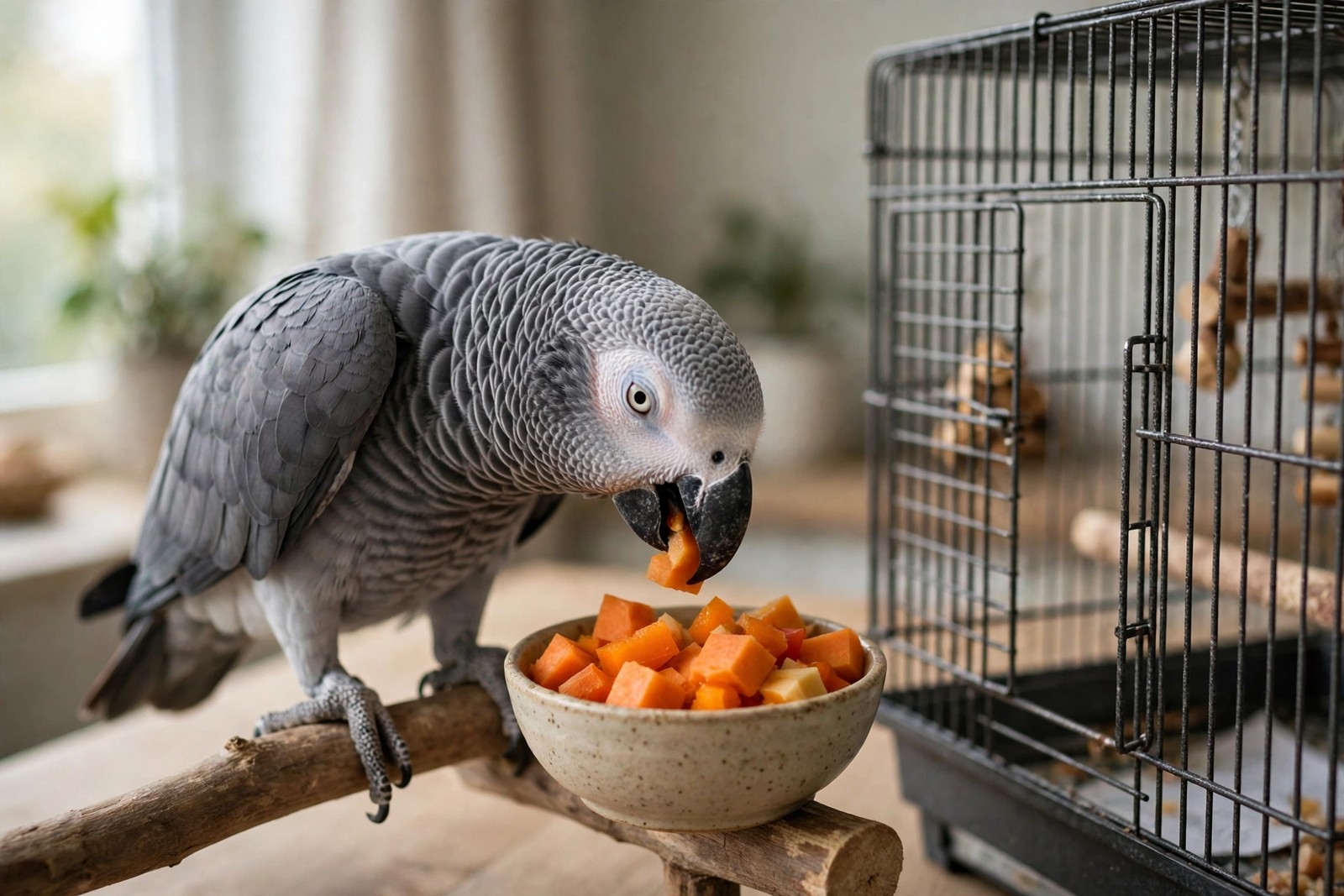
An older parrot rarely needs a completely new diet; it needs its existing diet corrected in the directions age makes more urgent. Parrots are long-lived — a well-kept larger parrot may be your companion for decades — and the seed-heavy menu many birds grew up on tends to catch up with them in later life. Seeds, especially sunflower seeds and peanuts, are energy-dense and fatty while being poor in calcium and vitamin A, and a younger, more active bird may carry that imbalance for years before an older, slower one starts to show it in feather quality, weight gain, laboured breathing after mild exertion, or blood results an avian vet does not like.
What Senior Bloodwork Usually Steers
The most useful senior diet changes are guided, not guessed. A baseline avian vet visit with bloodwork can flag the common late-life patterns — strained liver values on a fatty diet, low calcium, or vitamin A shortfalls showing as dull feathers and frequent respiratory infections — and each points the menu a different way. In broad terms, most older parrots do well moving gradually toward a good formulated pellet as the base, generous daily vegetables with emphasis on orange and dark-green choices such as sweet potato, squash, peppers, and leafy greens for vitamin A, and seed demoted to a training treat and foraging reward rather than the main course. Calcium deserves specific attention in older laying hens and in grey parrots, but supplements should be added only on your avian vet's advice, because oversupplementing causes its own harms.
The Golden Rule: Never Switch a Parrot Overnight
Parrots are neophobic and stubborn about food in a way dogs are not: many will sit hungry beside a bowl of unfamiliar, healthier food rather than eat it, and a senior bird losing weight is an emergency in slow motion. Convert diets over weeks. Mix a few pellets into the familiar seed and gradually shift the ratio, offer new vegetables daily in different forms — chopped, grated, threaded on a skewer, warmed — and weigh the bird weekly on a small scale at the same time of day so a downward drift is caught in grams, not in a crisis. Eat the new foods in front of the bird, with enthusiasm; parrots are flock feeders and a food your flock mate is enjoying is a food worth tasting.
Feeding the Older Body Day to Day
Senior parrots often fly less and perch more, so total calories usually need trimming while protein and micronutrient quality stay up, and softer presentations can help a bird with an ageing beak or stiff joints: lightly steamed vegetables, soaked or sprouted seeds and legumes, and food placed where the bird already likes to sit rather than at the far end of an athletic obstacle course. Watch droppings, appetite, and water intake as your daily dashboard, and treat a bird who stops eating favourites, fluffs up for long periods, or breathes with an open beak as a same-day avian vet call, since parrots hide illness until they cannot.
Diet changes for a senior parrot are a months-long project measured in weights and blood panels, and the thread is easily lost between visits. KinsLe Pet Passport keeps that thread in one place, holding your parrot's weight log, blood results, and current feeding plan together in a portable packet you can hand to the avian vet or a boarding sitter, so the careful senior diet you built does not depend on memory.