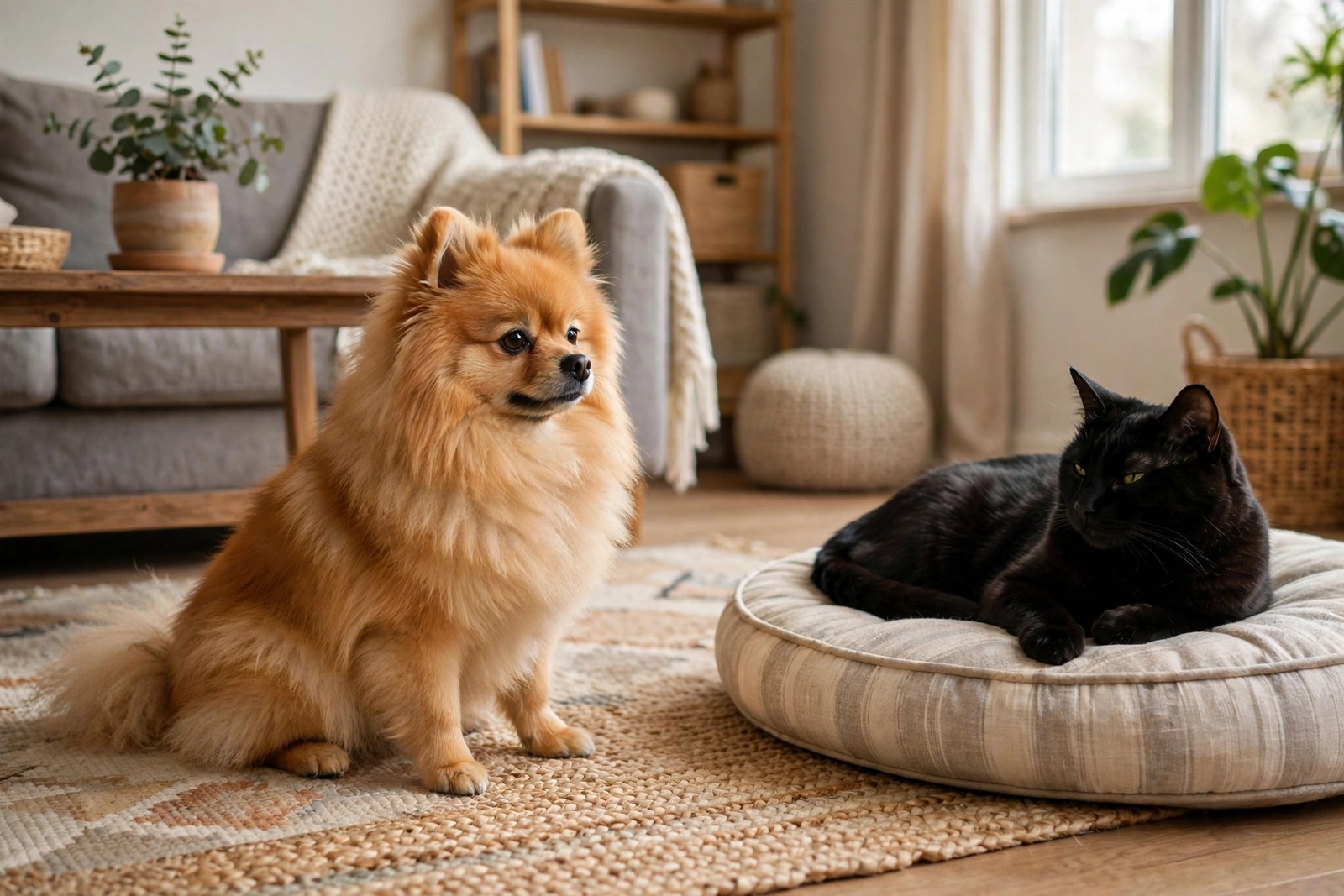
Pomeranians and cats are a more evenly matched pairing than many dog-and-cat combinations, because a small Pom may weigh less than the cat it lives with. That size balance cuts both ways. The cat is in little danger from a dog this small, and a confident cat will often set terms early and enforce them calmly. The Pomeranian, meanwhile, brings the friction: this is a feisty, vocal, self-important little breed that tends to bark at anything novel, claim the best laps and chairs, and treat a retreating cat as an invitation to bounce after it. With several weeks of patient introductions, many Poms move from noisy commentary to relaxed coexistence, and some become real companions to the cat.
Barking First: The Pom's Real Problem With Cats
Where a large breed's chase instinct is the main risk, the Pomeranian's risk is noise and persistence. Barking at the cat stresses the cat, rehearses the Pom's excitement, and can trigger the cat to run — which triggers the chase the barking started. Interrupt the pattern early and kindly: introduce the pair when the Pom is already calm after play and a toilet break, keep the first meetings separated by a gate so the Pom can practise watching quietly, and reward every moment of silent looking with treats delivered away from the gate, so calm pays better than commentary. Teach a reliable 'quiet' and a recall indoors before shared-room time, and end sessions while the Pom is still composed.
Lap-Guarding and Other Small-Dog Flashpoints
Pomeranians are lap specialists, and some guard the lap, the sofa spot or the person they consider theirs when the cat approaches. Watch for stiffening, a hard stare or a low growl when the cat nears the claimed spot, and respond by calmly ending the lap session rather than scolding — the Pom learns that guarding makes the good thing stop, while the cat's approaches are paired with treats arriving for the dog. Feed the two in separate places from the start, and give the Pom its chews and food toys away from the cat, because small dogs often guard high-value food items more fiercely than large ones. Also protect the Pom physically: keep meetings supervised, trim the risk of a close-range swat by never letting the Pom corner the cat, and give the cat shelves and high routes so it can leave upward instead of fighting its way out.
A Gentle Staged Plan for a Tiny Dog
- Swap scents first, rubbing a cloth on each animal and placing it near the other's bed with treats, for several days.
- Hold gate meetings in short sessions, rewarding the Pom for looking at the cat and then back at you, and letting the cat choose how close to approach.
- Progress to shared-room time with the Pom on a light house line you can step on if bouncing starts, while the cat moves freely.
- Add the furniture gradually — first meetings on the floor, later on the sofa where laps and guarding enter the picture.
- Keep the pair apart when unsupervised until several weeks of dull, ordinary behaviour say the relationship is settled.
What Success Looks Like With This Pairing
Expect the realistic outcomes in order: first the Pom stops barking because the cat has become boring, then the cat stops detouring around the Pom, then shared room time becomes unremarkable. Genuine friendship — the cat rubbing against the Pom, the two sleeping within reach of each other — happens in many households but is a bonus, not the benchmark. Keep the Pom's exercise and play needs met separately so the cat is never its only entertainment, and keep introductions at the same gentle pace even when progress feels fast in week one. Households that put the short daily sessions, the separate feeding and the scent swaps on one shared schedule find the plan survives busy weeks, and KinsLe Care Teams helps by letting you assign each of those duties for both pets to a named person, with every completed session marked complete with a timestamp.