
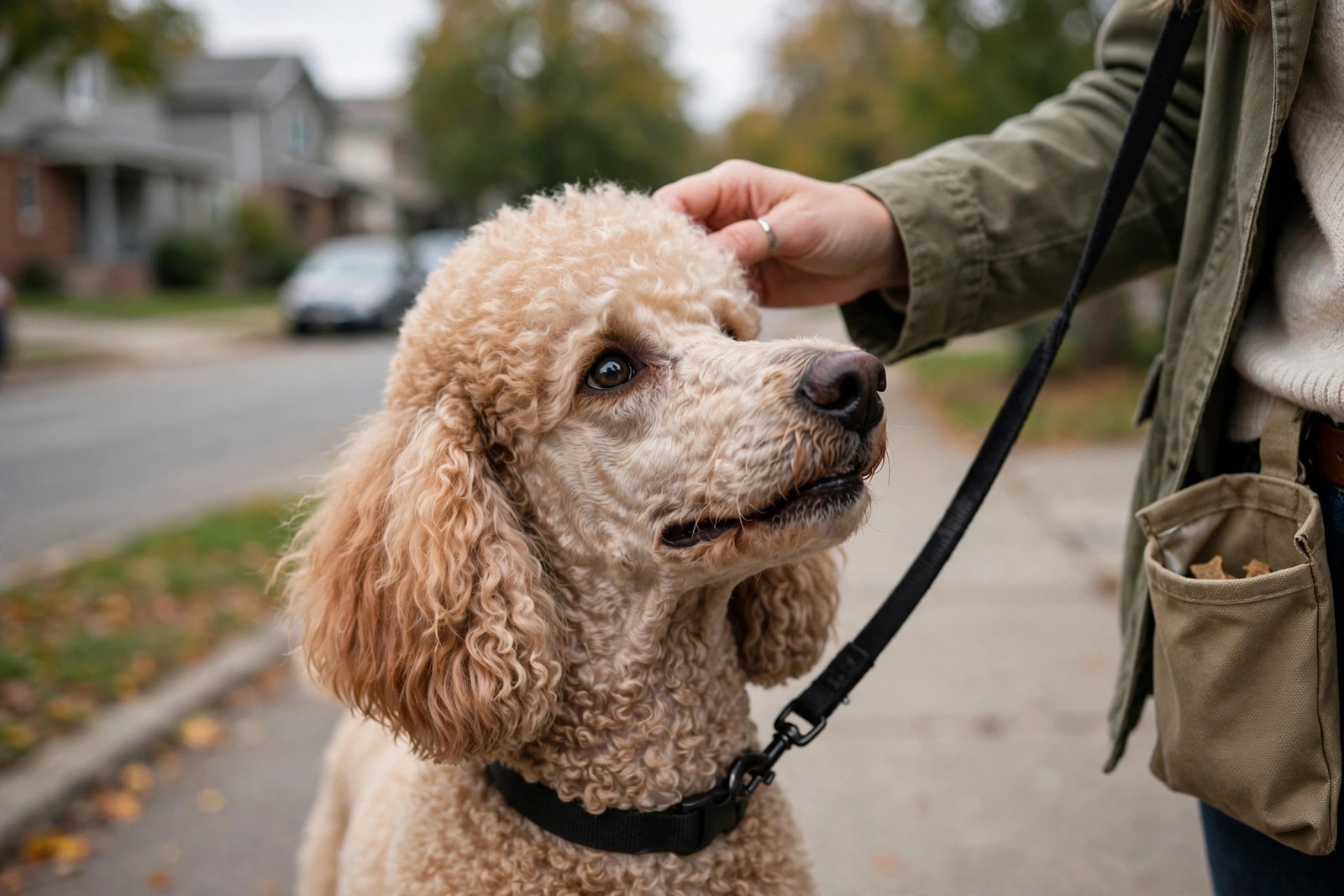
Poodles have a well-earned reputation as one of the more vocal companion breeds, and it starts with how observant they are. Originally water retrievers and long prized as circus and truffle-hunting dogs, Poodles combine sharp senses with a quick, analytical mind: they notice the neighbour's new car, the changed bins, the stranger's hat, and they comment. At home that makes them excellent early-warning systems — few Poodles let a doorbell, a footstep on gravel, or an odd noise at night pass unannounced — and it also means a Poodle in a busy street-facing home can find something worth reporting many times an hour.
Size Changes the Tempo, Not the Instinct
All three sizes share the alert streak, but owners often experience it differently. Toy and Miniature Poodles tend to be the fastest to bark and the slowest to stand down, partly through temperament and partly because small dogs are so often carried, sheltered, and inadvertently rewarded for announcing threats their owners then remove. Standards usually present as somewhat steadier: still prompt with a proper, deep announcement bark at the door, but generally quicker to accept your verdict that the situation is handled. These are tendencies, not guarantees — a reactive Standard will out-bark a serene Toy any day — yet if household quiet is a priority, size is a fair factor to weigh alongside meeting the individual dog and, for a puppy, its parents.
A Clever Dog With Nothing to Do Will Bark
Poodles were bred to work and to learn, and an under-occupied Poodle does not rest quietly with its thoughts. Barking at windows, at the household, and at noises outside is one of the standard self-appointed jobs, alongside redecorating with chewed skirting. The fix is rarely more shouting for quiet; it is occupation. Retrieving games honour the breed's original work, trick training and canine sports give that quick mind a curriculum, and grooming — a real time commitment in this breed, with clipping needed every few weeks — can itself be a calm, cooperative routine rather than a wrestling match. A Poodle whose day contains work, play, and rest in rhythm usually reserves its barking for genuine bulletins.
Teaching Quiet to a Dog Who Notices Everything
Work with the reporting instinct instead of against it. Acknowledge the alert with a calm cue, call the Poodle away from the door or window, and reward the dog for coming to you and settling; you are teaching that the job ends at the report, not that reporting is banned. Practise with staged, mild triggers at low intensity first, keep sessions short and successful, and be scrupulous about not rewarding demand barking — the bark aimed at you for food, play, or attention — with the very thing requested. Socialise puppies widely and gently, since a Poodle who finds the world ordinary has far less to announce about it, and seek a trainer's help if barking comes with lunging, snapping, or an inability to settle afterwards.
Because a Poodle's calm depends on several moving parts — exercise, training, grooming, company — it is exactly the kind of routine that frays when one person assumes another handled it. KinsLe Care Teams keeps those parts assigned and visible, with walks, brain games, and grooming appointments each owned by a named person and stamped on completion, so your Poodle's day stays full and its commentary stays where it belongs: at the doorbell, briefly.