
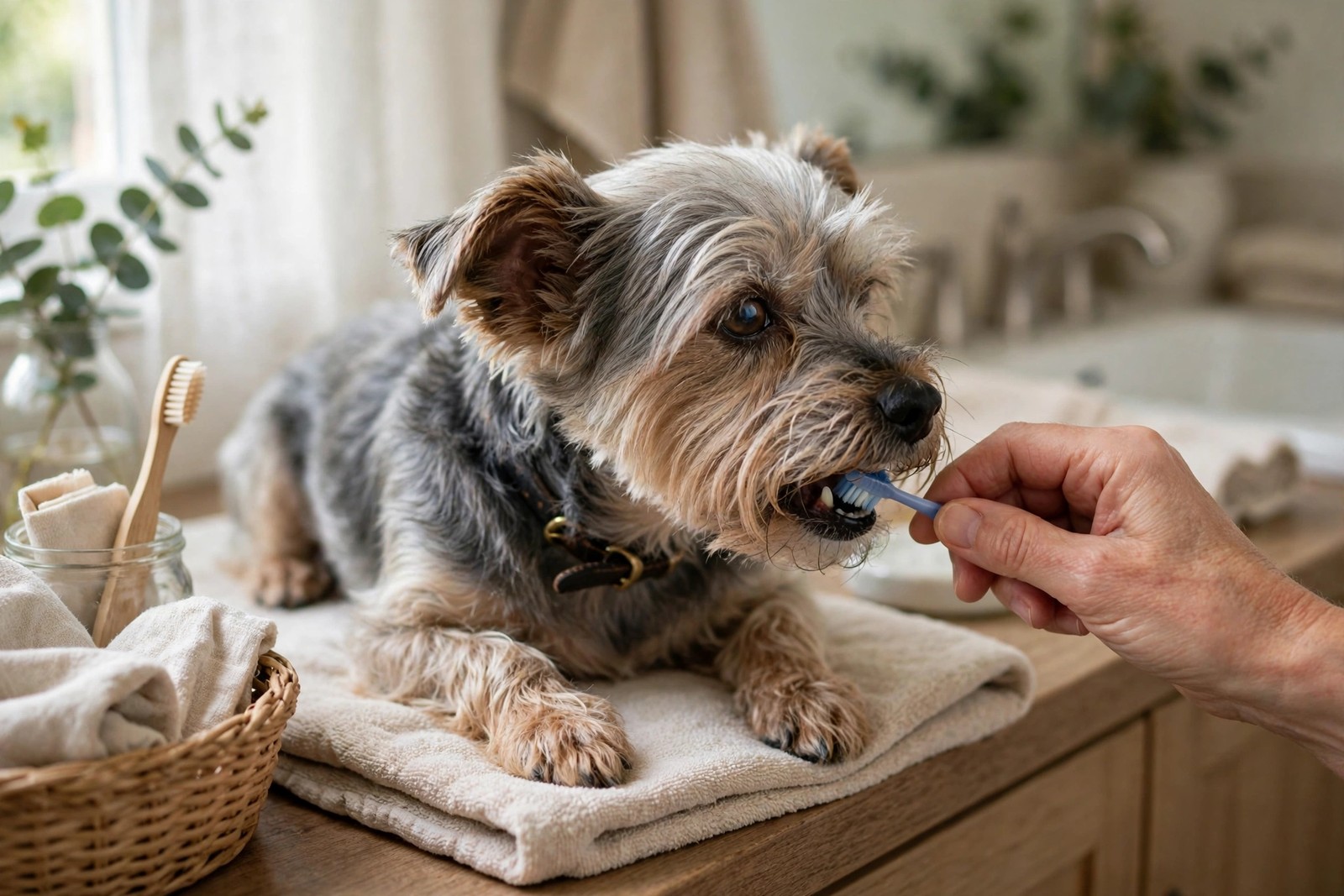
Yes — senior dogs absolutely still need dental care, and arguably need it more than younger dogs, because dental disease is extremely common in old age and sore teeth or infected gums quietly affect eating, comfort, and overall health. A dog who is just slowing down is sometimes a dog whose mouth hurts every time he crunches his dinner.
What Dental Disease Looks Like in an Older Dog
Plaque hardens into tartar, gums recede and become inflamed, and teeth can loosen, crack, or develop painful infection below the gumline where you cannot see it. Small breeds — Dachshunds, Yorkshire Terriers, Poodles, and Chihuahuas — are especially prone because their teeth are crowded into small jaws, but any senior can be affected.
Watch for bad breath that has got noticeably worse, yellow-brown buildup, red or bleeding gums, pawing at the mouth, dropping kibble, chewing on one side, preferring soft food he never used to need, or going off food in the morning and perking up later. Dogs are stoic; many eat through significant dental pain, so a good appetite does not clear his mouth. A lift-the-lip check at home and a proper look at every vet visit are the minimum.
Bacteria from an unhealthy mouth do not stay in the mouth, either. Vets take dental disease seriously in seniors partly because chronic oral infection adds strain to the whole body — another reason that being too old for dentals is a conversation to have properly, not an assumption.
Cleaning, Anaesthesia, and Honest Risk Talk
A thorough clean and any needed extractions require anaesthesia, because the important work happens under the gumline on a dog who must be perfectly still. Understandably, anaesthesia in a 13-year-old gives owners pause — so talk it through openly with your vet. They will assess his heart, kidneys, and overall condition, often with pre-anaesthetic bloodwork, and weigh the real risk of the procedure against the real, daily cost of leaving a painful, infected mouth untreated.
For some very frail dogs, the decision will be to manage rather than operate, and that can be the right call. For many healthy seniors, though, age alone is not a disease, and owners are often amazed by the brighter, more comfortable dog who comes home once the sore teeth are gone. Only your vet, who knows your dog's full picture, can advise which side of that line he sits on — and never attempt home scaling or extraction yourself.
Gentle Home Care in the Meantime
Daily toothbrushing with dog toothpaste is still the gold standard, even starting late — use a soft brush or finger brush, tiny amounts, and keep sessions short and pleasant. Never use human toothpaste. If brushing is impossible, dental wipes, approved dental chews, and water additives can help somewhat, though none replaces brushing or a professional clean. Introduce everything gradually; a senior with a sore mouth will not thank you for enthusiasm over gentleness.
Keeping Dental History in His Pet Passport
Dental records get lost between practices surprisingly often, yet they matter — which teeth were removed in 2023 changes what a new vet expects to find today. KinsLe's Pet Passport is your dog's records packet, holding vaccines, medications, allergies, and documents in one shareable place, so his dental history, anaesthetic notes, and cleaning dates travel with him to any vet. Share the Passport before a dental assessment and the team starts informed, not guessing. Pet Passport within KinsLe preserves which teeth were extracted, when cleanings happened, and any anesthesia notes, giving a new practice that history before an appointment begins.