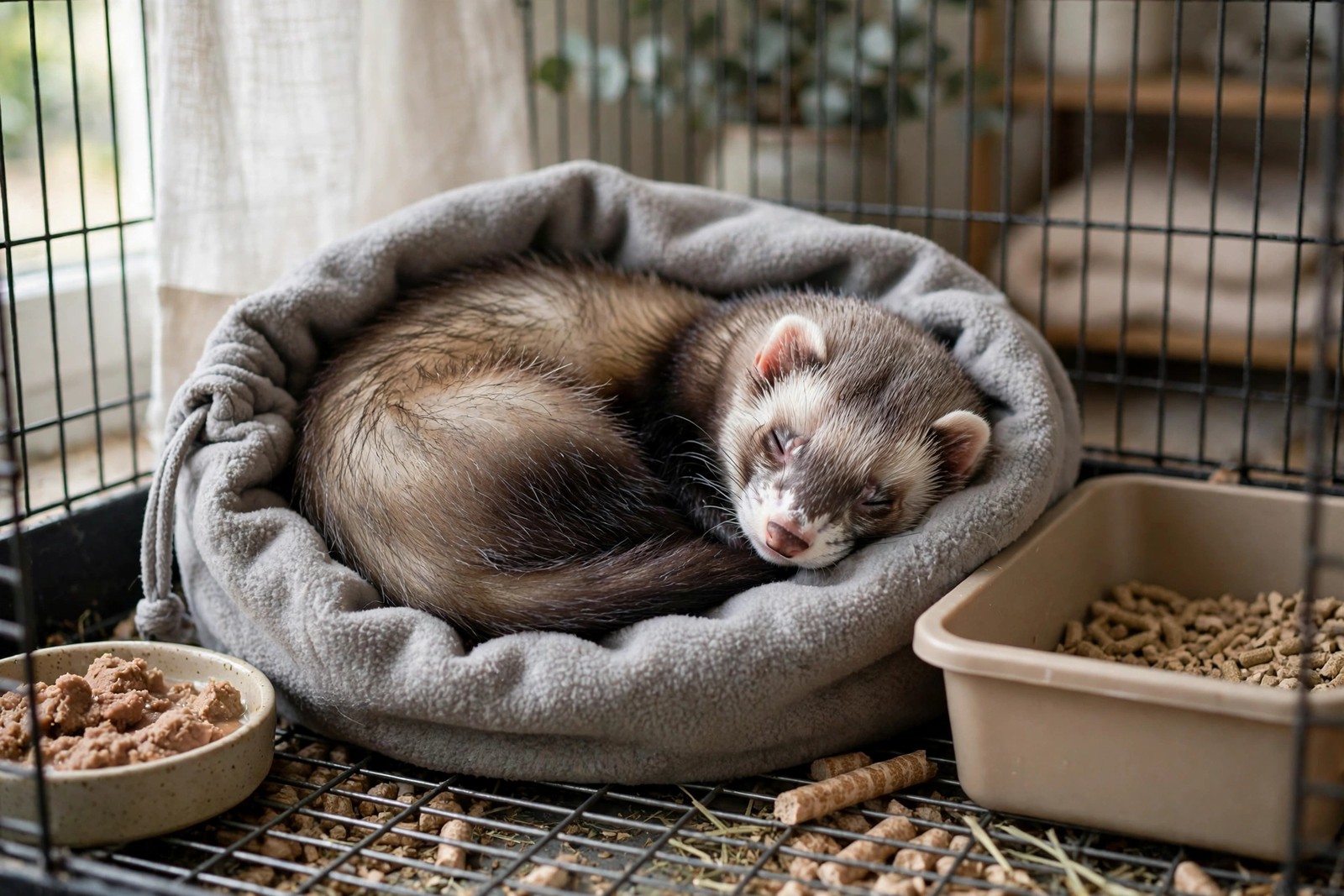
Yes — ferrets age fast, and a ferret of four or five is already a senior whose care should look different from a kit's. The body changes are specific to this species: muscle melts off the hindquarters, teeth accumulate tartar and wear, sleep deepens and lengthens, and a set of age-linked conditions that vets see constantly in ferrets moves from rare to likely. Good senior care is therefore not just gentler handling — it is a different monitoring routine, a different cage layout, and a much closer relationship with your vet.
The Two Conditions Every Senior Owner Should Know
Insulinoma, a growth on the pancreas that drives insulin up and blood sugar down, is one of the most common diseases of middle-aged and older ferrets. Its early signs are easy to miss: episodes of staring blankly, drooling or pawing at the mouth, wobbliness or hind-leg weakness, and a ferret who is simply harder to wake. Adrenal disease is the other regular: look for hair loss that starts at the tail and creeps forward, itchiness, and in females a swollen vulva. Neither condition is something to treat at home, and neither should be self-diagnosed from a description — but knowing the signs means you book the vet at the first episode instead of the fifth, and early booking genuinely changes the options a vet can offer.
Vet Cadence and What to Track at Home
Move a senior ferret to twice-yearly vet checks, and expect bloodwork to be part of them, because blood sugar and organ values catch the common senior problems while they are still manageable. At home, weigh your ferret weekly on a kitchen scale and write the number down — ferrets hide illness well, and a slow weight slide is often the first objective sign. Note appetite, stool quality, and how long the ferret chooses to play before sleeping; a play session that shrinks from forty minutes to ten over a month is information a vet can use. Bring the notes, not your impressions, to the appointment.
Food and Teeth in Old Age
Ferrets are strict meat-eaters, and that does not change with age, but texture often must. Tartar, loose teeth, and sore gums make hard kibble painful, and a ferret who drops food, eats on one side, or quietly eats less may be telling you its mouth hurts. Softening the usual food with warm water into a mash, or offering a meat-based soft food your vet approves, keeps nutrition up while the mouth is assessed — and sore mouths need a vet, since dental disease in ferrets is common and treatable problems hide under tartar. Keep fresh water in both a bottle and a heavy dish; older ferrets sometimes drink more readily from a dish, and hydration matters more as kidneys age.
Rebuilding the Cage for an Older Body
The multi-level tower that suited a young ferret becomes a fall risk. Rearrange to a single-level layout, or add wide, gently sloped ramps with solid surfaces between levels instead of ladders and hammocks hung high. Choose a litter box with one low side so stiff hips can step in and out, and put food, water, litter, and the favourite sleep box on the same level so everything essential is a short walk. Add extra bedding — old ferrets feel the cold and sleep longer and deeper — and check sleeping ferrets gently rather than startling them awake, since a deeply asleep senior can look alarmingly limp to a new owner.
Senior ferret care is a stream of small records — weights, blood results, appetite notes, daily observations — and it fails when the record lives in one person's memory. KinsLe's Pet Passport keeps your ferret's vet results, weight log, and current feeding and cage notes together in one portable packet, so every vet visit starts from the full picture and any sitter inherits the real routine, not a summary of it.