
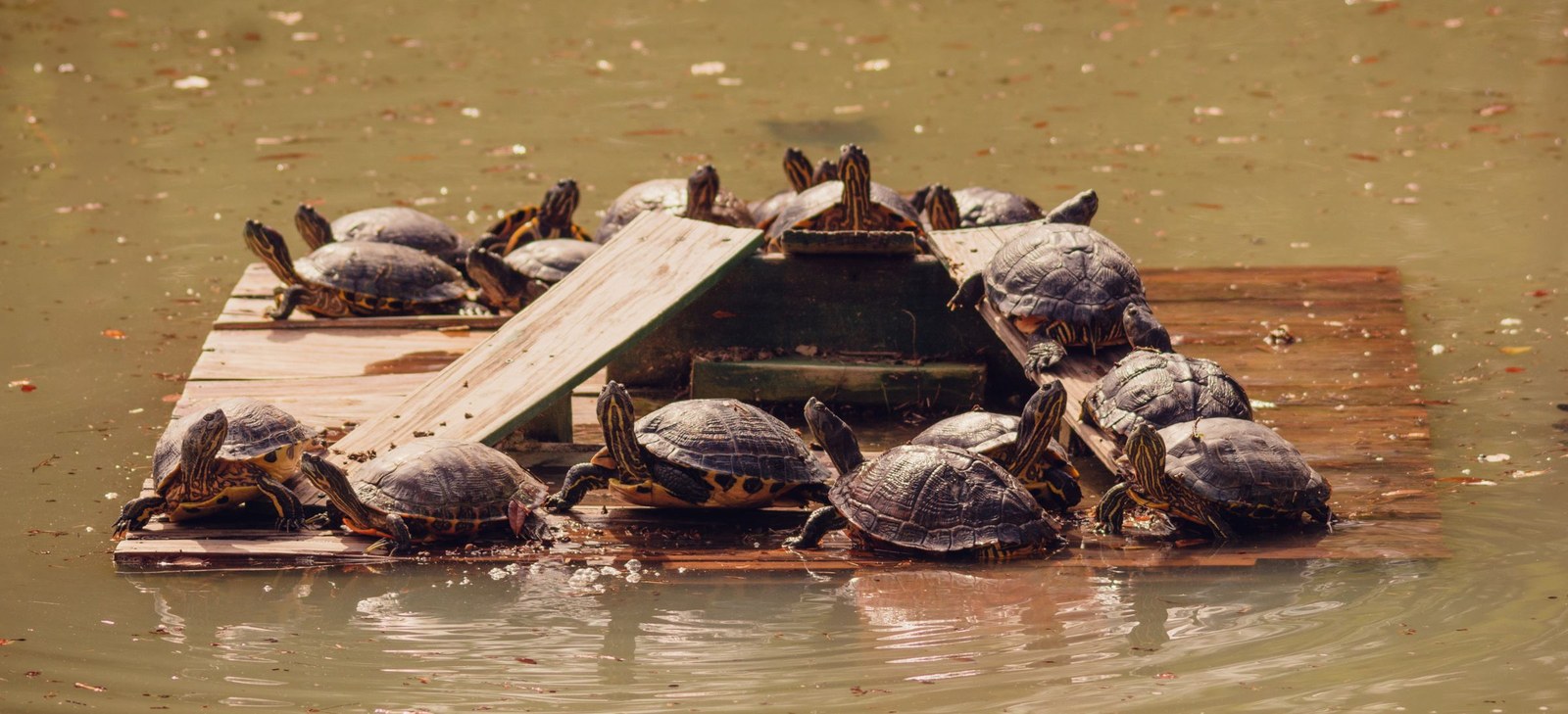
Yes — aquatic turtles absolutely need a dry dock: an easy-to-climb platform where they can haul their whole body completely out of the water to dry their shell, bask under heat and UVB light, and rest, every single day.
Why Getting Fully Dry Matters
In the wild, a red-eared slider or painted turtle spends hours hauled out on a log. That dry time is functional. Air and warmth help keep the shell and skin healthy and discourage the algae, fungus, and bacterial growth that thrive on a permanently wet shell. Basking also lets turtles regulate body temperature, which supports digestion and immune function, and UVB light over the dock is how they produce vitamin D and use calcium properly. A turtle that can only poke its nose out, or that perches with its underside still in the water, is not getting any of this.
Building a Dock Your Turtle Will Actually Use
The dock must fit the whole turtle, shell included, with room to turn around, and it should hold the animal's full weight without flexing, sinking, or tipping. Options include floating docks, suction-cup platforms, egg-crate ramps, cork bark, and above-tank basking areas for larger turtles that keep sinking floating models.
Key details to get right:
- A ramp or textured surface your turtle can grip — smooth, steep platforms get ignored
- The basking surface positioned at the distance the bulb manufacturer specifies, with a thermometer on the dock itself
- Water deep enough to swim, but a haul-out easy enough that a tired or smaller turtle never struggles
- Space that still works in six months: juveniles grow fast and outgrow small docks quickly
Heat, Light, and a Place to Cool Off
Fit both a basking heat lamp and a UVB bulb over the dock, run them on a consistent daytime schedule, and replace UVB bulbs on the manufacturer's schedule even if they still glow — output fades before visible light does. Check dock temperature with a thermometer rather than trusting bulb wattage. Your turtle should also be able to retreat to cooler water freely; basking is a choice the animal makes through the day, not a spot it is trapped on.
Signs Something Is Wrong With the Setup
A turtle that never basks may find the dock too hot, too cold, hard to climb, or exposed — many turtles avoid basking where they feel vulnerable to household traffic. One that basks almost constantly, including sleeping on the dock night after night, may be telling you the water is too cold or that it is unwell. Soft spots, white fuzzy patches, or a foul smell on the shell, and persistent refusal to eat, warrant a prompt visit to a veterinarian experienced with reptiles rather than home experiments.
Handing Dock Duties to a Sitter With KinsLe
Dock care is easy to garble in a verbal handover — bulb timers, dock temperature checks, and water top-ups all matter. KinsLe's Care Pass solves that: it is a temporary, scoped link you share with a sitter that carries your turtle's habitat instructions, and the recipient needs no account and no app to open it. When the sitting ends, so does the need for the link. Care Pass from KinsLe gives your named turtle sitter time-limited access to dock temperature checks and bulb-timer details, and that access ends when the sitting period does.