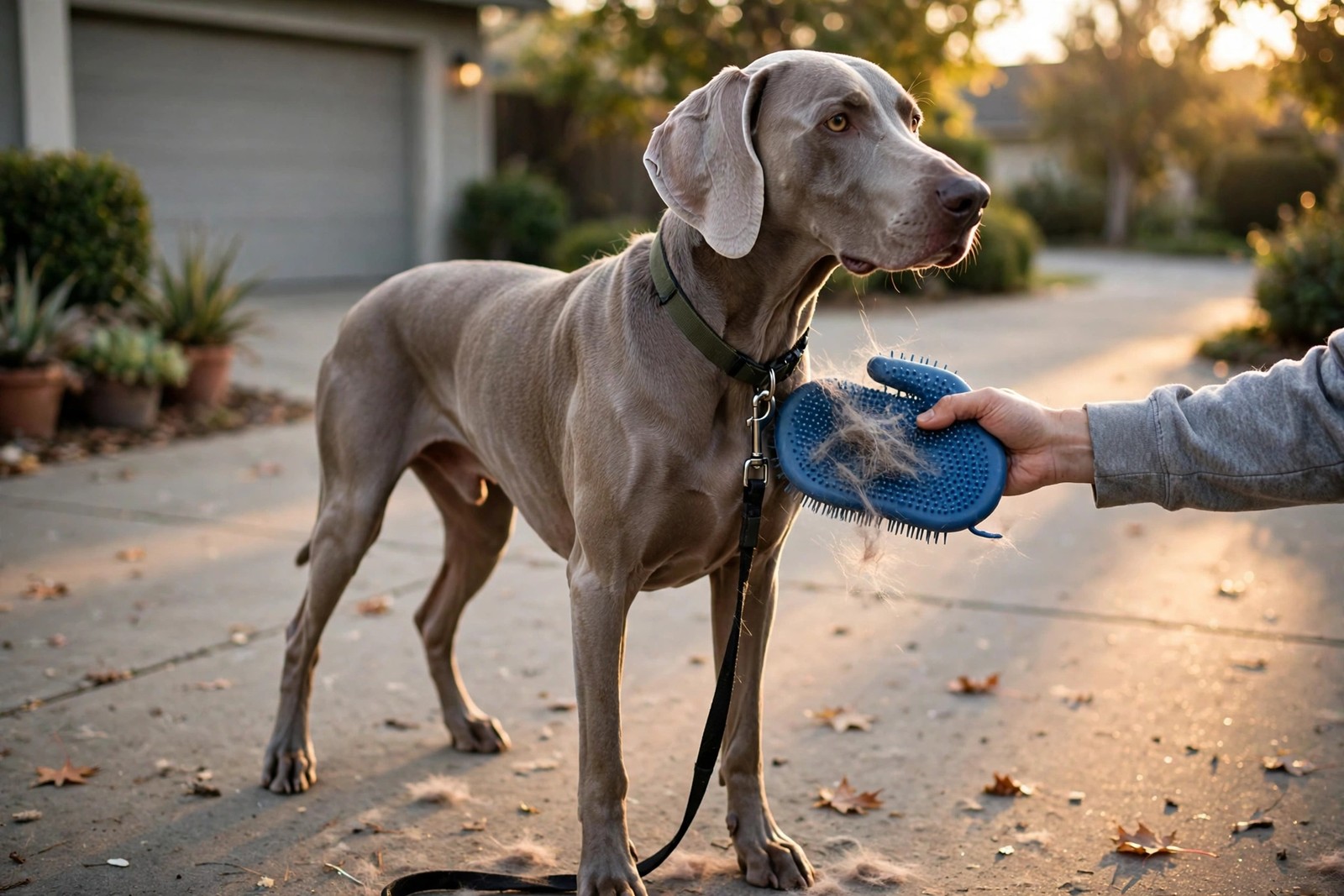
Weimaraners do not shed a lot by the standards of coated breeds — there is no undercoat to blow, no seasonal avalanche and no tumbleweed — but owners are often caught out by how noticeable the shedding they do have turns out to be. The Weimaraner coat is short, sleek and single, lying flat over a large, muscular hunting dog, and it releases fine hairs steadily through the year with a modest increase in spring. Those hairs are silver-grey, which reads as pale lint on every dark surface, and they are short and stiff enough to spear into upholstery, car seats and woven fabrics, where they cling far more stubbornly than long soft hair that sits on top.
The Five-Minute Weekly Brush-Through
Coat care for this breed is genuinely minimal, and the weekly session earns its place by what it removes before it falls: a rubber grooming brush or mitt, worked over the whole dog for a few minutes once a week, lifts the loose hair in bulk and distributes skin oils so the grey coat keeps its characteristic sheen. Check the skin as you go — a short coat shows scrapes, ticks, lumps and dryness at a glance, which is one of this breed's quiet conveniences. Ears deserve a weekly look too, since the long, hanging ears of a hunting breed trap moisture, and nails grow fast on a dog covering this much ground; neither is shedding, but both ride along naturally on the same weekly check.
Why the Hair You Do Get Is So Stubborn
Owners switching from a long-coated breed sometimes rate the Weimaraner worse for house hair, and the disagreement is about texture rather than quantity:
- Short, stiff hairs work their way into fabric weaves and car upholstery and resist vacuuming, where long hairs mostly lie on surfaces and lift away.
- The pale grey colour contrasts with dark sofas, black car interiors and dark work clothes, so a modest amount of hair looks like a lot.
- There is no seasonal blow to prepare for, but also no off-season: the steady trickle runs all year, so the weekly brush, not a seasonal campaign, is the control.
Washable throws on the dog's chosen sofa end, a car seat cover, and grooming before visitors arrive handle the practical side without drama.
Bathing, Skin and the Active Dog's Coat
Weimaraners roll, swim and hunt through undergrowth, and the coat's job is to shed dirt as readily as it sheds hair, so bathing is an occasional event for actual filth rather than a fixed routine. Over-bathing a short single coat can dry the skin and increase flaking and loose hair, the opposite of the aim; when a bath happens, use a dog shampoo, rinse thoroughly, and expect a modest surge of loose hairs over the following day or two as follicles release what was already dead. A healthy Weimaraner coat should feel smooth and look glossy; dullness, bald patches, persistent dandruff or itching belong in a conversation with your vet, since skin and thyroid issues show early in a coat this short and honest.
Fitting Coat Care Into a High-Energy Life
The realistic risk with a Weimaraner is never that grooming is difficult — it is that everything else about the dog is so consuming that a five-minute weekly task with no visible deadline quietly stops happening, and the car seats tell the story a month later. Anchor the brush-through to an existing weekly event: after the long weekend walk, before the car is cleaned, alongside the ear check and nail check as one short maintenance session. Youngsters should learn to stand for it early, in sessions of a minute or two paired with treats, because an adult Weimaraner who objects to handling is a lot of dog to persuade. Households that put the weekly session on a shared list, owned by a named person rather than left to chance, keep it alive through busy stretches, and KinsLe Care Teams helps by letting you assign the weekly brush-through, ear check and nail check as one recurring duty for a specific person, marked complete with a timestamp when done.