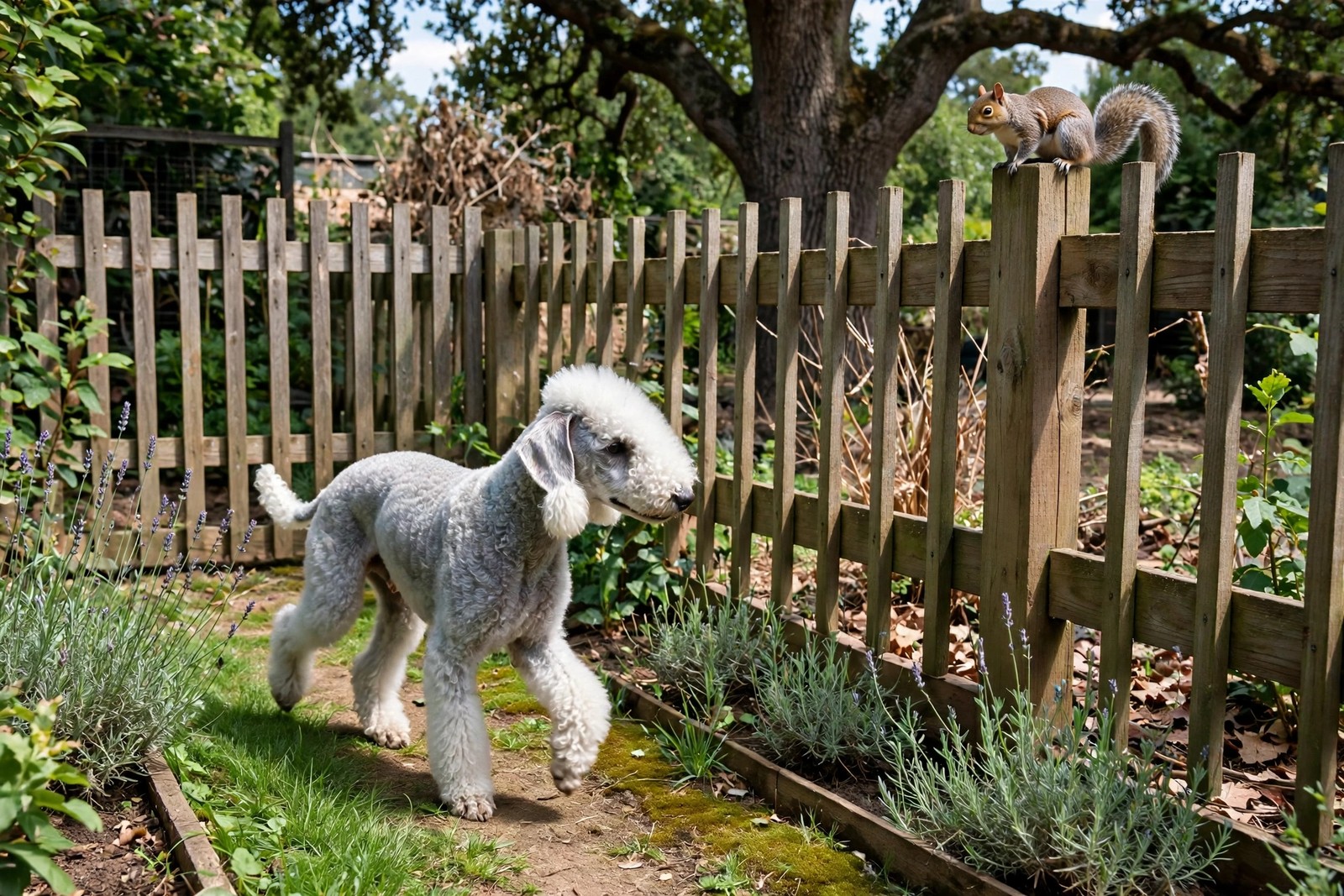
Yes, a Bedlington Terrier needs a securely fenced yard, and owners misjudge this breed more than most because the dog in front of them looks like a small lamb. The Bedlington's history is entirely terrier: a fast, keen hunter of vermin with a whippet-like turn of speed. In an unfenced yard, the first squirrel, rat, or fleeing cat converts that gentle appearance into a full-speed chase in a single stride, and a Bedlington in pursuit does not check for roads, recall cues, or property lines.
The escape methods a Bedlington actually uses
Size a Bedlington's fence against three specific behaviors. First is the chase exit, where the dog does not plan an escape at all but simply follows prey through any opening, including a gate opened for a delivery at the wrong second. Second is digging: terriers were bred to go to ground, and a Bedlington left alone in a yard may dig purposefully at the fence base, especially where it has seen or smelled something on the other side. Third is squeezing and scrambling. This is a narrow, flexible dog that can pass through gaps an owner would dismiss, and its athletic hindquarters let it scramble over low barriers or off objects left near the fence. Checking only the fence height misses two of the three real risks. A proper audit for this breed crouches down, examines the bottom edge and every gap, and only then looks up.
Specifying a fence for a small, fast terrier
A fence of moderate height with a completely sealed perimeter suits a Bedlington better than a tall fence with a loose base. Close the space under gates, fix boards or mesh firmly at ground level, and consider burying a short skirt of mesh or placing a hard edging along the base where soil is soft and digging is easiest. Remove climb aids near the boundary, including stacked pots, low benches, and wood stores that shorten the jump. Gates need positive latches that a quick paw cannot lift, and self-closing hinges are worthwhile because this breed's escape is usually opportunistic, exploiting the thirty seconds a gate stands open during everyday life.
Why off-lead freedom outside the fence is risky
The same prey drive that shapes fencing needs also governs walks and open spaces. A Bedlington that is reliable off lead in a quiet field remains one rabbit away from a road, and terrier chase drive is famously difficult to interrupt once the dog has committed. For this breed, long lines in open areas and off-lead time reserved for securely enclosed spaces are not overcaution; they are how owners keep a fast dog alive into old age. Roaming carries an added danger for a Bedlington because its unusual coat and fine build offer little protection in a confrontation with a larger animal, and a dog bred to pursue vermin will not reliably back down from one. Secure fencing at home anchors the whole safety picture, letting the dog enjoy genuine freedom daily in the one place you control completely.
Identification and rapid help if a chase wins
Keep your Bedlington's microchip details current, use a well-fitted collar with identification during yard time, and keep recent photographs that show the dog's current coat length, since a clipped Bedlington and a full-coated one look strikingly different to a finder. Make sure family members understand that this breed must never be trusted around an open gate, however trustworthy it seems indoors. If a chase does carry your dog out, raise the alarm immediately rather than assuming so small a dog cannot have gone far; a running terrier covers ground quickly. Reaching nearby helpers at once through KinsLe and the Lost Pet Alert System alerts Circle of Love members in the area for free while letting a finder contact you directly.