
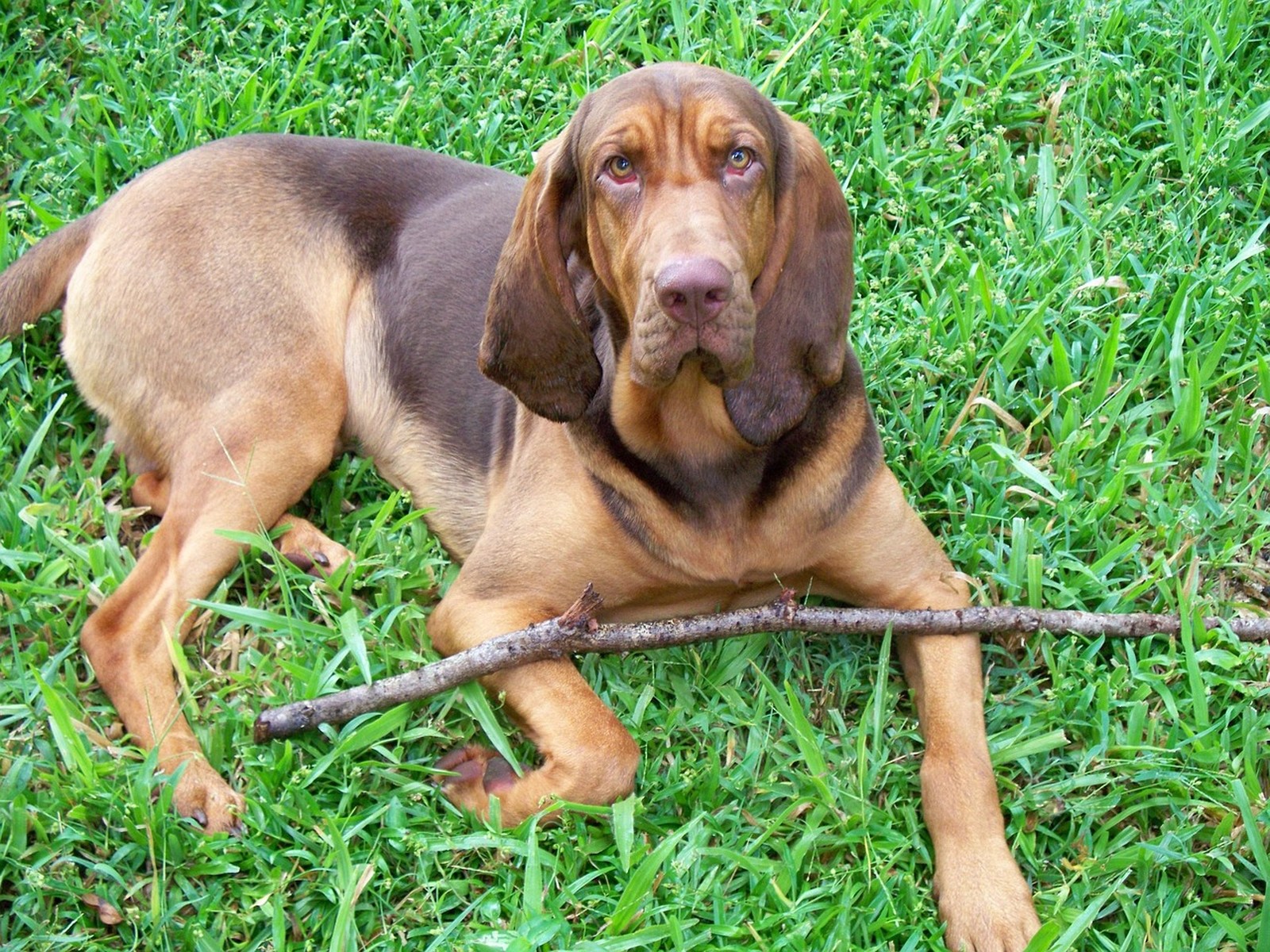
The world's nose, on your dog
Yes. The Bloodhound's scenting ability is the benchmark against which other dogs are measured, and it comes as a complete working package: when this dog takes a trail, the wrinkled face drops, the ears sweep scent upward, and the outside world fades out. A trail does not end at your fence line, your road, or your shouted recall, and a Bloodhound does not weigh consequences mid-pursuit. Pet Bloodhounds keep this drive fully intact beneath their droopy, affectionate household manner, so owners have to build the dog's environment around the nose — starting with a barrier the trail cannot simply flow through.
Gentle at home, unstoppable on a line
Bloodhound escapes are rarely athletic spectacles. They are slow, strong, and persistent: a shoulder leaned against a flexing gate, paws working at the base of a panel where scent pools, a whole determined body ambling through a gap a smaller dog made. These are big, heavy dogs, and hardware that survives a terrier's enthusiasm may simply fatigue under a Bloodhound's repeated leaning. Distraction is not a safeguard either — a dog mid-trail that ignores food and familiar voices will not be lured back by a treat bag, which is why prevention carries nearly all the weight with this breed.
Fencing that respects strength and scent
Prioritise substance: rigid panels or boards that do not bow, posts set deep enough for a heavy dog's pressure, and gate hardware rated for real force, closing with a latch the dog cannot lift with a nose. Bury or skirt the fence base where digging starts, especially near gates where scent and foot traffic concentrate. Inside the yard, remember the nose never clocks off — rotate scent games, hide toys and food around the garden, and let the dog work puzzles daily. A Bloodhound given trailing games at home still needs its fence, but it leans on that fence with noticeably less professional interest.
Walking a dog that tracks everything
Every walk with a Bloodhound is a tracking exercise whether you planned it or not, so a well-fitted harness and a leash you trust are daily equipment, and dropped-leash drills belong in enclosed spaces only. Recall should be trained and celebrated, but honest Bloodhound ownership means never staking the dog's life on it near an open road — the breed's fame rests on finishing trails, not abandoning them. At home, treat the gate like an airlock with visitors and deliveries, and brief anyone dog-sitting that this sweet, sleepy-looking animal becomes a locomotive the moment an interesting smell crosses the doorstep.
Slow dog, long-distance problem
A loose Bloodhound does not sprint away — it walks, methodically, for as long as the scent lasts, which means it can be surprisingly far away and still moving when you start looking. Early sightings from people nearby are therefore worth more than hours of solo searching. Keep identification on the collar and photos that capture those unmistakable wrinkles ready to share. With KinsLe, the Lost Pet Alert System turns that first sighting into contact — a free alert to Circle of Love members nearby, and a direct line for the finder to message you while the trail is still warm.