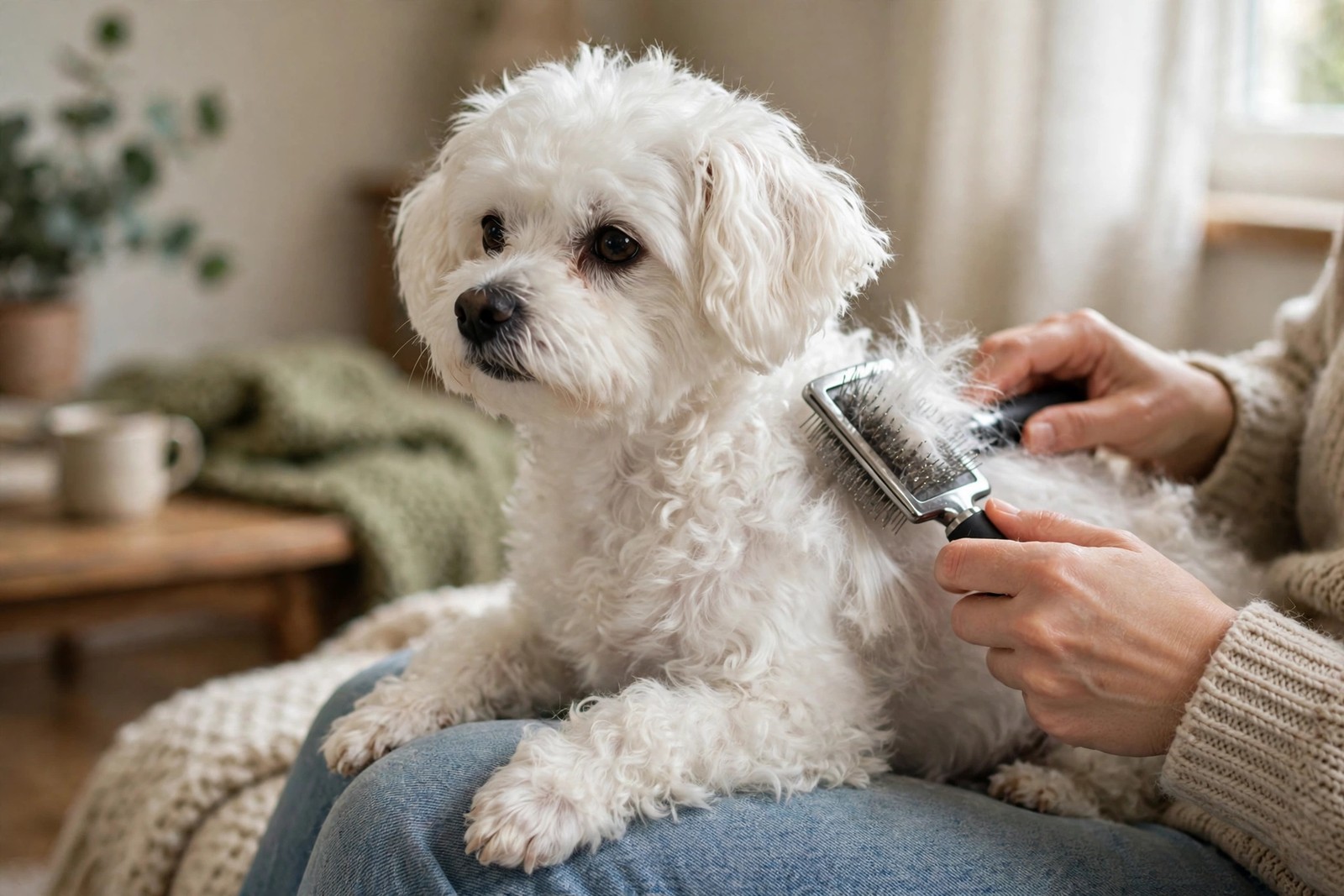
The Coat Decides: It Grows, It Mats, It Barely Sheds
The Bolognese carries a single, all-white coat with a distinctive flocked, woolly texture — the hair stands off the body in soft, loose flocks rather than lying flat. It sheds very little, which draws many people to the breed, but the hair that does loosen stays in the coat. Left uncombed, those loose strands weave the surrounding flocks into mats, and mats on this fine coat form fast: behind the ears, in the armpits, along the belly, and anywhere a harness or collar rubs.
So the honest answer is that brushing — really combing, down to the skin — is compulsory, and haircuts are a lifestyle decision layered on top of it. No trim exempts a Bolognese from combing; a trim only changes how long each session takes.
Route One: Keeping the Traditional Long Coat
A full Bolognese coat is beautiful and genuinely demanding. Expect to comb through the entire dog most days, working in small sections, lifting the flocks and combing from the skin outward so you are separating hair at the root rather than polishing the surface. A surface-only brush pass is how owners end up with a dog who looks fluffy on top and is felted solid underneath.
Bathing matters more in full coat, too. A dirty long Bolognese coat mats faster than a clean one, so regular baths with thorough rinsing and careful drying — combing as you dry — are part of the package. Many owners tie the top hair up out of the eyes with a soft band between sessions, which also helps you spot early tear staining on that white face.
Route Two: The Shorter Pet Clip
A pet clip, taking the body down to an inch or two while keeping the face and tail plume characterful, is the pragmatic favourite. It does not stop matting, but it stretches the interval: most short-coated Bolognese stay comfortable with a thorough comb-out two or three times a week, and a clip every month or two keeps the length in that easy range.
Book the clip with a groomer who will comb out before bathing rather than washing mats tighter, and be clear about length, because this coat grows back steadily and a clip that is perfect in week one is shaggy again by week six. Between appointments, keep up the ear, armpit, and belly checks; those hidden zones mat at any coat length.
Eyes, Ears, and the White-Coat Details
That white face needs daily attention of a different kind. Wipe the eye corners gently to manage tear staining before it sets into the hair, and keep the hair around the eyes either tied up or trimmed so it does not rub the surface of the eye. Ears carry hair inside the canal on this breed; ask your groomer or veterinarian what they recommend for your individual dog rather than plucking by default.
Contact your veterinarian if you find skin redness under mats, a sour smell from the ears, or persistent eye discharge, since each can reflect something beyond coat care. Mats that have already felted tight to the skin should be clipped out by a professional, never pulled or cut blindly with scissors against the skin.
The difference between the two routes is really about who does the combing and how often, and KinsLe's Care Teams can spread those sessions across the household with a visible record of the last full comb-through.