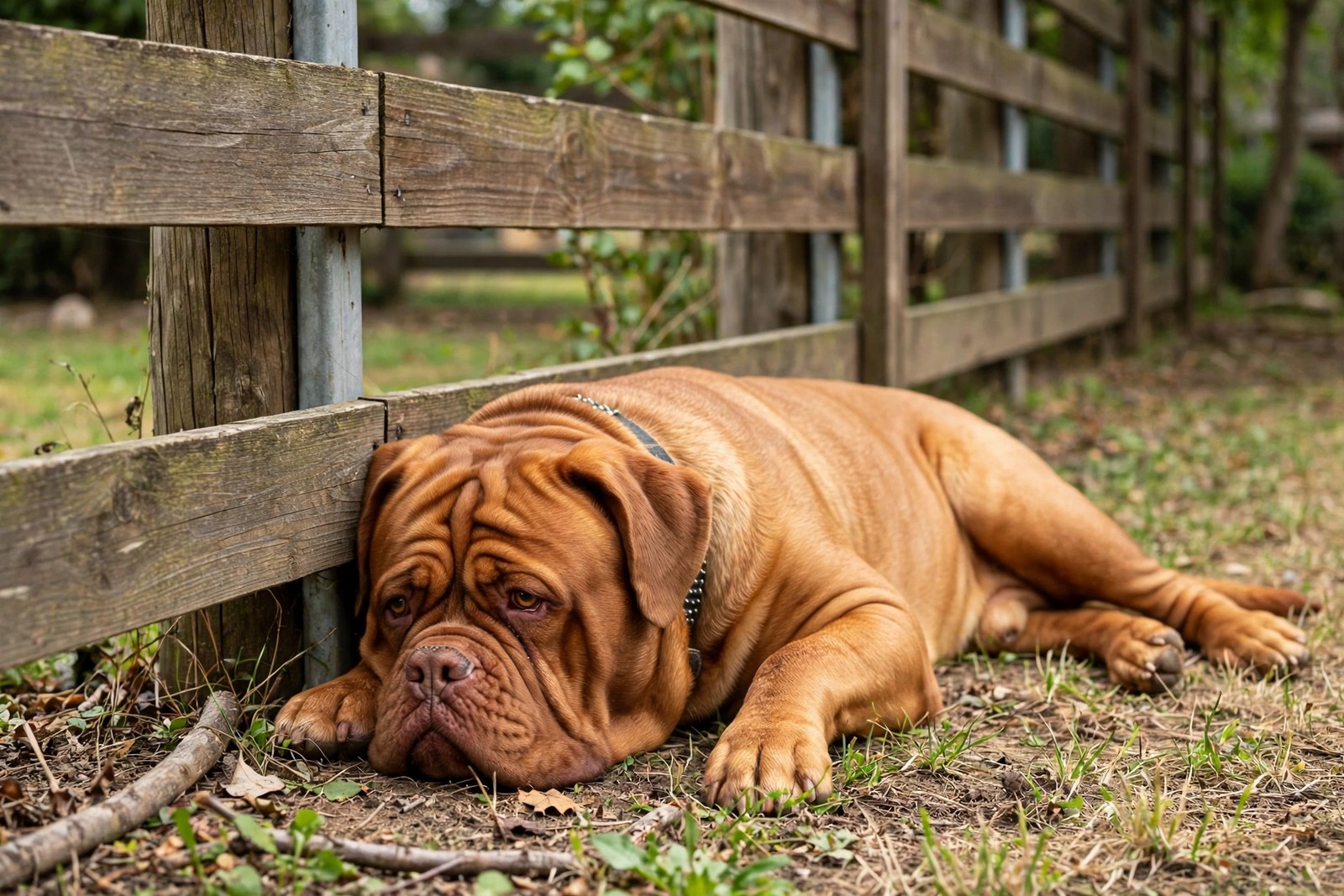
Short answer: yes — build for weight, not for speed
A Dogue de Bordeaux does need a securely fenced yard, though the engineering brief is unusual: you are containing one of the most massive dogs in the world, a French mastiff whose adult weight can rival a grown person's, yet whose energy and wanderlust are both low. A Dogue will not scale your fence, dig a tunnel system, or pace the perimeter plotting. What he can do is lean a hundred-plus pounds against a tired panel until it gives, shoulder a poorly latched gate in passing, or simply be on the wrong side of an open gate when something triggers the guardian in him.
The fence exists as much for everyone else's peace of mind as for his containment. A loose Dogue, however gentle at home, terrifies neighbors, endangers encounters with other dogs, and can create a legal and insurance crisis from a single frightened complaint.
Temperament behind the boundary
The breed was developed in France for guarding, hauling, and big-game work, and the modern Dogue remains watchful, loyal, and naturally protective of his household, often reserved or wary with strangers. That means the fence line is where his job description lives. A solid fence that blocks his view of passersby generally produces a calmer dog than a see-through barrier he can patrol visually all day, barking and building arousal at every dog walked past.
At home he is typically a devoted, even-tempered shadow who wants to be near his people — which is also why he should not be exiled to a yard. A Dogue left alone outside for hours is not exercising; he is waiting, drooling, and in warm weather, risking his health.
What secure means for a mastiff
Strength at panel and gate comes first. Posts, boards, and hinges should be rated in your mind for a very large dog's full leaning weight, and latches should be the kind a big, determined head cannot lift or nudge — then checked regularly, because hardware loosens under this breed's daily use. Height requirements are mercifully ordinary, since a Dogue is no jumper; a standard sound fence he cannot get purchase on suffices, with no climbable clutter stored against it.
The Bordeaux-specific additions are comfort and climate. This is a brachycephalic, heavily built breed that overheats readily, so a fenced yard for a Dogue must include real shade and water, and outside time in heat should be short and supervised regardless of fencing. Never rely on the yard as his exercise plan; short, gentle outings and indoor companionship suit his joints and breathing far better than hours outdoors.
If the boundary ever fails
Because escapes here are usually accidents — a gate left ajar, a panel finally surrendering — the average loose Dogue will not run far, but he may be frightened, overheating, or standing his ground in a way strangers misread. Quick, calm recovery by his own people is the goal, supported by current identification and neighbors who know the dog. That urgency is exactly what KinsLe's Lost Pet Alert System is built for, alerting nearby Circle of Love members for free so a finder can message you directly instead of approaching a wary mastiff alone.