
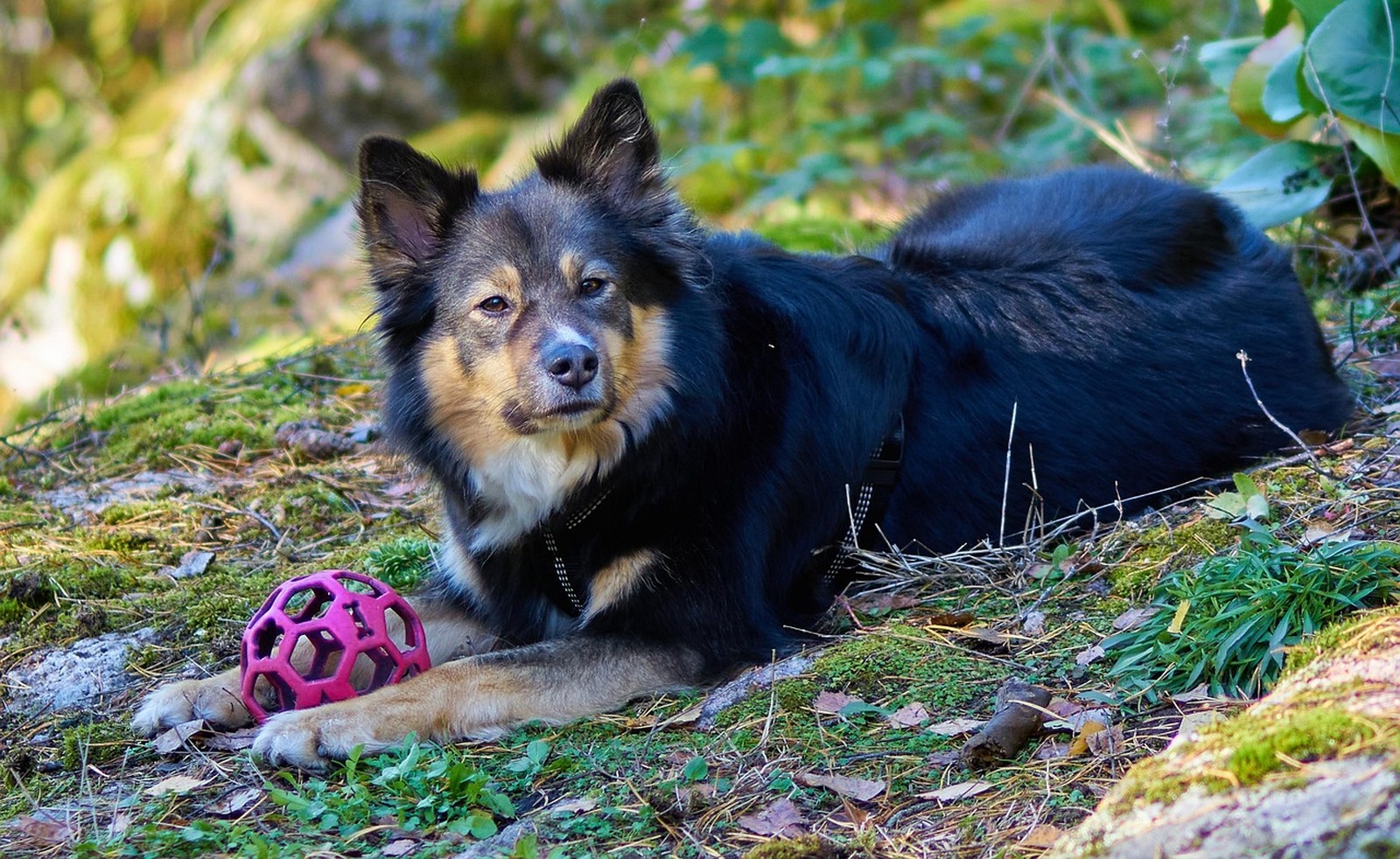
Why a Lapphund will test an open garden
A Finnish Lapphund was developed to work reindeer in cold, open country, moving with people but thinking for itself when stock scattered. That background leaves a dog who is sociable and gentle at home yet genuinely interested in everything happening beyond your hedge. A delivery at the front, children playing next door, or another dog passing the gate can draw a Lapphund across an unfenced boundary in seconds, not out of disobedience but out of friendly curiosity. Because the breed is also vocal, owners sometimes mistake barking at the boundary for staying put, when in fact a Lapphund who has spotted something more interesting on the other side will often go and greet it.
A secure fence turns that curiosity into safe observation. Your dog can watch the street, bark an announcement, and then turn back to the family instead of following the distraction into traffic.
What secure means for this breed
Lapphunds are medium sized, agile, and clever with paws and noses, so secure means more than a low decorative edge. Panels should meet the ground without a gap a dog can widen by scrabbling in soft soil, and gates need a latch a Lapphund cannot nudge open with a nose. If your dog digs for fun in flower beds, assume the same effort may be tried at the fence line and inspect that strip weekly.
Height matters less for this breed than completeness. Most Lapphunds are not obsessive climbers, but an excited dog greeting visitors can jump up at a gate, so a wobbly gate or a loose latch is a weak point worth fixing before it fails. Keep bins, log stores, and garden furniture away from the fence, because a resourceful spitz will happily use a platform to see, and then cross, what is on the other side.
Alternatives when you have no fence
If you rent or your garden is open plan, a Lapphund can still be kept safe without a permanent fence, but the substitute has to be active rather than assumed. Use a long line anchored securely for outdoor breaks, stay outside with your dog rather than watching from the kitchen window, and treat every unfenced outing as a walk on a lead, even at home. Portable pens suit a supervised play session, yet they are not a replacement for a boundary when you are indoors.
Recall training helps, and Lapphunds are bright and food motivated enough to learn a cheerful return, but recall is a second layer, not the fence itself. A herding dog mid-chase after a squirrel or a fleeing cat may not process your call until the pursuit ends, by which point road danger has already done its work. Build the recall for the park and for accidents, and use physical containment for everyday toilet breaks and garden time.
If your Lapphund does get out
Act in the first minutes, while a friendly Lapphund is still likely to be visiting nearby gardens rather than travelling far. Call calmly, avoid a frantic chase that turns escape into a game, and ask neighbours to check sheds and side passages where a curious dog may have wandered in and been shut in by accident. Leave your gate open with bedding that smells of home near it, because many dogs circle back to familiar ground once the novelty fades.
Identification shortens the whole episode. A collar tag that is easy to read and up-to-date contact details mean the neighbour two streets away who finds a cheerful spitz on their lawn can reach you in one call instead of guessing. That quick reunion is exactly why, alongside a sound fence, KinsLe pairs this breed so well with its Lost Pet Alert System for getting word to nearby pet lovers fast.