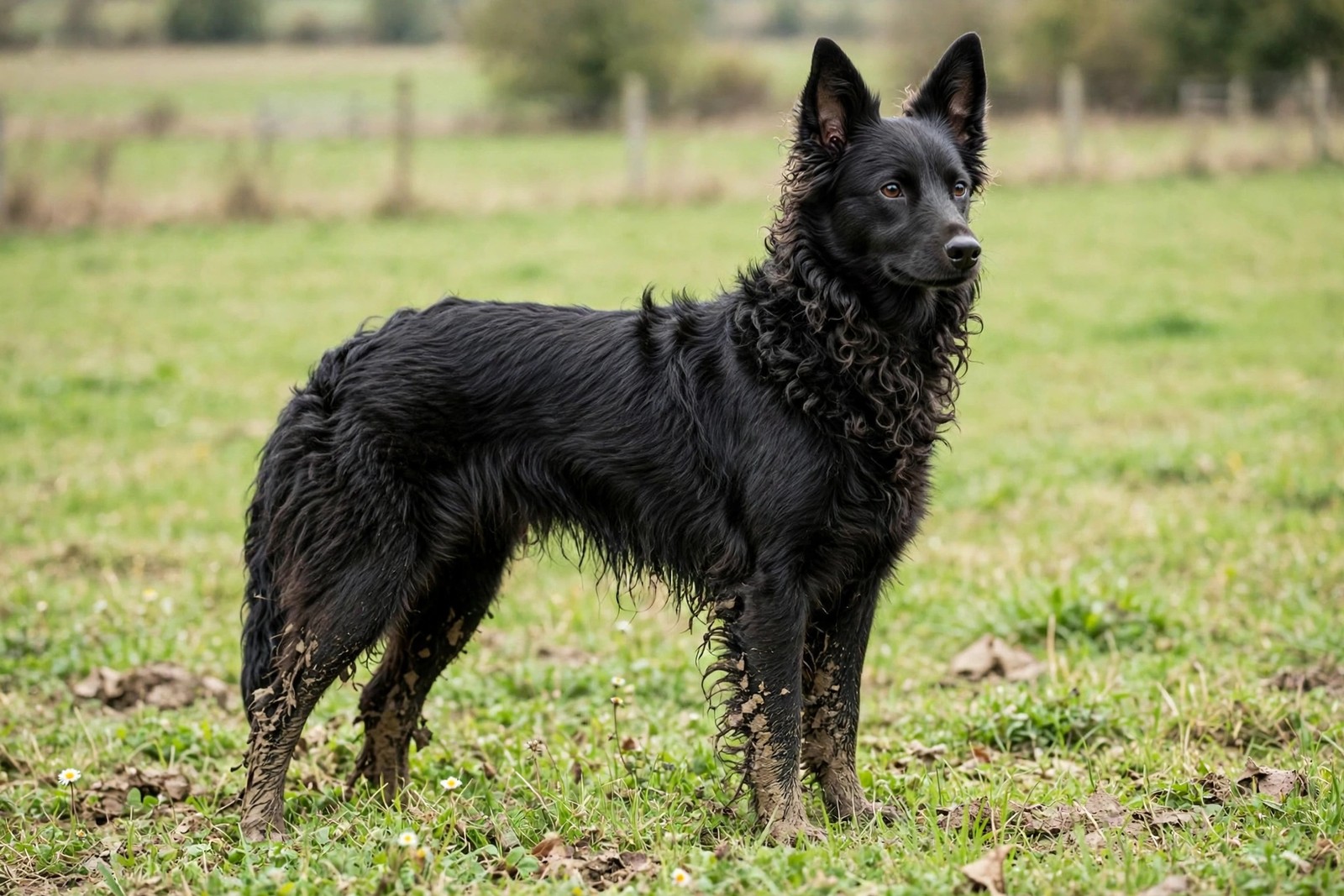
No Haircuts — the Mudi Coat Manages Itself
A Mudi does not need regular haircuts, and trimming the breed into shape would miss the point of its coat entirely. The Mudi is a rare Hungarian herding dog whose hair grows in waves and loose curls of medium length, longer on the backs of the legs and the tail, shorter and smoother on the face and front of the legs. That coat evolved for work in all weather with minimal human help, and it keeps growing to its natural pattern rather than to ever-increasing length. There is no Mudi clip, no breed trim and no styling stage. Owners who clip one usually regret the uneven way the waves grow back. Brushing — occasional, purposeful brushing — is the whole maintenance picture.
The Dirt-Falls-Out Coat, Explained
The Mudi's party trick is a coat that seems to clean itself. Mud picked up on a wet herding field or a muddy walk dries on the wavy hair and then simply flakes and falls away, leaving the dog looking respectable again without a bath. The texture of the hair resists holding dirt and water the way a denser, softer coat would. This does not mean a Mudi never needs washing — a dog that has found something foul to roll in still needs a bath — but it does mean baths can be rare, event-driven occasions rather than a standing appointment. Resist the urge to over-bathe a Mudi to keep it looking 'done'; frequent washing strips the very coat qualities that make the breed low-maintenance, and you will end up with a duller, dirtier-looking dog between washes.
Brushing: Occasional, but Aimed at the Right Spots
How often a Mudi needs brushing depends on the individual coat, but for most dogs a brush-through every week or two is plenty, stepped up when shedding makes loose hair obvious. Use a pin brush or slicker and work through the body coat, then comb the longer hair. The real targets are the friction points where the wavier hair knots: behind the ears, in the armpits, along the belly and through the feathering on the backs of the legs and the tail. Small tangles in those places tease apart easily with fingers if you catch them regularly; ignored for a month, they become the only genuine grooming problem the breed produces. Check the coat after countryside walks too, because wavy hair collects burrs and grass seeds that should come out the same day.
Skin and Coat Watch-Outs for a Low-Fuss Breed
Because Mudi owners rightly relax about grooming, build the health check into the brush-throughs you do have. Part the waves and look at the skin on the back, belly and behind the ears. Watch for flaking, red or irritated patches, tangles pulled tight against the skin, or a Mudi that starts scratching persistently, chewing its feet or shaking its head when it previously did none of those things. Grass seeds worked into the coat can lodge between toes and in ears after summer walks, so feel carefully through the feet and ear fringes after fields. Sore or broken skin, spreading hair loss, or itching that continues once tangles and debris are cleared should go to your veterinarian, with a note of when you first noticed the change.
Light Duties Still Benefit From Being Listed
A Mudi's grooming list is short — an occasional brush-through, a mat check in the friction zones, a rare bath — and precisely because each item is infrequent, individual jobs are easy to lose track of between household members. KinsLe keeps even that light list honest with Care Teams, where the brush-through and ear-and-paw checks for your Mudi can be assigned to whoever is free and stamped complete with the time, so 'occasionally' never quietly stretches into 'not since spring'.