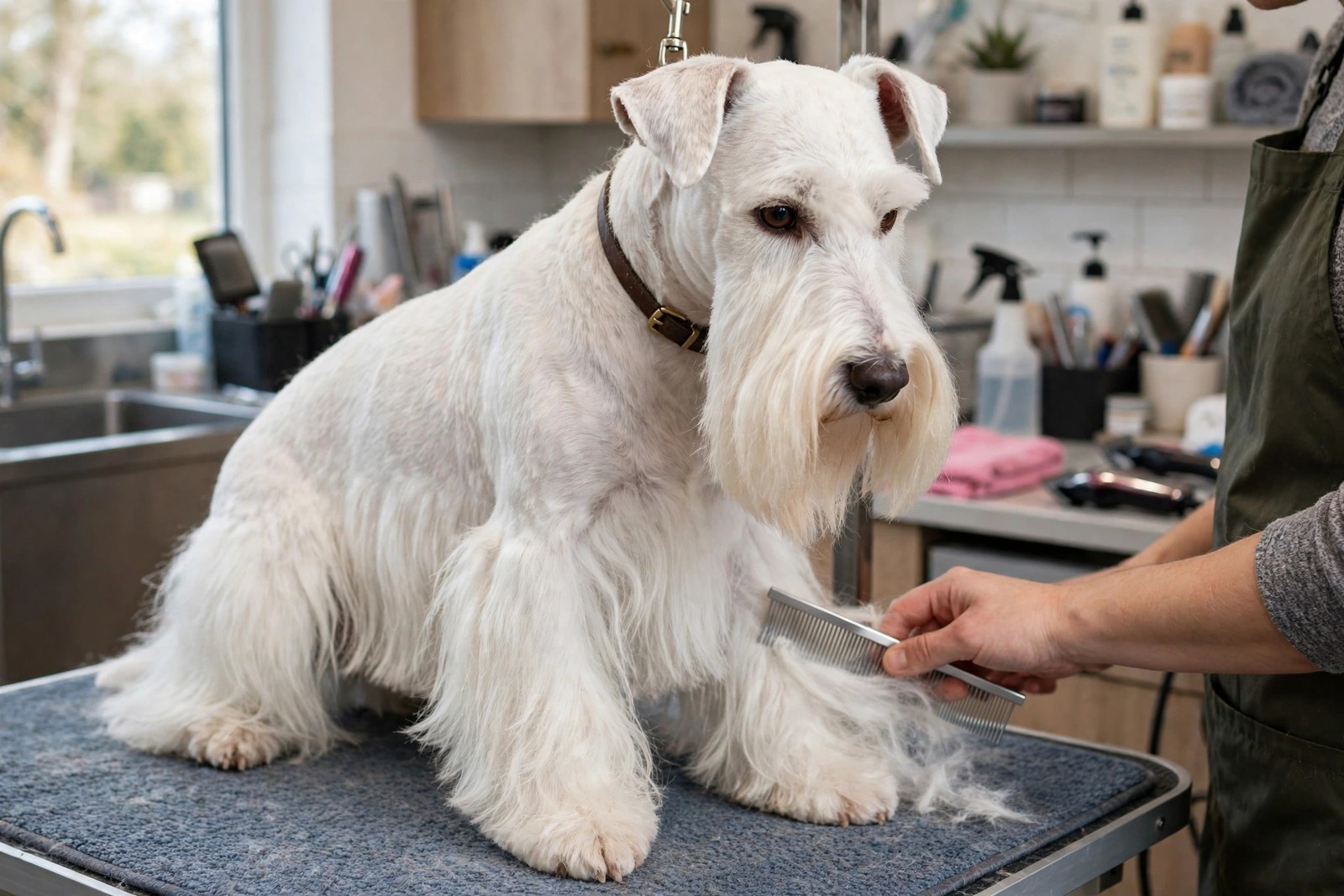
The Exception: A Terrier That Needs the Clippers
Most terrier owners hear that clipping ruins a wiry coat, but the Sealyham Terrier still needs regular coat reduction either way — the choice is only between hand-stripping and clipping. Left entirely alone, the Sealyham's hard topcoat and thick undercoat grow into a heavy, tangled mass that mats at the skin, traps moisture, and hides skin trouble. Brushing stretches the time between grooms and keeps furnishings tidy, but it cannot substitute for taking length off on a regular cycle.
Stripping Versus Clipping for a Pet Sealyham
Hand-stripping pulls dead wiry hair out by the root so fresh harsh coat grows in, preserving the breed's crisp texture and the clean white color at its brightest. It is slower and usually costs more, and it is the method behind the classic Sealyham outline of longer skirt and furnishings. Clipping, the common pet choice, is faster and perfectly acceptable for a companion dog, with one known trade-off: over time the coat grows back softer and may look slightly less brilliant white, because cut hair leaves the fine undercoat more prominent. Either route is legitimate — what is not optional is the regularity.
Most pet Sealyhams are booked every four to eight weeks, adjusted to how fast the individual coat grows and how long the owner likes it kept.
The Weekly Work Between Grooms
Between appointments, brush weekly with a slicker and finish with a comb that must pass through to the skin, especially in the furnishings that define this breed: the long beard, the skirt along the belly, and the fuller hair on the legs. Those areas mat first, and a mat discovered at the groomer's often means the furnishings have to be cut shorter than anyone wanted. The beard also needs everyday attention — a wipe and comb after meals and drinking — because a Sealyham's beard holds water, food, and mud and will stain and tangle if ignored.
Check ears during the same session, since hair grows inside the ear canal in this breed and is usually plucked at grooming appointments, and tidy the hair between the paw pads so the dog grips floors properly.
Keeping the White Coat Presentable
A white double coat shows everything, from tear staining near the eyes to beard discoloration and mud carried in the skirt. Regular bathing timed with grooms helps, but over-bathing between appointments dries the skin under a dense coat, so spot-clean the beard and legs instead and save full baths for the grooming cycle. Dry furnishings thoroughly and comb them while damp — Sealyham leg hair felts quickly as it dries if it is left to its own devices.
Skin Checks Hidden Under a Heavy Coat
Because so much coat covers a compact dog, part it to the skin during weekly brushing and look for redness, lumps, or a greasy feel, particularly in the armpits and groin where mats pull tightest. A Sealyham scratching persistently, developing odor that a bath does not fix, or losing coat in patches should see a veterinarian rather than simply being booked in sooner, since skin disease advances quietly under this much coverage.
One Schedule the Whole Household Can See
Sealyham care fails when the groom is booked late and the furnishings mat in the gap, so visibility matters more than memory here. In KinsLe, Care Teams can carry the clipping or stripping appointments alongside the weekly brush-outs and daily beard care as separate assigned duties, each timestamped on completion, so nobody assumes someone else handled the week.