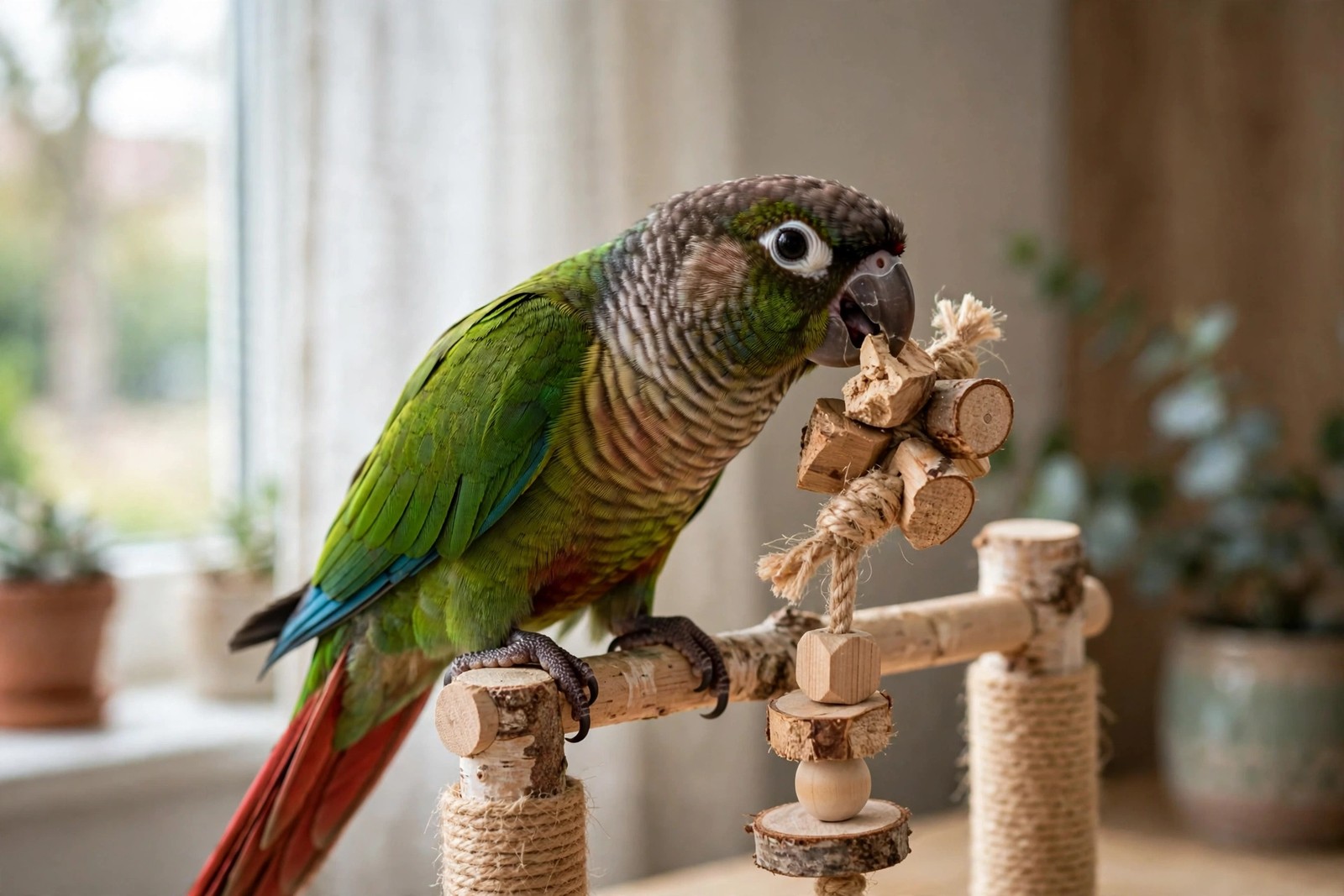
For most pet birds, the honest answer is no. A beak is living, growing keratin over bone, and a healthy bird wears it down at roughly the rate it grows. Chewing wooden toys, cracking seed, gnawing a mineral block, wiping the beak on a rough perch after meals, and grinding the upper and lower parts together at rest all file it down a little at a time. If your budgie, cockatiel, or conure is eating comfortably and the beak looks smooth and symmetrical, there is nothing to trim and no schedule to keep.
How a Healthy Beak Maintains Itself
Watch what your bird already does with it. Parrots and smaller pet birds spend a large share of their waking hours destroying things — soft wood, balsa, cork, woven fibre, and cuttlebone all give the beak edges real work. Natural wood perches of varied thickness add friction every time the bird wipes food from its beak or shuffles along the branch. A bird with too little to chew is the one whose beak may start to outgrow its wear, which is why providing fresh chew material regularly is the closest thing to beak maintenance most owners ever need to do. Rotate toys before they are reduced to splinters, replace a worn mineral block, and the beak generally looks after itself.
Signs the Balance Has Been Lost
Look for changes from your own bird's normal shape rather than a universal measurement. Warning signs include a tip that keeps lengthening and begins to curl or hook past the lower beak, the two parts no longer meeting evenly so the beak looks crossed or offset to one side, flaking that goes beyond light surface peeling, cracks, a soft or spongy feel, and any change in how the bird handles food — dropping seed, struggling to crack a familiar shell, or favouring soft foods it previously ignored. A bird that stops chewing its toys deserves attention too, because reduced chewing and overgrowth can feed each other.
Why Trimming Is a Vet Job, Not a Home Job
A beak is not a fingernail. It contains bone, nerves, and a blood supply, and the living portion extends further toward the tip than most owners expect, especially in a beak that has overgrown. Cutting or filing into that tissue causes pain and bleeding, and reshaping an overgrown beak often needs gradual correction over more than one visit rather than a single cut back to normal length. Just as importantly, overgrowth sometimes travels with an underlying health or nutrition problem, or with an old injury, so an avian vet will look at the whole bird — weight, diet, droppings, and condition — rather than simply shortening the tip. If you are ever unsure whether what you are seeing is normal wear or genuine overgrowth, a photograph sent to your vet clinic is a sensible first step.
What You Can Do at Home
Your job is provision and observation: keep chewable toys and a mineral block available at all times, offer a varied diet your vet is happy with, glance at the beak during your normal daily handling, and compare its shape month to month. Never attempt to file, clip, or reshape a beak yourself, and never let an untrained helper do it either.
Keeping a short dated note and a clear side-on photo in KinsLe's Pet Passport after each vet visit means the next check starts from evidence of how your bird's beak actually looked last time, not from memory.