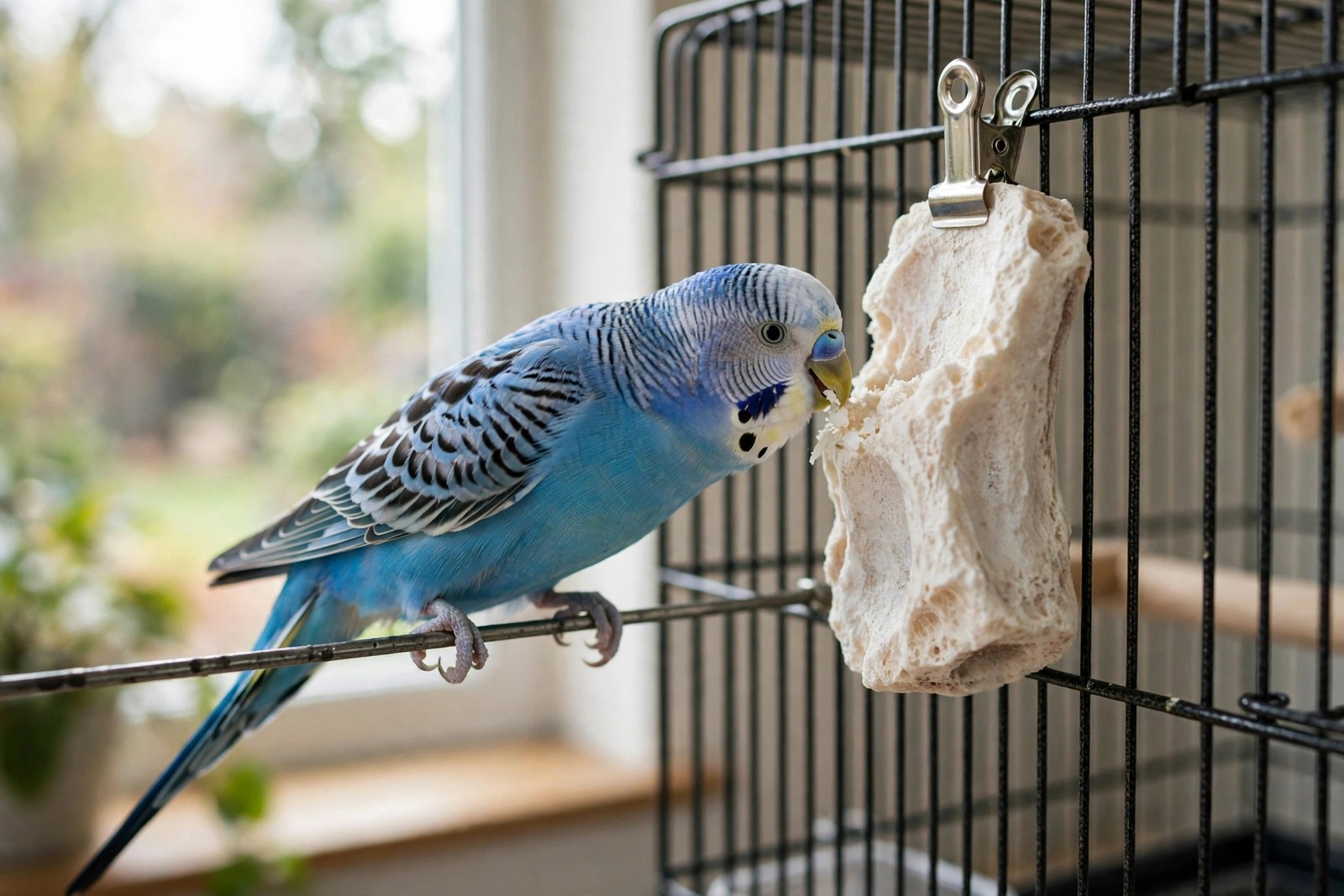
For most budgies, yes: a cuttlebone is worth having in the cage at all times. A cuttlebone is the internal shell of a cuttlefish, and its soft, chalky layers give a budgie two things in one object. It is a self-serve source of calcium and trace minerals that the bird scrapes off in tiny amounts as needed, and it is a working surface that helps keep the beak smooth and evenly worn as the bird chews. It is cheap, long-lasting, and actively used by most budgies, which is why it has remained a cage staple for generations.
Who Needs It Most
Egg-laying hens draw heavily on calcium to form shells, so a laying or recently laying female should never be without one. Growing youngsters building bone also use it steadily. Diet changes the picture too. A budgie eating mostly seed gets an unbalanced mineral intake, because seed is low in calcium, so the cuttlebone fills a genuine gap. A bird eating a complete formulated pellet as its main diet already receives measured calcium, and may visit the cuttlebone mainly for beak work and occupation; that lighter use is fine, and the bone should still be offered rather than removed. A mineral block serves a similar mineral purpose and some birds prefer one over the other, so offering both is reasonable in a larger cage.
Fitting and Looking After It
Mount the cuttlebone inside the bars near a favourite perch, using the wire holder or clip it comes with, with the softer, more textured side facing the bird so the beak can scrape it easily. Position it where droppings from a higher perch will not rain onto it. Check it weekly and replace it when any of these apply:
- It has been gnawed down to a thin, fragile shell of its original thickness.
- The surface is stained with droppings or soaked with bathing water, since a damp, dirty bone can harbour mould.
- It has fallen into soiled bedding or cage-floor waste.
- It smells musty or shows dark spotting, in which case remove it at once rather than rinsing and reusing it.
A fresh cuttlebone usually lasts one budgie several weeks, but a keen chewer, especially a hen, can work through one noticeably faster, which is a reason to check rather than rely on a calendar guess.
What a Cuttlebone Does Not Do
It will not correct a beak that is already overgrown, flaking badly, or growing crooked, and it will not fix a diet that is otherwise unbalanced. A budgie who ignores the bone completely, crumbles it without eating any, or suddenly chews it obsessively may be telling you something about diet, boredom, or breeding condition. Persistent beak problems, soft or shell-less eggs, weakness, or a bird sitting fluffed and quiet are reasons to see an avian vet promptly rather than simply adding a second cuttlebone.
Offer it, mount it well, and replace it before it becomes a dirty sliver, and this simple object quietly covers calcium, beak care, and occupation in one place. KinsLe Care Teams makes that easy to sustain by letting you assign the weekly cuttlebone check to whoever cleans the cage, with a timestamped record showing it was actually done.