
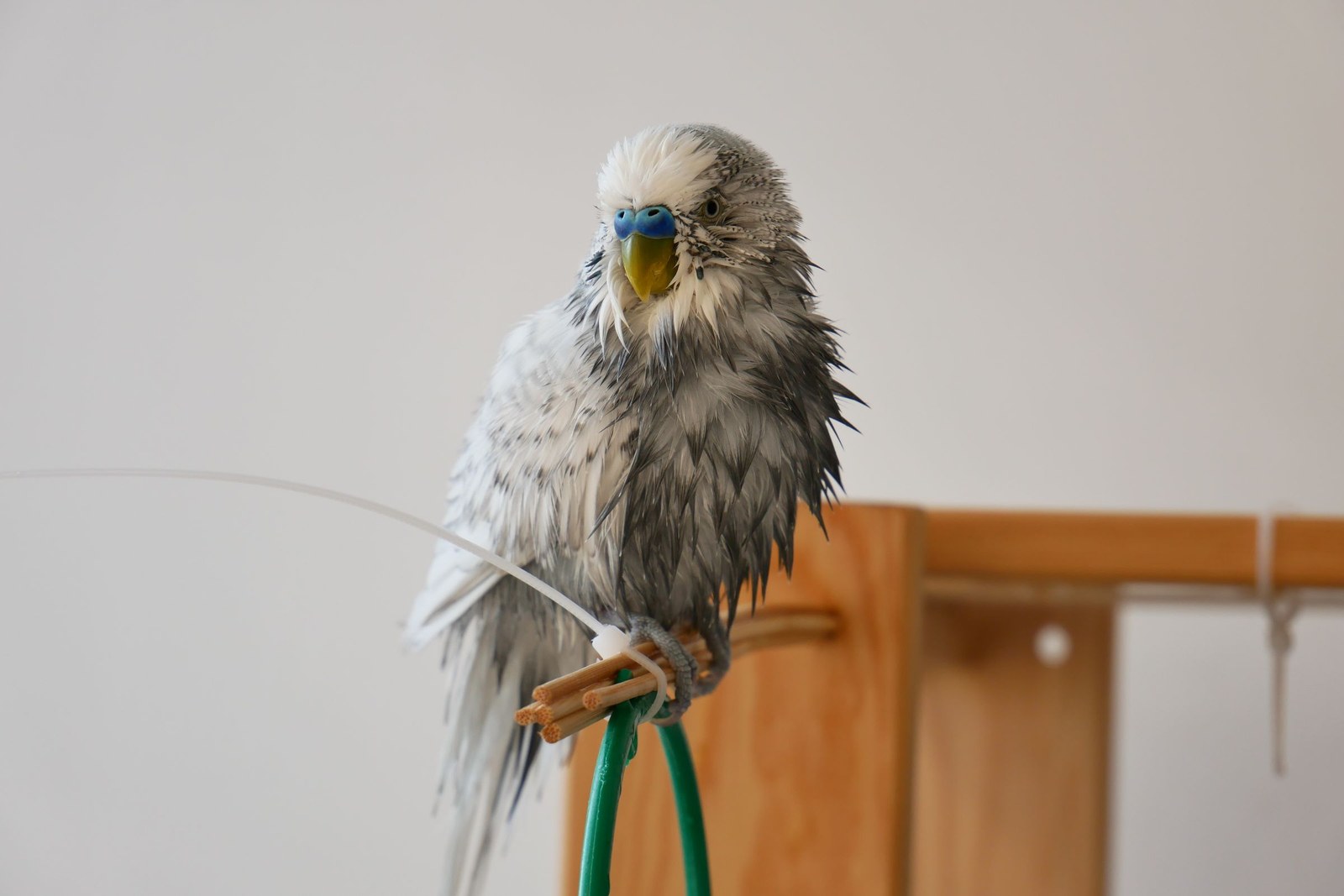
Most budgies do not strictly need you to bathe them — but most love bathing when it is offered their way, and regular bathing helps keep feathers in good condition, encourages preening, and can ease the itchiness of a molt. The key word is offer: a shallow dish of clean water, a gentle mist, or wet leafy greens to roll in, with your budgie free to choose. A bird that hops in happily is bathing; a bird being sprayed while it flees is just getting wet and stressed.
The Three Baths Budgies Choose From
Every budgie has a preference, and finding it is half the fun:
- The shallow dish. An inch of lukewarm water in a wide, heavy dish on the cage floor or clipped to the bars. Many budgies start with tentative dips, then graduate to full splashing. Replace the water the moment it is soiled — birds drink from whatever is in front of them.
- The gentle mist. A clean spray bottle used only for water, misted above the bird so droplets fall like rain. Some budgies spread their wings and lean in; others hate it. Let the first reaction decide.
- The wet greens. A plate of soaked romaine, kale, or herbs. Rolling in wet leaves is deeply budgie behaviour, and shy birds that refuse dishes will often bathe this way — and snack while they are at it.
How Often, and When
Offer a bath two or three times a week in normal weather, and more often during a molt, when pin feathers make birds itchy and frequent bathing softens the sheaths. Bathe in the morning or early afternoon so your bird is fully dry before bedtime — a wet bird in a cool, drafty room can chill. In winter, bathe less often and only in a warm room. Never use soap, shampoo, or feather sprays unless an avian vet has specifically advised it; plain water is all a healthy budgie needs, and detergents strip the natural condition of feathers.
Reading the Response
Happy bathing is obvious: fluffing, chirping, wing-flicking, and returning for more. A bird that retreats to the far perch, flattens its feathers, or goes silent is declining — remove the bath without fuss and try another style another day. Never chase a budgie with a spray bottle “because it is good for him.” Bathing is enrichment, and enrichment the bird cannot escape stops being enrichment. Also supervise dish bathing for very young or weak birds, and keep water shallow — an inch is plenty for a bird a budgie's size.
Bath-Day Hygiene
Wash bath dishes with the daily food and water dishes, since a bird that bathes in it also drinks from it. Use a dedicated misting bottle that has never held cleaning chemicals, and refresh its water regularly rather than letting it sit for weeks. After a splash session, a quick wipe of the cage floor keeps things fresh.
Keeping Bath Days on Schedule With KinsLe
It is easy to mean to offer baths and then forget for two weeks. KinsLe's Care Teams fix that: assign feeding, walks, medications, and grooming duties — including bath and misting days for your budgie — to household members, with timestamped completions so everyone can see the bath actually happened. Feather care lands on a regular rhythm instead of good intentions. Care Teams on KinsLe turn bath days into named assignments — Tuesday misting for one helper, a Saturday dish refresh for another — each completion timestamped, and his feather routine never relies on memory.