
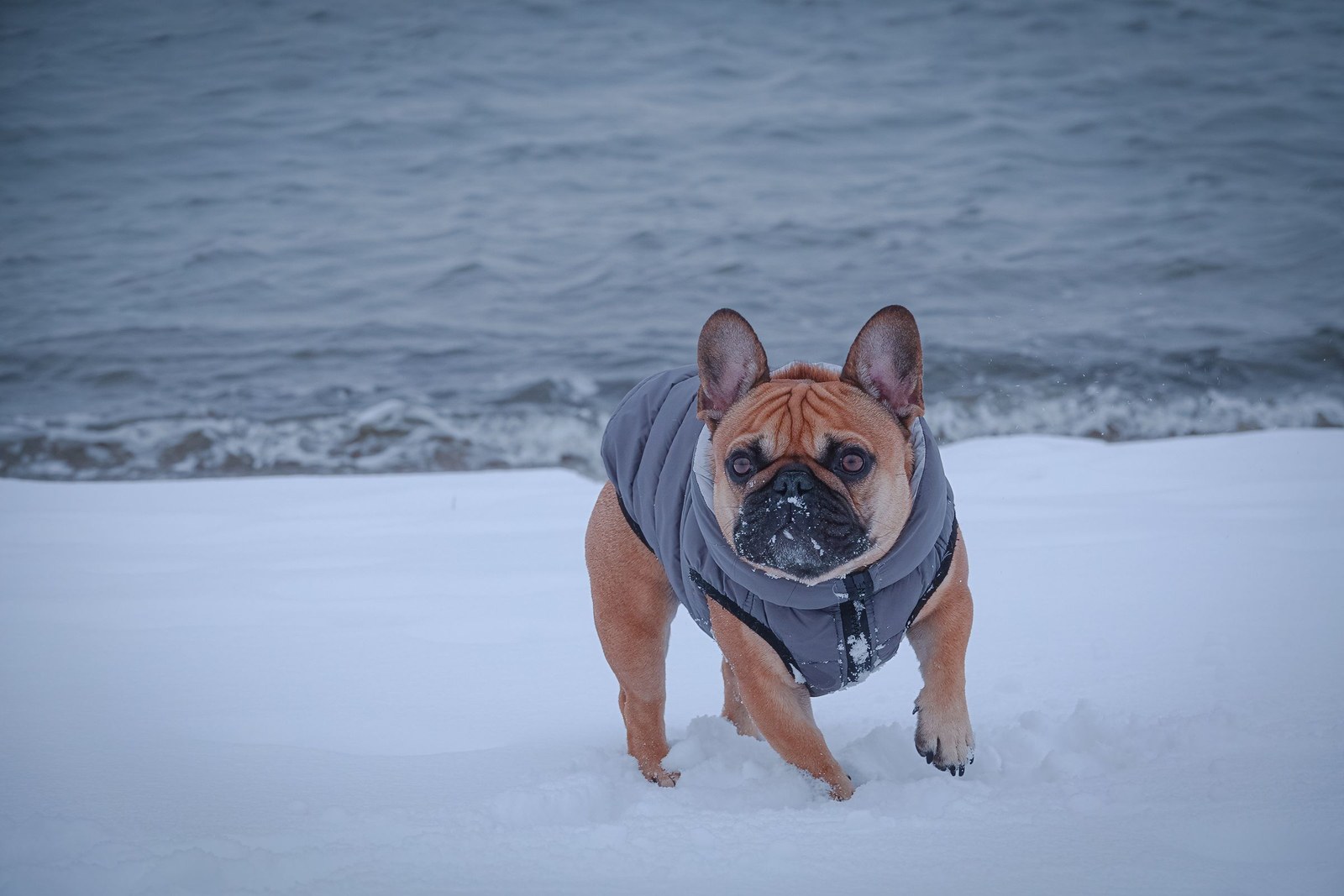
Yes — winter grooming is different, mostly in the details. Coats grow thicker and mat more easily under collars and coats, road salt and grit need wiping off paws after every walk, and indoor heating dries skin out. Most dogs also do fine with slightly less frequent bathing in winter, as long as brushing keeps up. Adjust the routine to the season and your dog stays comfortable instead of itchy, matted, and salt-sore.
Brushing a Thicker Winter Coat
Many dogs grow a denser coat as temperatures drop, and thick fur hides tangles until they are proper mats. Keep brushing on the regular schedule — a few times a week for most coats, more for long or double coats — and focus on the spots winter gear rubs: under the collar, beneath a harness, and where a dog coat's straps sit. Those friction zones felt quickly and are painful to brush out later.
If you use a dog coat on walks, take it off promptly indoors. Leaving a coat on a warm dog compresses damp fur and encourages exactly the matting you are trying to prevent, and overheated indoor dogs get restless and itchy besides.
Salt, Ice, and Winter Paw Care
Winter paws take a beating. De-icing salt irritates and dries pads and can sting in small cracks, so wipe or rinse paws after every walk on treated sidewalks — and do it before your dog licks the salt off themselves, since ingesting much of it can upset their stomach. For dogs who tolerate them, booties are the cleanest solution on heavily salted routes.
Between the toes, check for ice balls on snowy walks. They build up in the fur there, pull painfully, and make dogs hop mid-walk. Trimming the fur between pads short, keeping walks shorter in extreme cold, and a paw balm applied before and after outings all help. Cracked, sore pads that are not improving deserve a vet visit rather than more home balm.
Dry Skin and Bathing Less Often
Central heating dries the air, and many dogs get flaky, itchy skin in winter because of it. Bathing a little less often helps — every few weeks is plenty for most dogs in winter, using a gentle, dog-specific shampoo and lukewarm water, rinsed thoroughly since leftover shampoo is itself an itch trigger. Dry your dog completely after wet walks and baths; a half-dry thick coat stays chilled and tangles faster.
If flakes come with redness, odor, hair loss, or scratching that keeps your dog awake, that is beyond seasonal dryness — book the vet rather than switching shampoos repeatedly.
Keeping the Whole Household on the Same Routine
Winter care has lots of small steps — paws wiped, coat off, drying done properly — and they get skipped when only one person knows the routine. The winter steps themselves — paw wipes after salted sidewalks, coats off indoors, thorough drying — stay household habits passed on by showing, not by a feature. What KinsLe's Family Sharing adds is profile access: a grandmother watching the dog for a weekend, or a teenager in the family on evening walks, can be given access to that profile if you choose them.