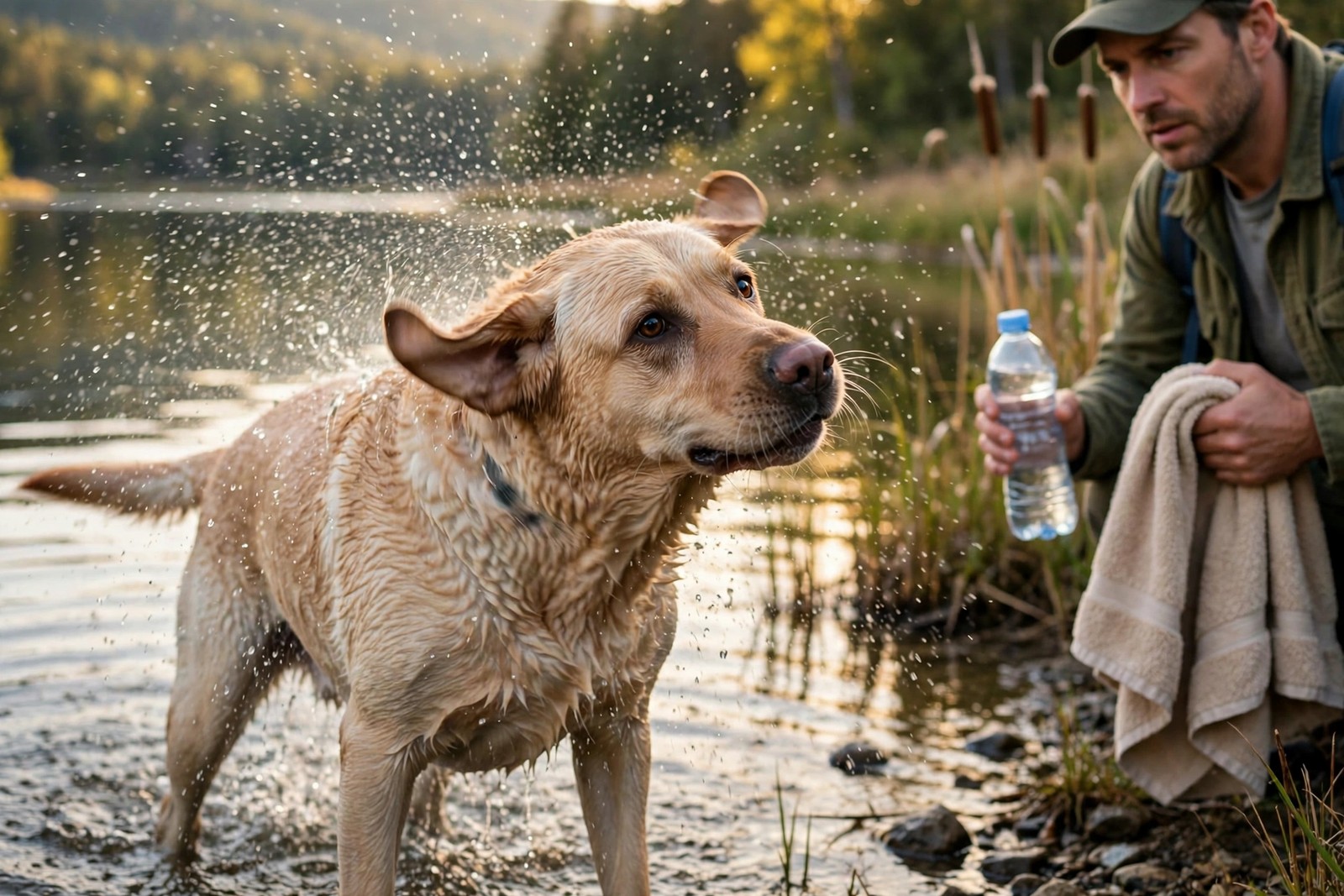
Yes — a dog who swims in lakes and rivers should have a prevention plan that reflects that habit, because freshwater exposure adds risks that a garden-only dog rarely meets. Tell your vet where and how often your dog swims, because regional risks vary and the right cover for one area may miss the point in another. The goal is not alarm. The goal is a short, specific plan plus a simple after-swim routine that catches problems while they are still small.
What to Discuss With Your Vet
Ask whether any vaccination is advised for dogs with regular water contact in your area, and let your vet set that schedule and record it. Raise parasite prevention too, because wet ground, wildlife, and other dogs at popular swim spots change exposure. Mention your dog's breed and ear shape, since floppy ears and narrow ear canals trap moisture after swimming. If your dog drinks lake water, has had repeated ear trouble, or has a weakened immune system, say so plainly, because each fact can change the advice. Ask what after-swim ear care, if any, suits your dog rather than copying another owner's routine.
Water Your Dog Should Never Enter
Keep your dog out of water that carries a visible blue-green scum or paint-like streaks, water that smells foul, and water posted with a local warning. Blue-green algae can make a dog seriously ill, and signs can develop quickly after drinking or licking contaminated water from the coat. Still, warm, slow-moving water deserves extra caution in hot weather, and fast or deep river water adds a physical danger that no prevention can offset. If your dog may have swallowed suspect water and then vomits, drools heavily, staggers, or becomes weak or unusually tired, contact a vet immediately rather than waiting for the picture to clarify.
The After-Swim Routine That Prevents Most Trouble
Rinse the coat and paws with clean water to remove mud, algae residue, and irritants, and check between the toes for grass seeds, small cuts, and trapped grit. Dry the ears carefully with a soft cloth on the parts you can reach without probing deep into the canal. Look over the skin as you towel, especially in the armpits, groin, and under the collar, where moisture lingers. Offer clean drinking water so a thirsty dog is less tempted by the next puddle or shoreline. Note any swim that was followed by symptoms, with the place and date, because location patterns help a vet judge risk.
Signs to Watch for in the Following Days
In the two or three days after a swim, watch for loose stools or vomiting, repeated head-shaking or ear scratching, a sour smell from an ear, red or itchy skin, hot spots, coughing, and tiredness that does not lift with rest. A single mild stomach upset after a big day may settle, but repeated vomiting, blood in stools, a painful or smelly ear, collapse, or marked lethargy needs a vet the same day. Puppies, seniors, and dogs with ongoing health conditions can go downhill faster and deserve a lower threshold for calling.
Keeping Swim-Season Cover Current
Swimming is seasonal for many families, so prevention can quietly lapse during winter and stay lapsed when the warm weekends return. Keep vaccination records, parasite cover dates, ear history, and notes on any water-related illness together, and review them before the first swim of the season. Holding that swimmer's health record in KinsLe's Pet Passport lets a new vet, a boarding kennel, or a house sitter see the water-specific plan without guessing what cover your dog actually has.