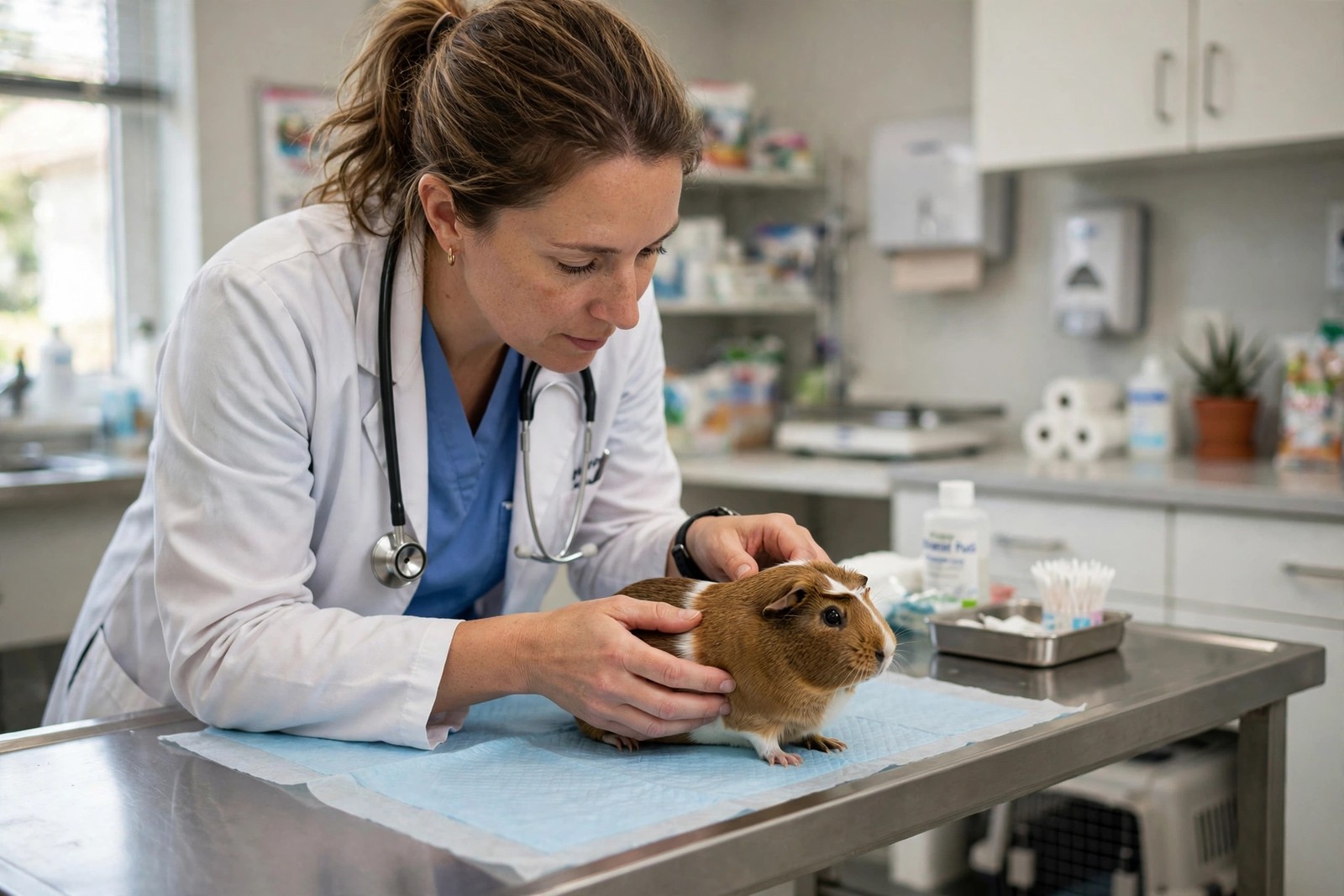
Guinea pigs sit apart from other common pets on this question: vets do not offer them a standard set of jabs across Britain, America, or most of Europe, because the infectious diseases behind those other vaccination programmes rarely threaten this species. (One regional exception exists: some countries vaccinate against a guinea-pig-specific disease in specific circumstances, so a local vet's word governs where you live.) What guinea pigs need instead of vaccines is the right preventive routine: a vitamin-C-sufficient diet, parasite checks, and prompt attention to breathing and appetite, because those are the systems that actually fail them.
What Replaces Vaccines in Guinea Pig Prevention
Guinea pigs cannot make their own vitamin C, so a daily supply — through a quality guinea-pig pellet and vitamin-C-rich vegetables like bell peppers — is their closest equivalent of a vaccine: scurvy causes joint pain, poor healing, and immune problems. The rest of prevention is husbandry and observation: quarantine new pigs for a couple of weeks before mixing (respiratory disease and fungal ringworm and mites mostly arrive on new animals), weigh weekly (a falling weight is the guinea pig's earliest illness signal), and learn the two great emergencies — a pig who stops eating (the gut slows dangerously within hours) and laboured breathing or a clicking chest (pneumonia moves fast in this species). Annual vet checks are worthwhile even without jabs to give: teeth, skin, feet, and weight all get a professional once-over.
Working With Your Vet
With no jab to give, a guinea pig appointment earns its keep in other ways. The vet can check teeth that never stop growing for uneven wear, listen to the chest for the effort or noise that points to respiratory trouble, weigh your pig against your own weekly records, and look closely at skin and coat for mites or ringworm. Feet, nails, and eyes all get a trained look as well, and a diet review can catch a vitamin C shortfall before it turns into scurvy.
Bring the observations that make that check count: weekly weights with any downward trend marked, notes on hay and pellet intake, droppings that have changed in size or number, breathing that has become noisy or laboured, and the dates any new pig arrived and finished quarantine. A guinea pig who stops eating, breathes with effort or noise, or loses weight steadily needs a vet the same day — those are the real emergencies in this species, vaccine card or not.
Keep those records between visits as a simple guinea pig log: the weekly weight, appetite and water intake, droppings, breathing, and any symptom with the day it started. A falling weight or a few quiet days of eating less can look like nothing from memory, yet side by side in a log they show exactly when the change began — the detail a vet needs when there is no vaccination history to lean on.
Kept in KinsLe's Pet Passport, that weight log, diet history, and record of each check-up travel as one records packet for your guinea pig, ready to open at any appointment.