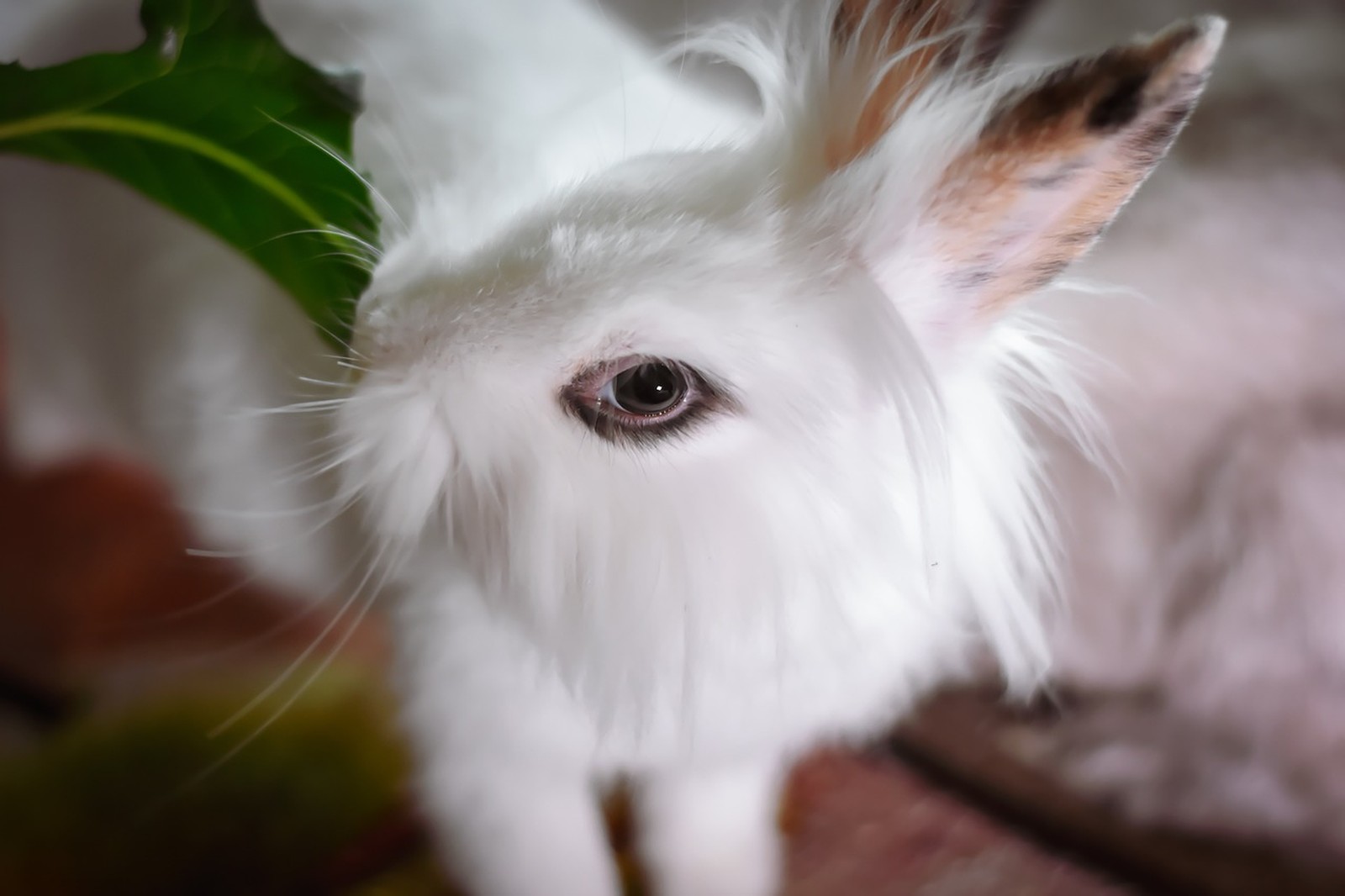
Yes — with long fur, grooming stops being cosmetic and becomes health care. Breeds and mixes with flowing coats, such as Angoras and lionheads, grow wool that tangles within days, traps moisture and dirt against the skin, and comes loose in quantities a rabbit then swallows as she grooms herself. A short daily brush is what stands between that coat and two serious problems: painful matting and a gut slowed by swallowed wool.
Why Long Fur Is Risky for Rabbits
Rabbits cannot vomit, so every hair swallowed has to travel the full length of the gut. In a short-haired rabbit, a hay-rich diet usually keeps that hair moving. In a long-haired rabbit, especially during a moult, the volume of loose wool can outpace the gut, droppings become smaller, drier, or strung together with hair, appetite fades, and gut slowdown in rabbits becomes urgent quickly. Mats cause their own harm: they pull constantly on delicate skin, hide sores and flystrike risk in warm weather, and a mat around the rear end traps droppings and urine against the body.
A Brushing Routine That Works
Brush most days, in short calm sessions on the floor with your rabbit free to move away and come back. Use a gentle slicker or comb suited to fine wool, and work in small sections, lifting the coat and brushing from the skin outward in layers rather than skimming the surface — surface brushing hides the tangles forming underneath. Support the skin with one hand while the other brushes, because rabbit skin tears easily. Pay extra attention behind the ears, under the chin, around the armpits, and along the rear, where friction builds mats fastest. End before she is fed up, and pair the session with a favourite herb so the brush predicts good things.
Dealing With Mats Safely
Small, loose tangles can be teased apart with your fingers, then combed through from the ends inward. A mat that is tight against the skin is a different job: never pull it, and never slide scissors under it, because rabbit skin tents up into the mat and is frighteningly easy to cut. Work a comb gently between skin and mat over several sessions, or have a vet or experienced rabbit groomer remove severe matting. Check the skin under any mat you clear — redness, sores, or a rabbit who stops eating afterwards needs a vet promptly.
The Rules That Protect Her
Never bathe a rabbit. Immersion risks shock and hypothermia, wet wool mats worse as it dries, and a clean, well-brushed rabbit does not need it; spot-clean a dirty patch with a barely damp cloth instead. Keep unlimited hay in front of her at all times, since fibre is the engine that carries swallowed hair through the gut. Weigh her weekly if you can, and treat dropping appetite, shrinking droppings, or a hunched, quiet posture as a same-day vet call, not a grooming issue. KinsLe's Care Teams helps a shared household keep this coat on track by assigning the daily brush and weekly full check to named people, each task timestamped, so the day nobody brushed her is visible at once rather than discovered as a mat a week later.