
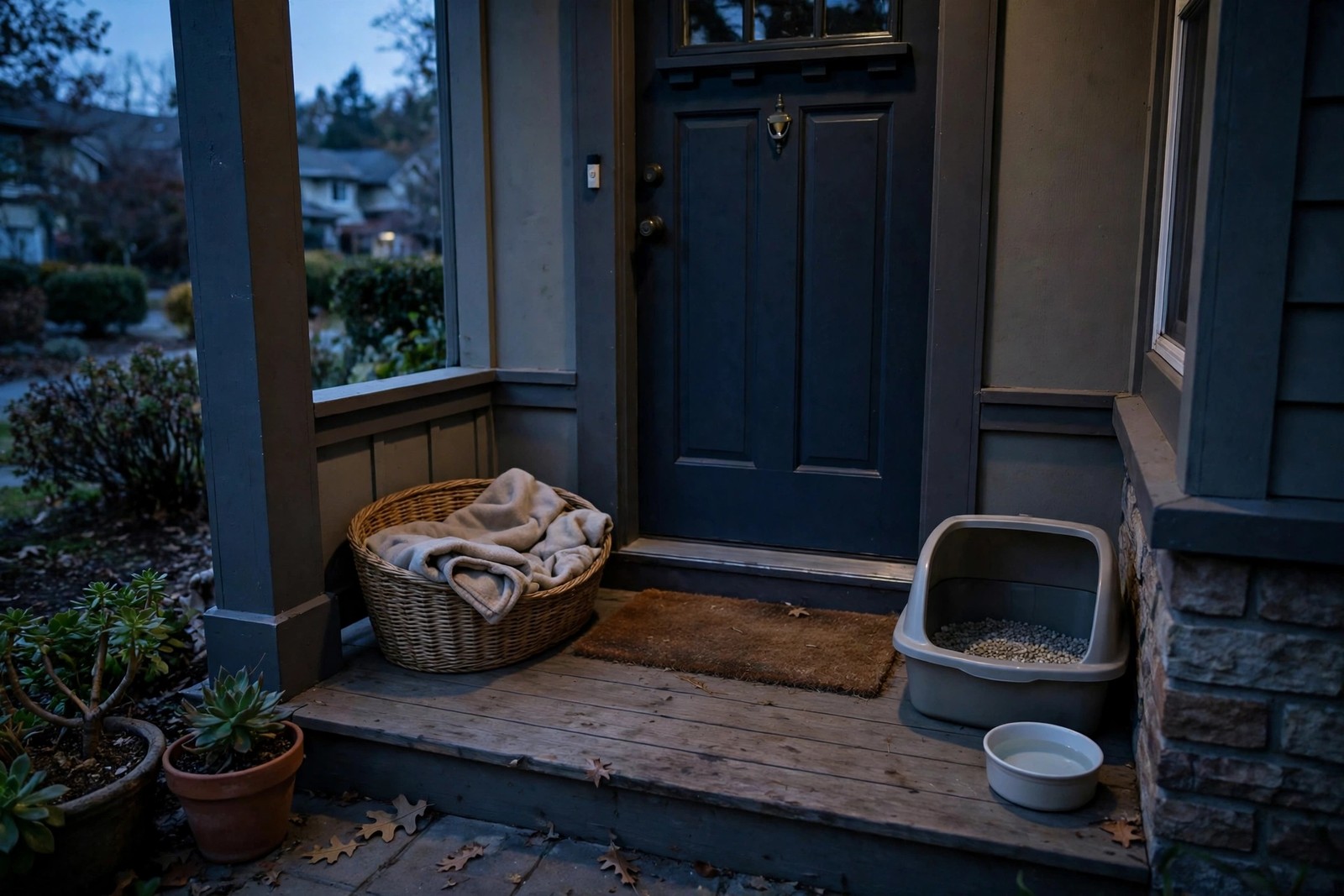
The litter box trick is debated, and it's not the strategy most experienced searchers recommend first. The theory is that a lost cat can smell its own litter from a distance and follow it home, but a dirty litter box can also attract other cats and wildlife whose presence may scare your cat away from the very spot you're watching. Familiar bedding and worn clothing offer the scent benefit without the same drawbacks.
Why the Idea Persists — and Its Limits
The litter box advice survives because scent genuinely matters to cats, and because desperate owners understandably try everything at once — when the cat comes home, whichever trick was running gets the credit. But most lost indoor cats are not wandering miles away navigating by smell; studies of lost-cat behavior and shelter experience consistently find them hiding very close to home, often within a few houses. A cat hiding silently two yards away doesn't need a scent beacon. She needs time, quiet, and a searcher looking in the right small places.
There's also a real downside to weigh: used litter advertises 'a cat lives here' to every roaming tomcat, raccoon, and in some regions coyote in the neighborhood. Strange animals investigating your porch at night can pin your cat deeper into hiding.
Scent Strategies That Are Safer
Put out items that smell like home without announcing a toilet: your cat's bed or blanket, a worn shirt of yours, and her scratching post if it's portable. Place them by the door she escaped from, along with fresh water (food can attract other animals, so monitor it or bring it in overnight). Refresh worn clothing every day or two so the scent stays strong. If she escaped from a window or a specific door, keep that route in mind — cats often try to re-enter the exact way they left, sometimes in the small hours of the morning.
What Works Better Than Scent Alone
Active, close-range searching finds more cats than any passive trick:
- Search at night with a flashlight, sweeping low for eyeshine under porches, decks, and bushes.
- Ask neighbors to check garages, sheds, and crawl spaces — cats slip in and get shut inside.
- Set a humane trap near the escape point if your cat is too frightened to approach, checking it frequently.
- Put up clear flyers with one big photo within a few blocks, and notify shelters.
- Revisit the same hiding spots repeatedly over several days; hiding cats shift and surface.
When Someone Does Spot Her
A sighting only helps if it reaches you instantly and you can coordinate in the moment — where exactly, which direction, is she still there. KinsLe Messenger is the per-pet communications hub on your cat's profile, so a finder who reaches her profile can message you directly and you can respond fast, whether the news comes from a neighbor two doors down or someone across the neighborhood. Speed turns sightings into reunions. KinsLe Messenger gives that neighbor a direct line to you through her profile on KinsLe, so a quiet sighting two doors down becomes a conversation while she is still nearby.