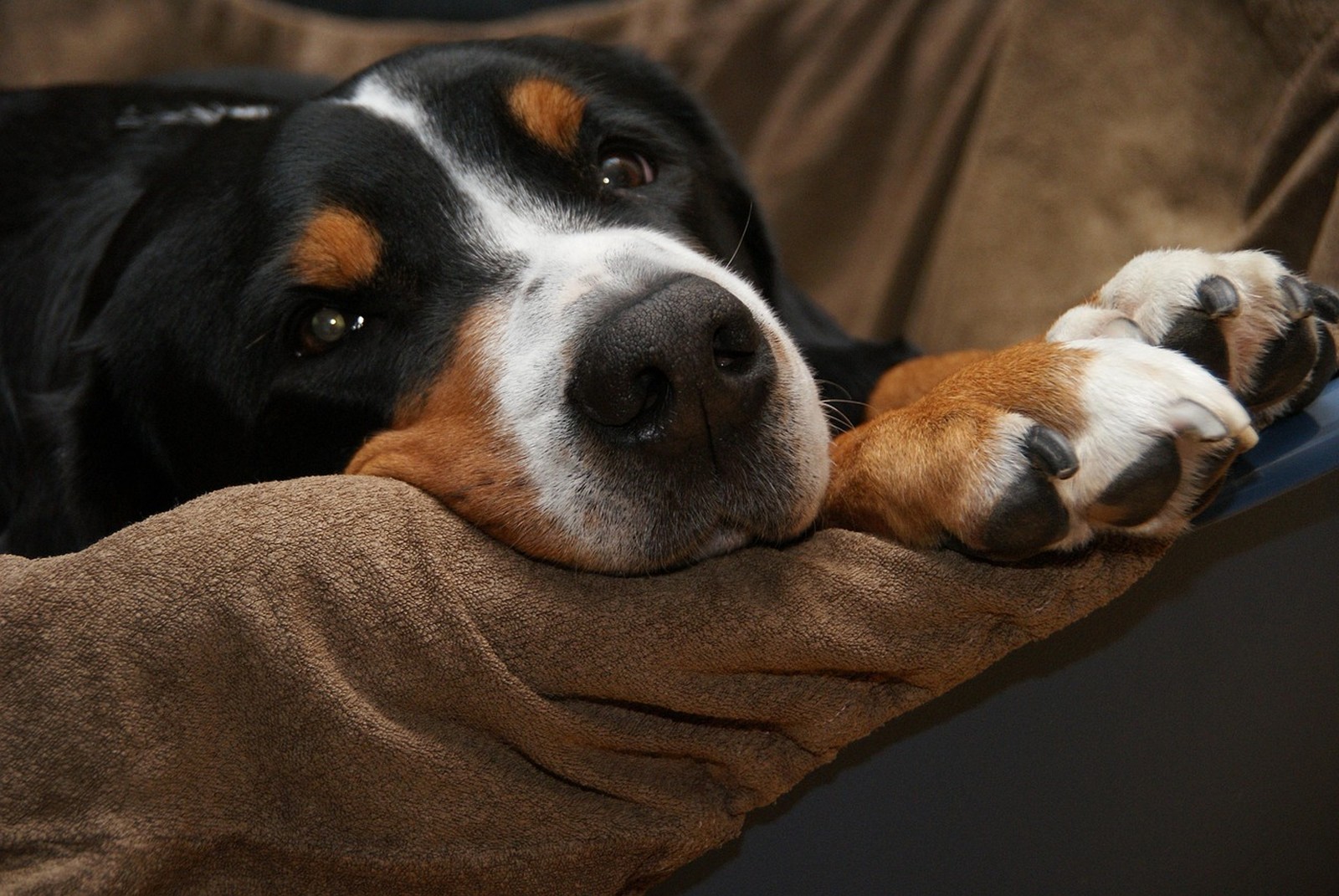
The Adult Swissy at Full Size
The Greater Swiss Mountain Dog is the largest of the four Swiss mountain breeds, developed to pull carts and drive cattle in Alpine farm country. Males stand 25.5 to 28.5 inches at the shoulder and weigh 115 to 140 pounds. Females are noticeably smaller but still substantial at 23.5 to 27 inches and 85 to 110 pounds. The frame is heavily boned and muscular, with a body slightly longer than it is tall, a broad chest, and a level, powerful back built for work in harness.
The striking tricolor coat — black over the body, rich rust markings, and white on the face, chest, and feet — makes the dog's size easy to read at a glance. Unlike fluffier giants, the Swissy's short, dense coat hides nothing: what you see is genuine muscle and bone, which is why fit adults impress people as even heavier than their listed weights.
Growing Slowly Toward 140 Pounds
Swissies are slow-maturing dogs. A male may stand nearly his full height by his first birthday yet look rangy and unfinished, with the deep chest and thick hindquarters still to come. Full adult substance typically arrives somewhere in the second year, and some males keep adding quiet muscle into their third. Owners sometimes worry that a leggy fourteen-month-old is behind schedule; in this breed, he is simply on Swiss time.
That slow growth argues for patience in feeding and exercise. Meals measured for steady rather than rapid gain protect developing joints in a dog destined to carry serious weight, and heavy pulling work, carting, or long repetitive exercise should wait until the frame has finished. Draft sports are a wonderful outlet for this breed — once the dog is fully grown and conditioned for them, not during adolescence.
Daily Life With a Draft-Sized Companion
A Greater Swiss Mountain Dog takes up real household territory. Beds, crates, and vehicle space must be sized for a dog who may outweigh his owner, and the food bowl empties at a giant-breed rate. The breed is generally people-oriented and eager to be included, which at 130 pounds means a constant, affectionate shadow moving through kitchens and doorways. Early training in leash manners, settling on a mat, and greeting people without leaning his full weight against them pays off enormously at adult size.
Grooming is simpler than the size suggests — the short double coat needs regular brushing and sheds noticeably in spring and fall — but bathing a wet, uncooperative 130-pound dog is a two-person event. Teaching a puppy to enjoy the tub, the brush, and paw handling is an investment that returns peace for a decade. Health costs also scale with size, so budget for giant-breed pricing on everything from anesthesia to joint supplements your vet may recommend.
Deciding on the Swissy
This breed fits active families who want a devoted, all-weather working companion and have the space, vehicle, and strength for a true draft dog. It is a lot of animal for small cars, small homes, or owners hoping for a low-energy pet — young Swissies are boisterous and strong long before they are mature.
If the finished dimensions suit your life, you gain a cheerful, loyal heavyweight. When your puppy leaves his breeder, KinsLe's Transferrable Profiles bring his profile along with his records and routines preserved, so his first weeks of care stay documented as he settles in.