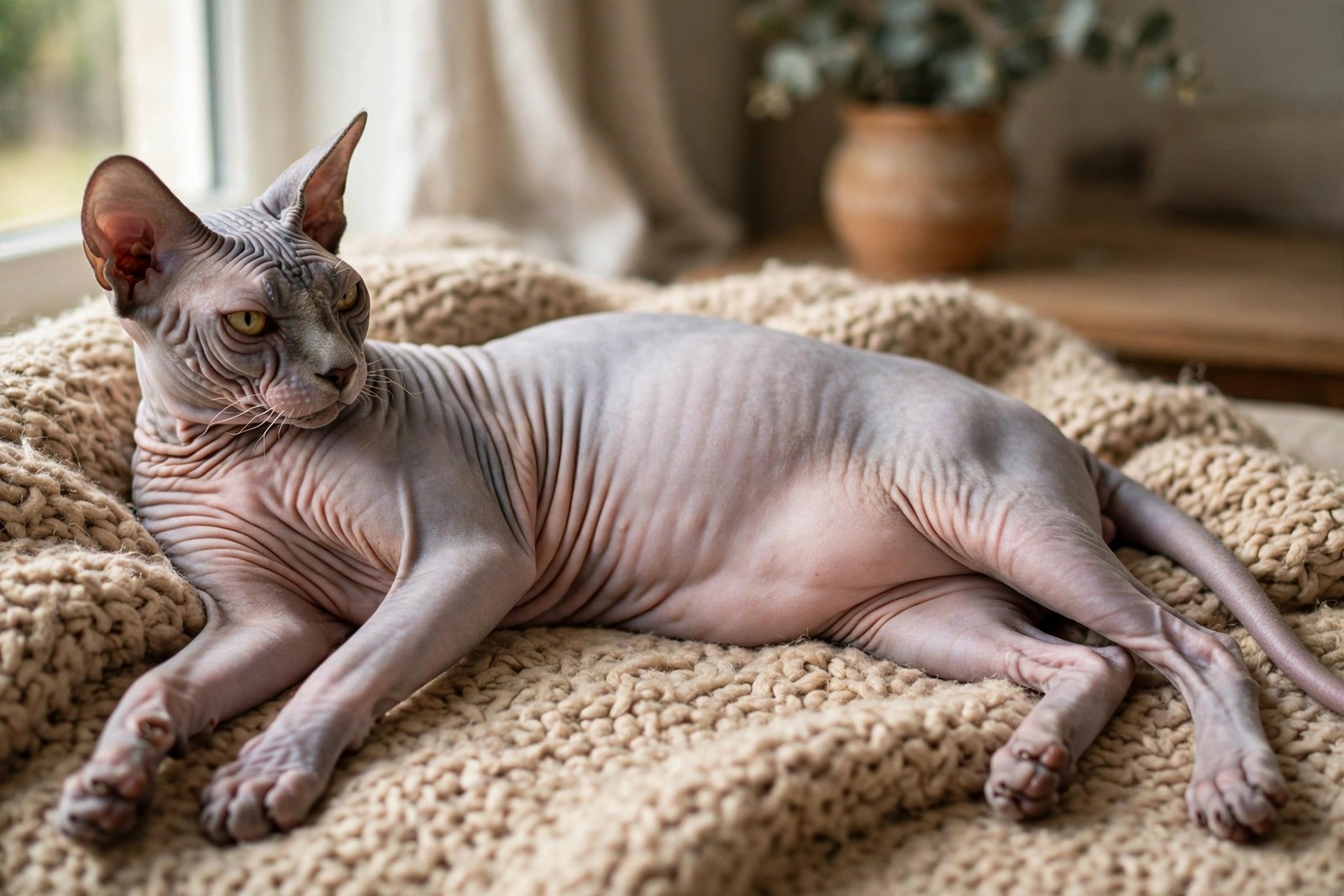
An adult Sphynx is a medium-sized cat, but medium only tells half the story. Most weigh 6 to 12 pounds and stand about 8 to 10 inches tall at the shoulder, yet almost everyone who picks one up says the same thing: this cat feels heavier than expected. That dense, warm heft is the breed in miniature — compact on paper, substantial in your arms.
Adult size in numbers
Females typically settle between 6 and 9 pounds, while males more often land between 8 and 12 pounds. Height and length stay moderate, with a long, muscular body, a deep chest, and long legs that can make a Sphynx look taller than a rounder cat of the same weight. Individual cats fall outside the middle of the range, so judge yours against body condition rather than the scale alone: ribs should be easy to feel with a light touch, visible as a soft outline rather than sharp angles, and the waist should still show behind the breed's characteristically rounded belly. That pot-bellied look is normal for a healthy Sphynx and is not, by itself, a sign of overfeeding.
Why a Sphynx feels heavier than it looks
A Sphynx carries very little of what makes other cats look bulky. There is no thick coat adding visual volume — only fine down over wrinkled, suede-like skin — so the size you see is almost all cat. Under that skin is solid muscle over medium bone, especially through the shoulders, hips, and legs. The result is a cat that photographs as slender and handles as dense. Owners notice it most on the lap: a 9-pound Sphynx settles in with the weight of a much larger animal, and because the skin is warm to the touch, the cat feels like a small, living hot-water bottle.
From kitten to adult: how growth unfolds
Sphynx kittens start tiny, usually only a few ounces at birth, and gain steadily. By about 8 weeks most weigh around 2 pounds, and by 12 to 16 weeks many are in the 3 to 4 pound range, already showing the breed's large ears, long limbs, and wrinkled skin in miniature. Growth is fastest in the first six months, when a kitten may reach roughly half to two-thirds of adult weight. From six months to a year the pace slows: legs lengthen first, then the chest deepens and muscle fills in. Most are close to adult height and weight by about 12 months, though many keep adding quiet muscle until 18 months or a little beyond. A sudden stall, rapid gain, or loss is easier to spot on this breed than on a coated cat, so weigh monthly during the first year and note appetite and energy alongside the number.
What this size means for skin, ears, and daily care
Size shapes care in practical ways. A 6 to 12 pound cat is easy to lift, carry, and bathe in a sink or small tub, which matters because a Sphynx needs regular bathing: with no coat to absorb oil, skin oils build up and transfer to bedding and favorite sleeping spots. Those very large ears also collect wax and oil and usually need gentle weekly checks and cleaning as your veterinarian advises. The same bare skin that shows muscle so clearly offers no insulation, so a Sphynx feels the cold, seeks warm laps and sunny spots, and can sunburn in strong light. Metabolism runs high to hold body heat, so many adults eat more than a furred cat of identical weight — let body condition, not surprise at the food bowl, guide portions. Standard medium-cat carriers, trees, and litter boxes fit well; budget instead for washable bedding and warm resting places.
A Sphynx that stays in its healthy range, keeps good muscle through the back and legs, and holds a steady weight month to month is at its correct size, whatever the exact number. Keeping each weigh-in in KinsLe's Pet Passport, next to vet notes and vaccine records, turns that famously visible growth and adult condition into a clear history you can pull up in seconds.