
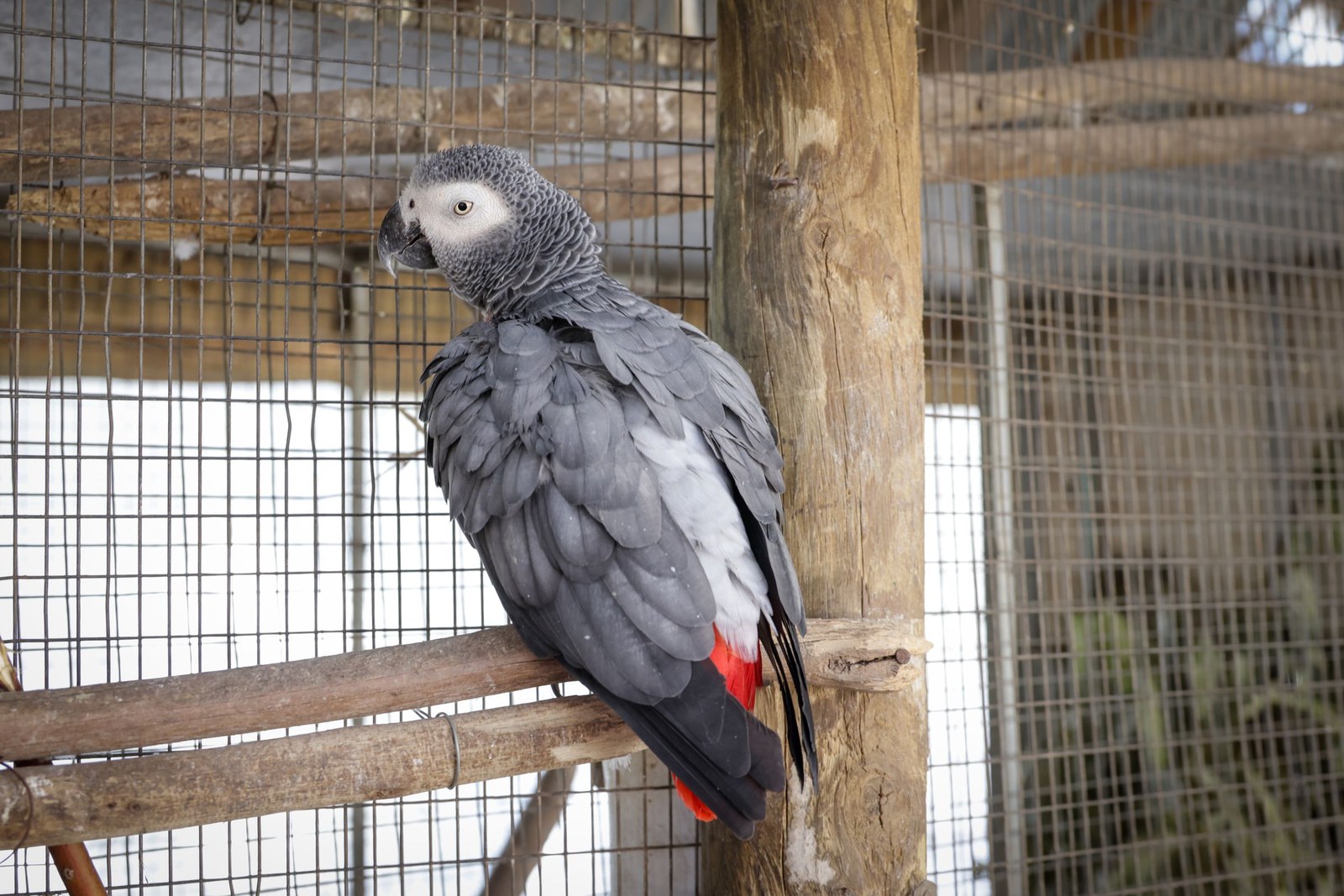
Your parrot's cage should be big enough for it to fully stretch and flap both wings at the same time without brushing the bars, toys, or perches — and for most species, that means going noticeably bigger than the minimum size printed on the box. A cage is not just a container; it is where your bird sleeps, eats, plays, and spends every hour you are at work, so treat it like a small room rather than a parking spot.
The wing-span rule
A practical starting point is a cage at least one and a half times your bird's wingspan in width, with enough depth and height for a full wing flap and a comfortable tail. A budgie or cockatiel can thrive in a wide flight cage around 30 inches across, while a medium parrot like a conure or African grey needs substantially more interior volume. At the top end, macaws and large cockatoos need genuinely large cages — often 40 inches wide or more — plus an out-of-cage play stand, because no indoor cage fully replaces time out.
Width matters more than height for most parrots. Birds fly horizontally, not vertically, so a tall, narrow cage that looks impressive in a showroom often gives less usable space than a shorter, wider one.
Bar spacing and bar strength
Size is only half the equation. Bar spacing must suit the bird: too wide, and a curious parrot can push its head through and get stuck; too narrow on a big bird's cage usually means flimsy bars that a powerful beak can bend.
- Small birds such as budgies and cockatiels: spacing around half an inch to five-eighths of an inch
- Medium parrots such as conures and greys: roughly three-quarters of an inch to one inch
- Large macaws and cockatoos: one to one and a half inches, with thick, welded bars
When in doubt, choose the smaller spacing within the safe range for your species, and check that doors latch securely — clever parrots learn to open simple clips surprisingly fast.
Fitting the inside without crowding it
A big cage filled to the brim is a small cage in disguise. Leave a clear flight or flapping zone in the middle, place perches at a few heights rather than filling every level, and hang toys along the sides where they entertain without blocking movement. Food and water cups should sit where your bird can reach them without squeezing past a toy. If your parrot has to sidestep along a perch to get anywhere, the layout — not the cage — needs rethinking.
When to size up
Young birds grow, and a cage that fit a weaned baby African grey will not suit the adult. Wing feathers brushing bars, a tail that bends against the back, or a bird that has stopped flapping and climbing are all signs the space has become a squeeze. Mobility changes matter too: an older parrot may do better in a wider, lower cage with easier perch spacing than in a tall one.
How KinsLe helps
On KinsLe, your parrot's profile grows with it, and Kimmy — the built-in AI assistant — can send you reminders and nudges to re-check cage fit as your bird grows, swap in fresh enrichment, and stay ahead of routine care tasks. It is an easy way to make sure a cage that was right last year still suits the bird you have today. Kimmy in KinsLe can answer your follow-up questions about wing room and bar spacing, with replies drawn from KinsLe Answers when a cage size needs a second look.