
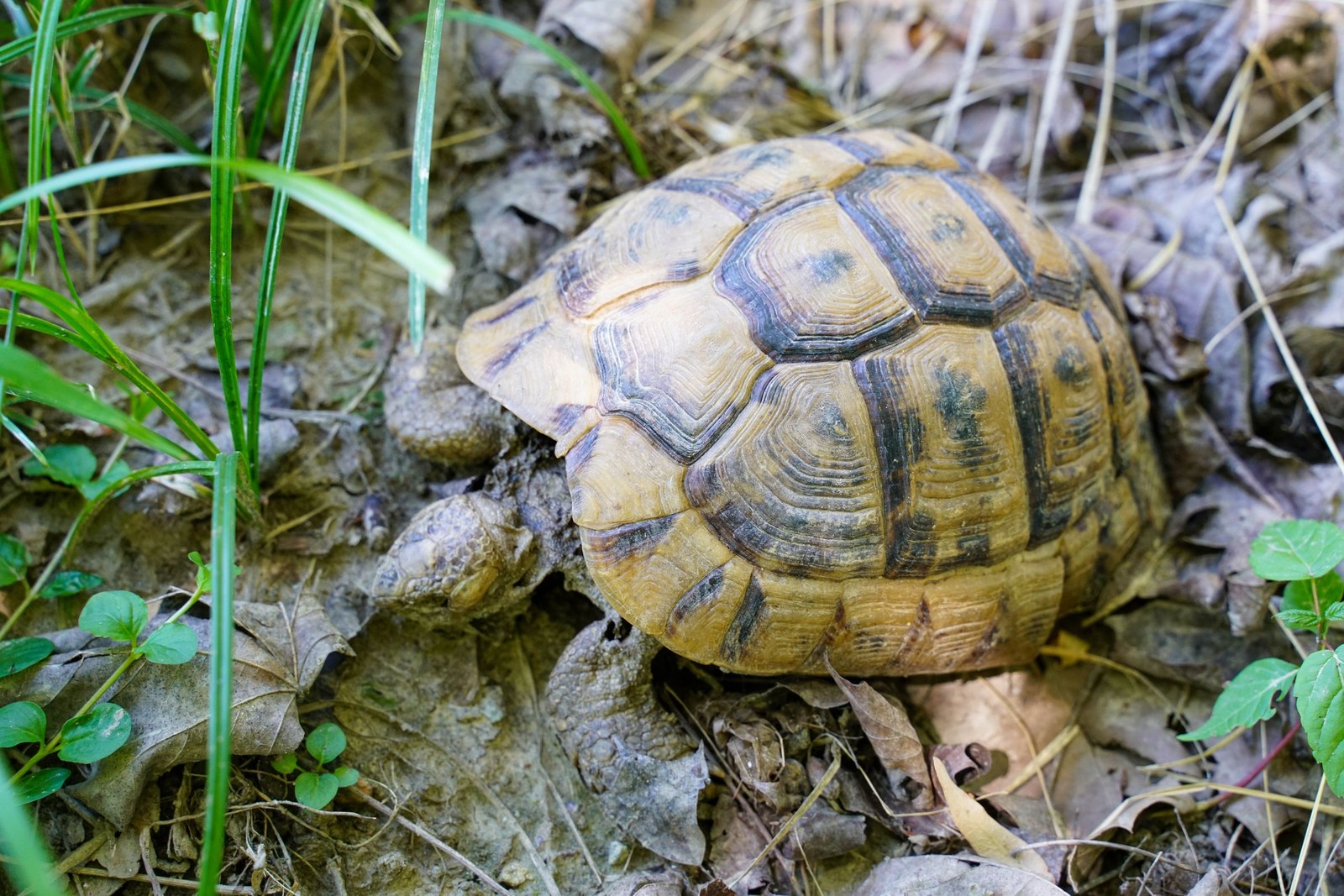
Bigger is almost always better: a tortoise enclosure should be sized for the adult your species will become, not the palm-sized juvenile you bring home, with enough floor space to walk, graze, turn easily, and move between a warm basking end and a cooler, shadier end throughout the day.
Start With Adult Size, Not Baby Size
A hatchling Hermann's or Russian tortoise may look lost in a large space at first, but these species commonly reach 6 to 10 inches and stay active for decades. A leopard tortoise or sulcata is a different commitment altogether, growing far larger and eventually needing a secure outdoor yard rather than any indoor table. Before you build or buy, confirm your exact species, its expected adult length, and whether it is a burrower, a grazer, or both, because a red-footed tortoise from humid forest floor habitat uses space and cover very differently from a desert species.
As a practical starting point, many keepers use a footprint of at least 8 times the tortoise's length by 4 times its length for a small adult, then go larger whenever possible. For most indoor tortoise tables, that means thinking in feet, not inches — a 6-by-3-foot table is a more honest minimum for a small adult than a 40-gallon tank.
What the Space Actually Needs to Hold
Floor space disappears quickly once you furnish the enclosure properly. You will need room for:
- A basking spot under a heat lamp and UVB light at one end
- A hide at the warm end and another at the cool end
- A shallow water dish large enough to soak in without tipping
- A feeding slate, plus space to scatter greens so your tortoise forages rather than waiting at a bowl
- Substrate deep enough to dig in, and an open walking loop around it all
If adding those essentials leaves no clear path to wander, the enclosure is too small, however big the label on the box sounded.
Indoor Tables vs. Outdoor Pens
Outdoors, when your climate and season allow it, is often the easiest way to give real space, along with natural sunlight and grazing. An outdoor pen needs escape-proof walls a tortoise cannot climb or dig under, shade at all times of day, and protection from dogs, raccoons, and birds of prey — a secure mesh cover matters even for larger animals. Indoors, ventilation is the trade-off: open-top tortoise tables suit Mediterranean and desert species well, while forest species that need higher humidity may do better in a large enclosed vivarium.
Signs the Enclosure Is Too Small
Watch behaviour, not just measurements. Repeated pacing or climbing at the walls, flipping onto the back in tight corners, inactivity, loss of appetite, and a tortoise that sits in one spot because the warm and cool zones are effectively the same temperature all suggest the space or layout is not working. A gradient only exists if there is genuine distance between the lamp and the far end.
Planning the Upgrade With KinsLe
Because tortoises grow slowly, it is easy to miss the moment an enclosure stops fitting. On KinsLe, Kinny, the built-in AI assistant, can send reminders and nudges for regular growth check-ins — a quick weigh-in and shell measurement every few months — so you notice steady growth and can plan the next, larger build before it becomes urgent rather than after your tortoise is cramped. Your first pet profile is free, which makes it simple to start logging those measurements from day one. Kinny answers sizing follow-ups for your exact species inside KinsLe, pulling its replies from the KinsLe Answers library.