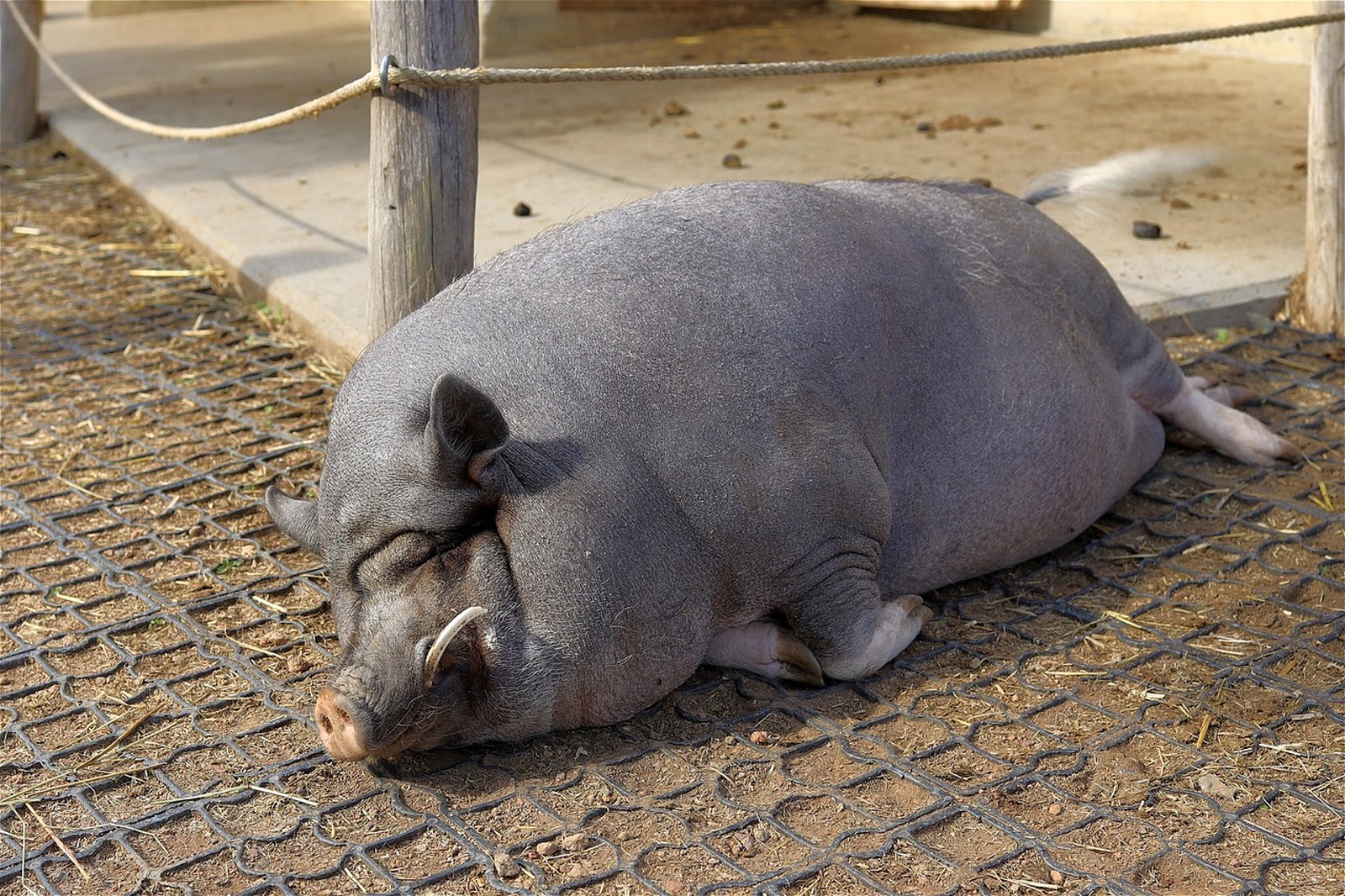
Expect a grown animal somewhere between 150 and 300-plus pounds, not a lap-sized pet that stays small. That range surprises people because pet pigs are usually sold as appealing piglets of a few pounds, while growth continues quietly for several years before the frame fills out. A so-called miniature pig is miniature only beside a commercial farm pig; beside a sofa, a large dog crate, or a garden gate, the adult is a substantial animal. There is no true teacup pig. A pig promised to stay tiny is typically a very young piglet, a pig kept short of food, or the offspring of parents displayed while they were still juveniles themselves.
How Growth Unfolds Over the Years
A pet pig grows fastest in the first year, then keeps adding height, length, and bulk well beyond the point where many owners assume growth has stopped. Judge a piglet's future by its parents at full maturity, not by the parents' age in a sales photo; a parent under two years old has not finished growing either. Ask to see older siblings from the same pairing if they exist, and treat vague promises about adult weight as a warning rather than a guarantee. Underfeeding a young pig to hold its size down harms bones, organs, and behaviour, and it does not produce a healthy small adult.
What That Size Means at Home
A 150 to 300 pound pig is strong, low to the ground, and hard to lift, so plan handling that never depends on carrying. You need fencing a determined rooter cannot lift or push through, a shelter the pig can turn around in, flooring that stays grippy when wet, and a garden area you accept will be rooted up. Doorways, car travel, and vet visits all need thought in advance: a ramp and early crate training beat a struggle with a full-grown animal. Indoor pigs still need daily outdoor time for grazing, rooting, and toileting, and a bored pig of this size can open cupboards, move furniture, and damage flooring.
Feeding for a Healthy Weight, Not a Small One
Feed a measured pig diet with forage and vegetables, keep treats small and occasional, and weigh or body-check your pig regularly. Pigs gain readily, and extra weight loads joints, feet, and breathing, yet chasing a tiny adult weight through restriction is equally harmful. The honest goal is a pig in the 150 to 300 pound range, or above it, who is neither ribby nor round: you should feel ribs under a modest covering, see a waist from above, and watch the pig move, root, and climb a ramp comfortably. Discuss diet and body condition with a vet who sees pigs, especially while growth is still under way.
Questions to Ask Before You Commit
Ask the seller for the parents' ages, weights, and photos taken recently, and ask what adult size previous litters reached. Visit if you can, look at the fencing and shelter an adult needs, and decide whether your home, tenancy, and local rules allow a pig of this size for its whole life. Rehoming a grown pig is difficult, because rescues receive many adults bought on a tiny-pig promise. Committing with clear eyes, space ready, and a long-term plan is the kindest filter of all.
If the adult size still suits your life, a pet pig can be a rewarding, intelligent companion for many years. Keep one shared record of weight, diet changes, and vet notes rather than relying on memory as growth creeps up. Through KinsLe Family Sharing, a parent or adult child you select can open the pig's profile directly, long after the tiny-piglet stage has passed.