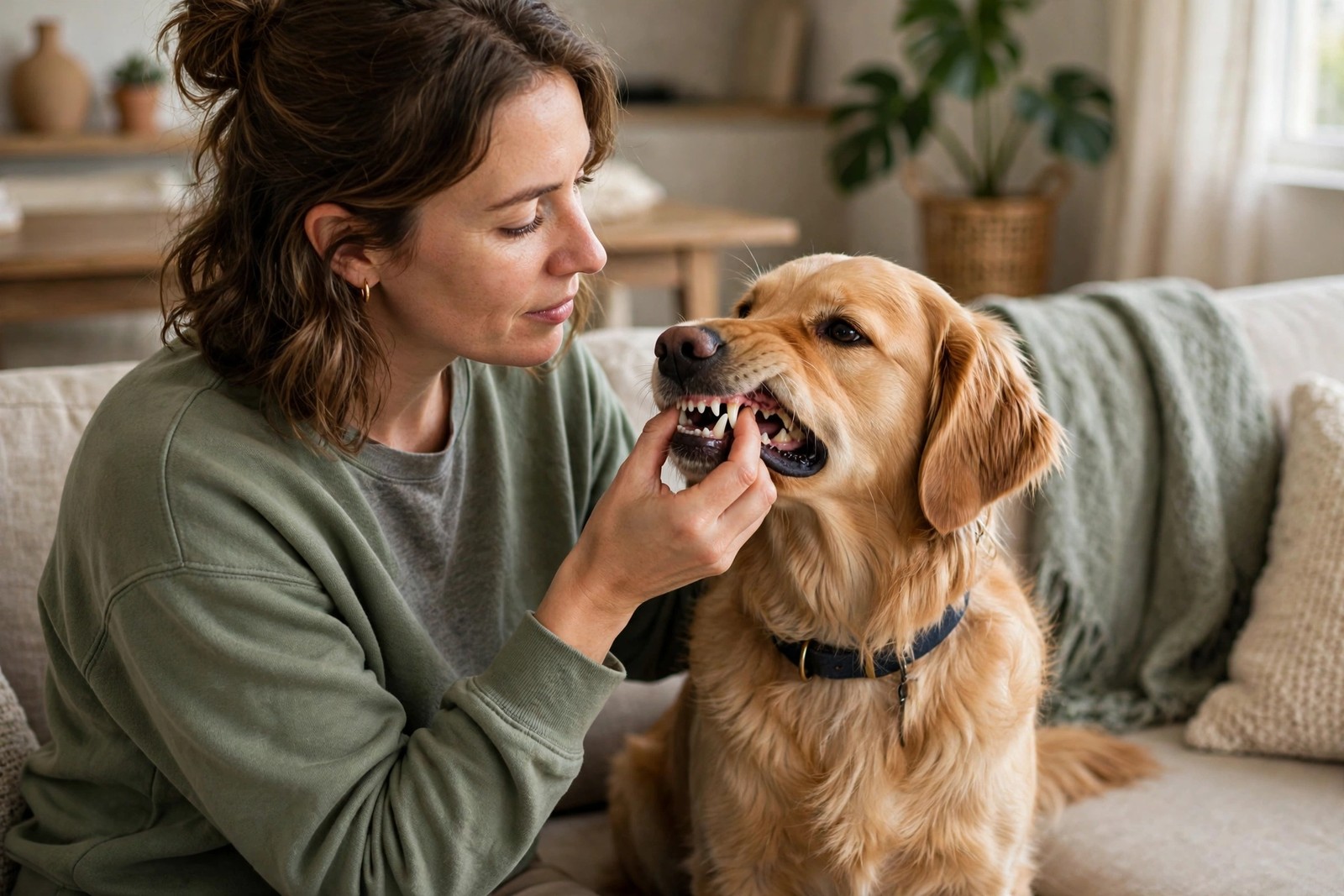
A calm, well-lit minute is all a home dental check takes once mouth handling feels routine to your dog. Lift each lip in turn to inspect the gum line and the teeth behind it, then glance at the front teeth as well. Healthy gums are pink (or pigmented pink) and firm, teeth should be white to slightly cream with no thick brown build-up, and breath should be unremarkable — noticeably bad breath is itself a sign something is going on.
What You Are Looking For
Work through a short mental list: tartar (yellow-brown crust, worst on the big back cheek teeth); red, swollen, or bleeding gums, especially a red line where gum meets tooth; any broken, loose, wobbly, or discoloured tooth; lumps or growths on the gums; and signs of pain — dropping food, chewing on one side, pawing at the mouth, or suddenly resisting head handling. Build up gradually with a cooperative dog: finger first, praise and treats, a few seconds at a time. Never force the jaw open on a dog who is stressed or sore — that is a job for the vet, sometimes under sedation.
Working With Your Vet
Bring the vet a dental picture, not a worry. Jot down which teeth carry tartar, where the gum line looks red, and when you first noticed a change in breath or chewing, then let the veterinarian examine the mouth and judge what is happening below the gum line, where home checks cannot reach. An article like this one can help you spot changes worth booking for, yet only an in-person examination — sometimes with X-rays under sedation — shows the full state of roots and bone. Short dated entries beat a summary from memory: 'brown crust on the left upper molar, first seen two weeks ago' tells the vet far more than 'his teeth looked bad.'
Book a dental check if you see tartar build-up, red or bleeding gums, a broken or loose tooth, bad breath that has changed, or any change in how your dog eats. Dental disease is progressive and painful long before a dog stops eating, so findings at home are a prompt to book, not a reason to wait and watch.
Turn those jottings into a running dental record. After each home check, add the date, what the back cheek teeth looked like, whether the gums bled when touched, and how eating went that week. Month by month, that record shows whether tartar is creeping, whether a sore spot is new, and whether breath trouble arrived suddenly or built slowly — distinctions that memory blurs after a fortnight. Revisit the record after anything that alters the mouth's routine: a dental cleaning, a lost or extracted tooth, a switch to softer food, or the start of daily brushing.
File each dental entry alongside vaccination dates and visit summaries, and the packet tells a continuing story instead of isolated snapshots. Pet Passport in KinsLe holds a dog's records, dates, and vet history together as a single portable packet, so the dental notes from your kitchen-table checks travel to appointments, boarding stays, and handoffs without going missing.