
The short answer
Start with stability and containment: a level, purpose-built stand that a toddler cannot rock, a lid that stays shut, and every chemical, food tub, and net stored high in a closed place. Teach kids to watch with their hands off the glass — and never to tap.
Start with the stand and the lid
A tank full of water is shockingly heavy — even a modest setup can weigh well over 200 pounds — so the stand must be level, purpose-built, and impossible for a toddler to rock or climb. Keep step stools and chairs away from the tank so little climbers cannot reach the top. A snug-fitting lid does triple duty: it stops small hands from reaching in, keeps toys and snacks from being dropped in the water, and keeps jumping fish where they belong. If your lid has feeding flaps, keep them closed between meals.
Lock away the chemicals
Fishkeeping comes with things no child should touch: dechlorinator, fish medications, algae treatments, and water test-kit reagents can all be harmful if swallowed. Store every one of them in a high, closed cabinet — ideally latched — along with nets, siphons, and buckets, which are both a mess risk and a temptation. Keep a towel nearby for the inevitable splash, and wipe up spills right away so wet floors do not become slip hazards for the whole family.
Teach tank manners early
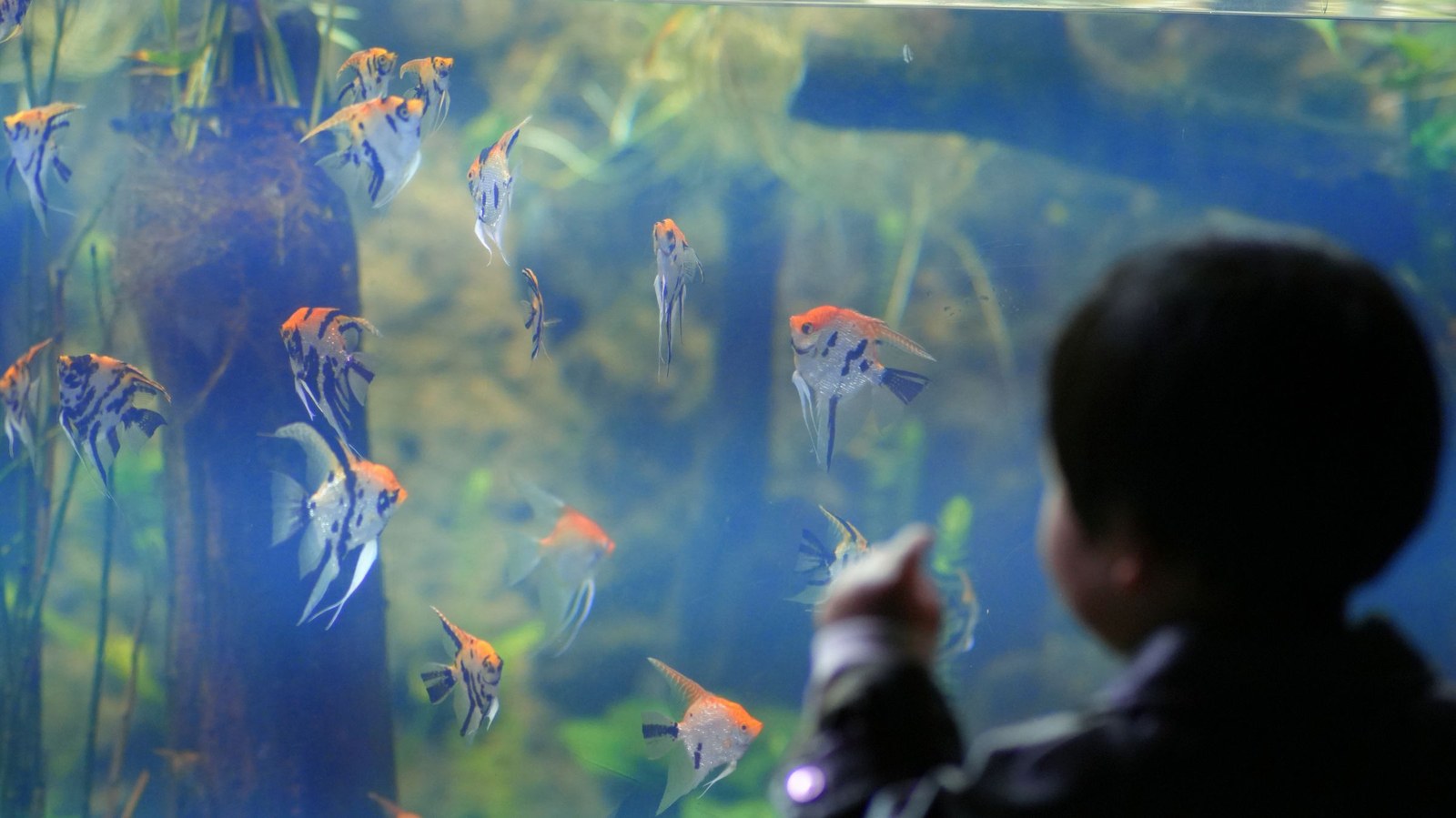
Kids make wonderful fish helpers when the rules are clear: look with your eyes, hands stay off the glass, and tapping is never allowed — it startles fish, and repeated vibrations are genuinely stressful for them. Let young children help in supervised, bounded ways: a preschooler can hold the food container while you pinch the portion, and an older child can help you count the fish during a weekly health check. Always supervise feeding itself, because a generous little helper can dump in a week's worth of food in about five seconds.
Grow a helper's responsibility gradually
As kids grow, they want real responsibility — and clear roles prevent both overfeeding and hurt feelings. Agree the supervised jobs together — an evening feed here, a weekly top-off there — and keep the rest with an adult. Younger children stay within arm's reach throughout, even for a feed they have done many times before. Through KinsLe's Family Sharing, a grandparent or older sibling you select can open the fish's profile directly, without needing to ask you for it first.