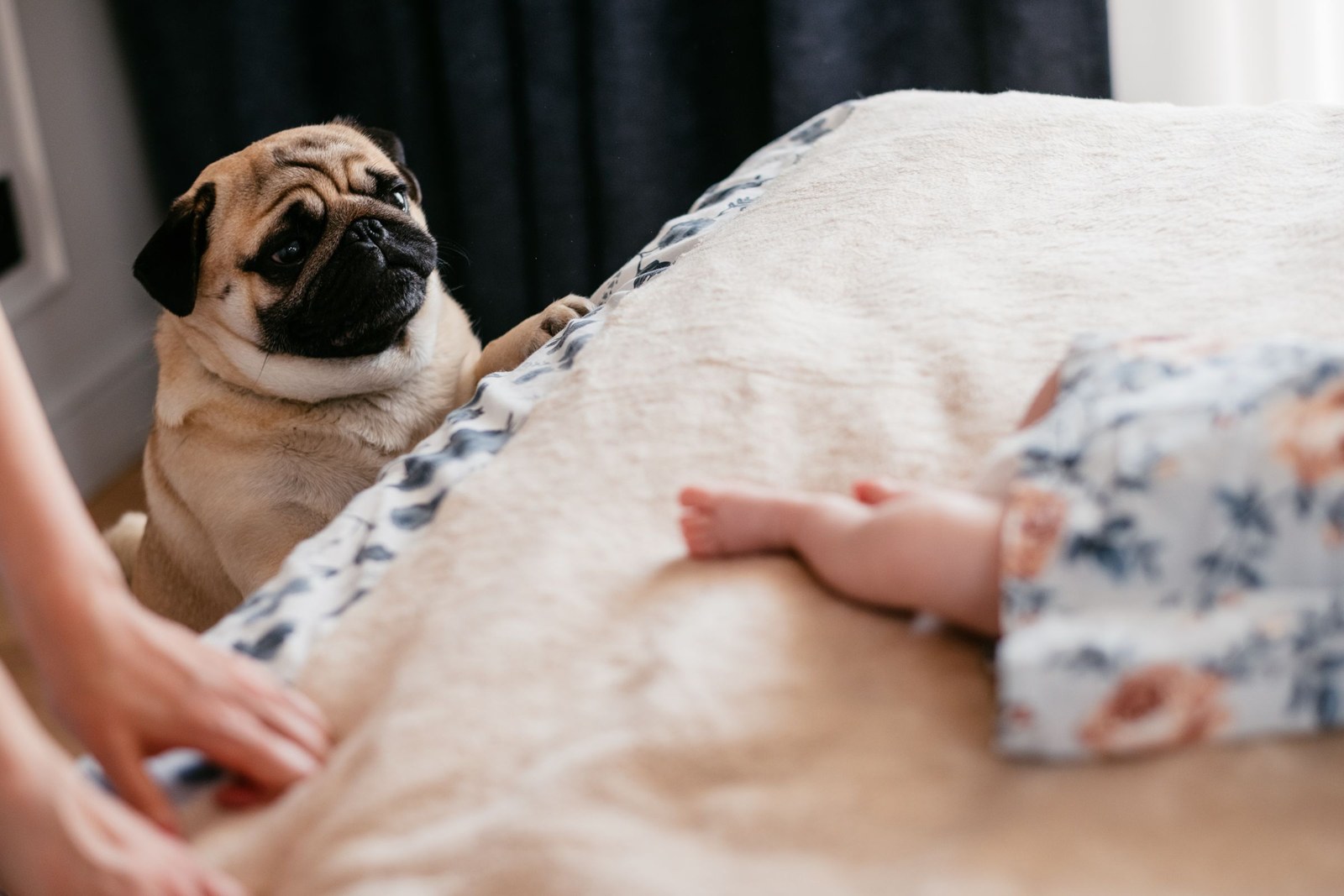
Give your dog weeks, not days, to get used to the baby's world. Put the crib, stroller, and swing together early and leave them standing in their real places until they stop being interesting. Then layer in the soundtrack and the new movements: recorded cries played quietly beside something pleasant, short walks rolling the empty stroller, and a settled spot on a mat while you sit in the feeding chair. By homecoming, the scenery and the sounds should already feel ordinary.
Desensitizing to Baby Sounds
Recorded cries, coos, and squeaky toys can be genuinely startling to a dog who has lived in a quiet adult household. The method is gradual exposure paired with good things:
- Play baby sounds at a volume so low your dog barely notices, during something pleasant like dinner or a chew.
- Over several days, raise the volume in small steps, always staying below the level that makes your dog pace, bark, or stare.
- If your dog reacts, you moved too fast — drop back a level and rebuild.
- Sprinkle in the real household sounds too: the swing's motor, the bottle warmer's beep, a musical mobile.
A sensitive Border Collie might need two weeks of this; an easygoing senior Labrador might shrug at full volume on day three. Follow your dog, not a calendar.
Making the Gear Ordinary
Assemble the nursery gear early and let your dog investigate it switched off, then switched on. Practice the new physical skills yourself: folding the stroller one-handed, walking your dog at heel beside it without the wheels clipping their paws, and settling your dog on their mat while you rock in the feeding chair. Teach and polish "place" until your dog can hold it through mild distractions, because a reliable place gives your dog a defined, rewarded role during feeds and changes instead of hovering anxiously at your elbow. Scatter a few baby items — a sock, a pacifier in its case — into everyday life so none of them are novel on the big day.
Protect the Routine Your Dog Counts On
Newborns will bend the schedule, but the closer your dog's anchors stay — morning walk, meals, evening play, bedtime spot — the more secure they feel. Decide now who covers the dog on hospital days and during the first blurry week home, and write it down. Dogs read uncertainty in the household quickly; a plan the humans are calm about is a plan the dog can relax into.
Turning Prep Into Assigned Practice With KinsLe
Ten minutes of sound practice or stroller walking is easy to intend and easy to forget — unless it is assigned. KinsLe's Care Teams let you assign feeding, walks, medication, and grooming duties to family members, with timestamped completions so everyone can see what is done; those same short baby-prep sessions can be shared across your household the same way, so one person plays the sounds on Monday, another walks the stroller route on Tuesday, and the practice actually happens every day instead of living on a hopeful to-do list. Small, steady reps are what make homecoming day feel like just another Tuesday to your dog. Care Teams on KinsLe turn sound-play practice and stroller walks into named household duties, with completions timestamped so no day of desensitization quietly slips.