
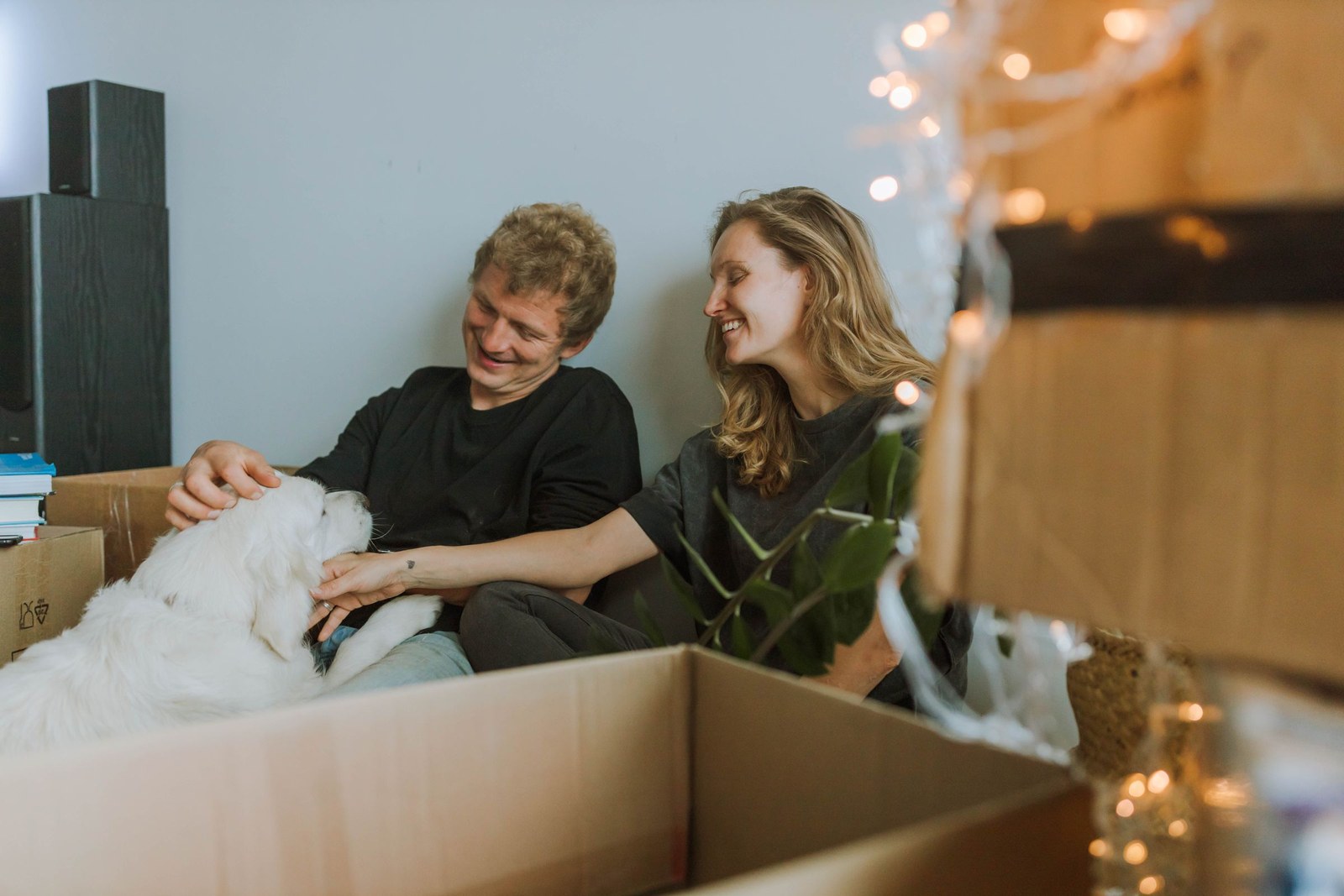
The fastest comfort you can offer after a move is familiarity. Rebuild one corner of the new house around your dog's own bedding, unwashed blankets, and favourite toys, so the first resting place smells right. Hold mealtimes, walk times, and bedtime steady at the hours your dog already knows. Open up the rest of the house gradually, room by room and at your dog's pace; a few unsettled nights early on are normal adjustment, not misbehavior.
Why Moving Is Hard on Dogs
Dogs navigate life through routine and scent, and a move wipes out both at once. Every smell that told your dog "home" is gone, the sounds are different, the floor feels different underfoot, and even the yard smells of other animals. Some dogs take it in stride within days; others pace, whine at night, lose their appetite, or become clingy shadows. Puppies and confident young adults usually bounce quickly. Senior dogs and anxious dogs often need longer, and a rescue who has changed homes before may worry this is another temporary stop. None of this is stubbornness — it is a dog doing their best in a world that changed overnight.
The First Days: Small World, Steady Routine
Resist the urge to give your dog the full run of the new house immediately. Start with the familiar corner — bed, unwashed blankets carrying the old home's scent, favorite toys, water bowl — in the room where the family spends the most time. Keep the anchors identical: same food, same feeding spot routine, walks at the usual hours, the same words for the same cues. Open up one new room at a time over the first days, letting your dog investigate and retreat as they choose. If you can, spend the first nights nearby; a dog who can hear you breathing settles far faster than one shut alone in a strange kitchen. Within a week or two, most dogs are claiming sunny spots and patrolling the new yard like they have always lived there.
Safety in a Strange Neighborhood
A disoriented dog in an unfamiliar area is a genuine flight risk, and moves are one of the most common times dogs get lost. Before the first walk, check every fence line, gate latch, and door for gaps a stressed dog could test. Keep your dog leashed in the yard until you have watched them relax there, update the address attached to their microchip and tags as soon as you move, and walk the same short route repeatedly at first so the neighborhood's smells — and the way home — become familiar. If movers or deliveries mean doors standing open, shut your dog safely in one finished room with their bed and water until the traffic stops.
The Safety Net While You Settle With KinsLe
Set that safety net up before moving day, while things are still calm. If your dog slips out while doors stand open for movers, speed matters more than posters a neighbor might never see. The Lost Pet Alert System on KinsLe is the backup built for that week: there is no charge to use it in any profile, a missing-dog alert stays visible to anyone viewing the map; whoever spots your dog can reach you with a direct message through the profile.