
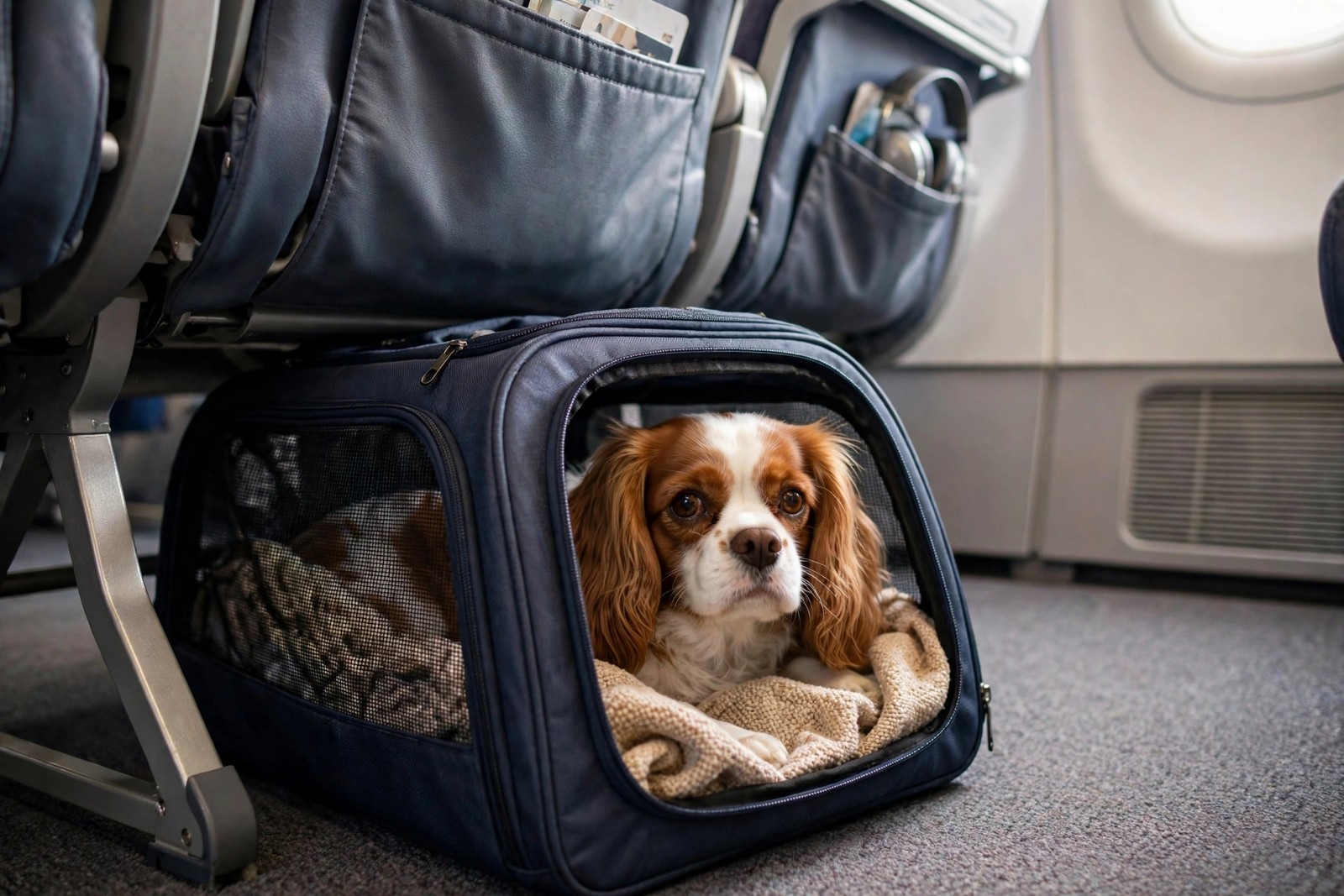
Most dogs stay calmer on a flight when they board already tired, toileted, and settled into a familiar routine — a good walk beforehand, a light meal well before departure, a familiar blanket in the carrier, and a calm owner all matter more than any single product. Start preparing days ahead, not at the gate, so travel day itself feels like a sequence your dog has already rehearsed.
Before you leave home
Exercise is your best tool. A proper walk or play session — a real energy-burn, not just a loop around the block — helps most dogs rest in the carrier. Offer water, give a final bathroom break as late as possible before entering the terminal, and keep departures low-key. Dogs read your tension accurately; a rushed, anxious goodbye teaches an anxious lesson.
Feed a smaller-than-usual meal several hours before the flight rather than a full bowl right before you leave. A full stomach plus turbulence is a recipe for nausea and a miserable carrier cleanup, while a dog who last ate a few hours ago is usually comfortable. If your dog is prone to motion sickness at home in the car, tell your vet in advance — that history is useful information, not something to discover mid-flight.
Rehearse the carrier at home in the week before. Short, rewarded sessions inside it, with the door closed and the sounds of a busy household around it, make the real thing less novel.
At the airport and during the flight
Arrive with time to spare so security is not a sprint. Many airports have pet relief areas — use the last one available before boarding, even if your dog went at home. At security you will usually carry your dog through screening while the carrier is X-rayed, so a secure collar or harness and a leash in your hand, not your bag, prevent a frightening loose-dog moment in a crowded terminal.
In the cabin, settle the carrier under the seat and then largely leave it alone. Constant opening, fussing, and whispered checking can keep a dog alert who might otherwise doze. A familiar blanket or an item that smells like home does quiet work here. Offer a small amount of water on longer flights if your airline allows you to access the carrier, and speak in the same low, boring tone you would use at home at bedtime.
What not to do
Do not sedate your dog unless your veterinarian specifically advises it for your dog. Sedation at altitude can affect breathing and body-temperature regulation, and it is a particular concern for brachycephalic breeds like Pugs, Bulldogs, and Shih Tzus, who already work harder to breathe. Over-the-counter calming products and supplements vary widely in quality and effect — if you are considering one, ask your vet first rather than experimenting on travel day, when you cannot undo a bad reaction.
Also skip the brand-new toy, new food, and new routine all at once. Novelty is stimulation, and stimulation is the opposite of what you are trying to create.
Let Kimmy handle the reminders
The calmest travel days are the ones where nothing was left to the last minute, and that is where KinsLe's Kimmy, the built-in AI assistant, earns its place. Kimmy can send you pre-trip reminders and nudges — for the pre-flight walk, the vet paperwork check, packing the blanket and medication, and timing that last relief break — so your morning runs on a checklist instead of a scramble. You stay unhurried, your dog feels it, and the flight starts from a much better place. Kimmy, inside KinsLe, fields follow-up questions on carrier rehearsal, pre-departure meal timing, or airport relief breaks, pulling each answer from KinsLe's own Answers collection.