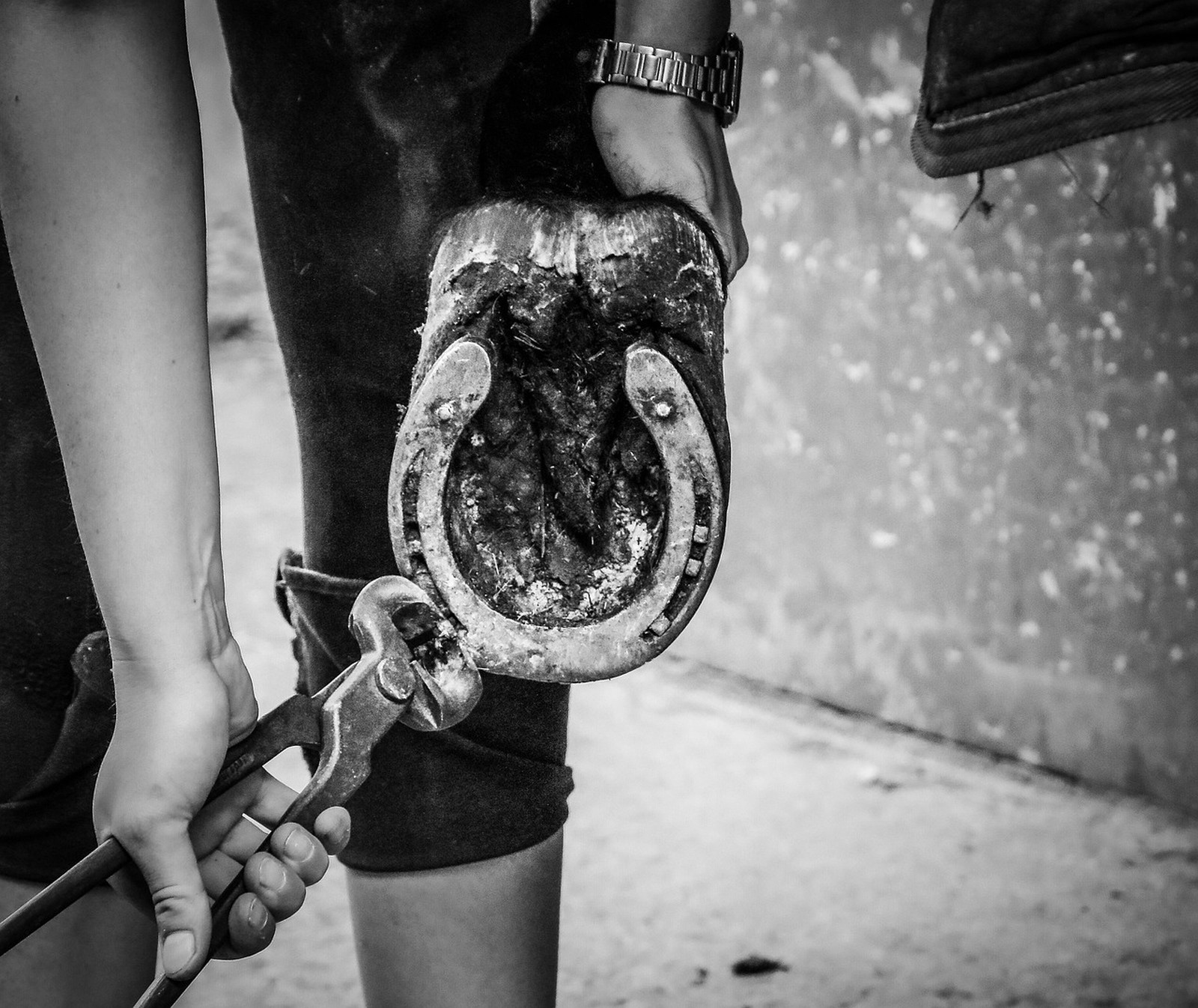
A horse grows hoof wall slowly from the coronary band at the top, so the hoof on the ground today reflects months of feeding, footing, and trimming. That is good news: steady improvements in those four areas reliably produce a stronger hoof, as long as you judge progress over a season rather than a fortnight.
Keep the Farrier Cycle Steady
Regular trimming or shoeing is the foundation. Most horses are seen roughly every six to eight weeks, adjusted by your farrier for growth rate, workload, and season. Letting the cycle stretch lets toes grow long, heels underrun, and walls flare and crack under the extra leverage. Keep a record of each visit, what was done, and how the horse moved afterwards, and tell your farrier early about new chips, cracks, or lost shoes rather than saving it up. Sudden lameness, a hot hoof, or a strong pulse in the lower leg is a vet call, not something to wait out until the next farrier visit.
Feed the Hoof From the Inside
Hoof horn is built from the diet, so start with good forage and a ration balanced for vitamins and minerals rather than a random supplement shelf. Horses on restricted grazing, soaked hay, or mostly poor pasture are the ones most likely to be short on key nutrients. Owners often ask about biotin and other hoof supplements; they can have a place for some horses, but they work over months, cannot fix an unbalanced base diet, and are worth discussing with your vet or farrier before spending on them. Keep sugary feeds and rich spring grass in check for horses prone to hoof problems, and make feed changes gradually over a week or more.
Footing, Bedding, and Daily Picking
Hooves soften and weaken standing in wet mud or dirty bedding, and thrush thrives in a damp, packed frog. Rest or rotate muddy gateways and trough areas, keep bedding clean and as dry as you can, and provide a dry standing area after wet turnout. Pick every foot out daily, heel to toe, clearing the grooves beside the frog. That two-minute habit is also your inspection: look for stones wedged in, small cracks starting, loose shoes, a sour smell, or black, crumbly frog tissue. Catching a crack at a centimetre is a farrier note; catching it at the coronet band is a vet bill.
Movement and Honest Timelines
Movement stimulates blood flow to the hoof, so daily turnout and regular exercise support growth better than long hours standing in a stable. Work new wall down is slow: expect a full hoof capsule to take the better part of a year to replace, and photograph the feet from the front and side each farrier cycle so gradual improvement is visible. A horse who keeps cracking despite good feeding, footing, and trimming needs a joint vet and farrier look, since pain, conformation, and underlying illness all show up in the feet. KinsLe's Care Teams keeps the whole cycle visible on a busy yard by assigning daily hoof picks, bedding checks, and farrier appointments to named helpers, timestamped as they are done, so the slow hoof work never depends on one person's memory.