
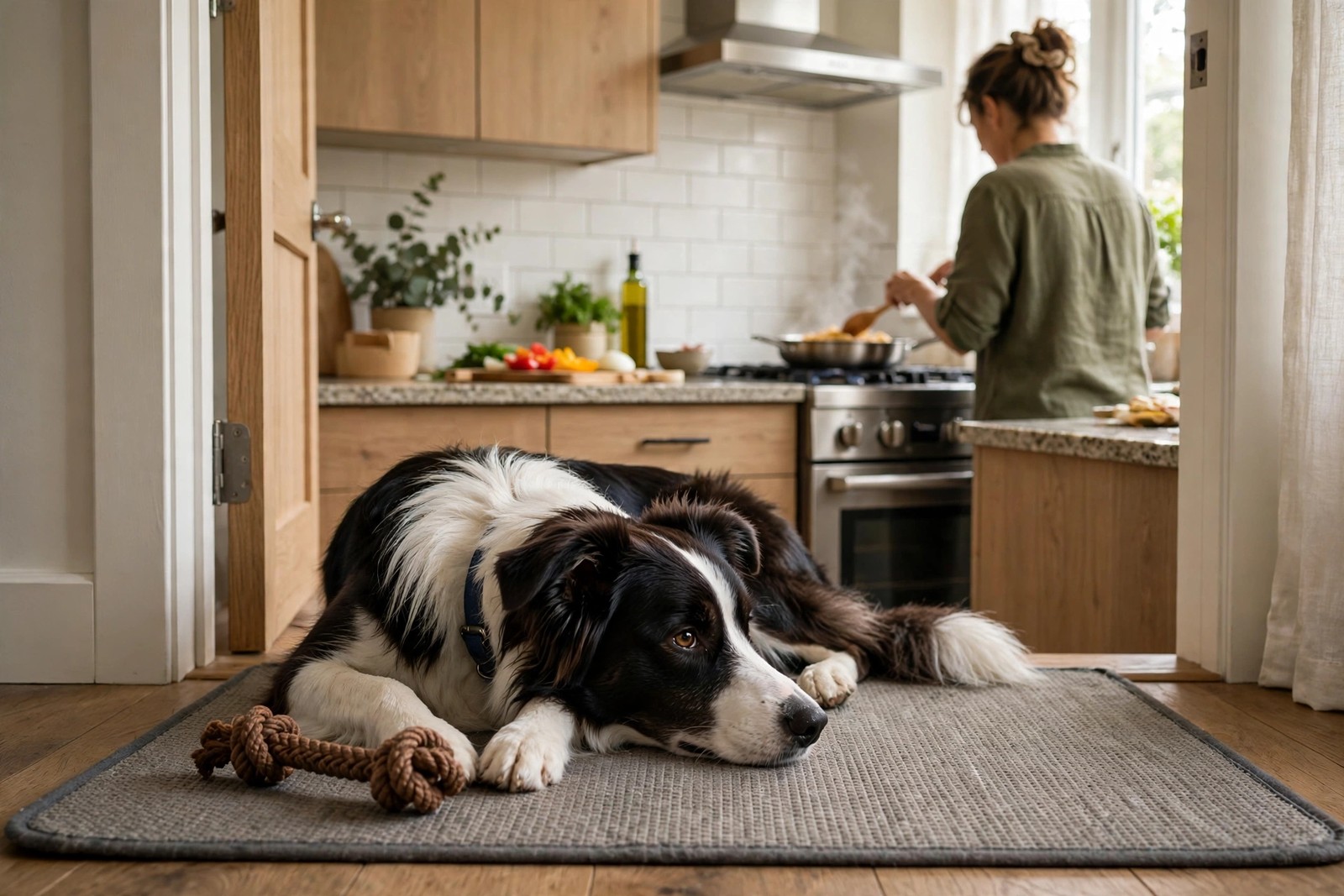
Keep your dog off the counters while you cook by giving him a job that pays better than surfing: a mat just outside the kitchen doorway, a long-lasting chew waiting on it, and rewards for staying there while you work. Set the station up before ingredients come out, use a baby gate during the early training phase if you need one, and reward every glance at you instead of the counter. A dog with a comfortable, profitable spot has far less reason to patrol yours.
Why the kitchen is so magnetic
Cooking fills a room with scent, dropped morsels, sizzling sounds, and your attention pointed elsewhere — a perfect storm. Labradors, beagles, and spaniels hover hopefully, and puppies learn in one afternoon that standing near the cook sometimes produces a falling carrot coin. Expecting willpower alone is unfair; the station works because it is close enough to watch, comfortable enough to rest on, and stocked well enough to compete.
Building the cooking station
Choose a spot with a clear boundary — a mat or raised bed just outside the kitchen, where he can see you but is not in the path of hot pans. Teach it as its own game on a quiet afternoon first: step on the mat, treat; lie down, treat; stay ten seconds, treat and release.
When you cook for real:
- Lay the mat and deliver a long-lasting chew or a stuffed, frozen food toy before you start chopping.
- Refresh the reward partway through long recipes with a fresh treat delivered to the mat.
- Toss a small treat to the mat whenever he looks at you instead of lunging toward a dropped scrap.
- Release him with a clear word when cooking ends, so staying has a predictable finish.
If he repeatedly leaves, calmly return him once, then add the baby gate across the doorway with the mat and chew on his side. The gate is not punishment — it is scaffolding while the habit strengthens, and many households remove it within a few weeks.
Safety first around hot food and floors
A station also keeps your dog safer. Tripping over a dog while carrying a pot of boiling water is a real kitchen hazard for both of you, and dropped onions, garlic, grapes, chocolate, and hot oil splashes are all risks to a dog waiting directly below the stove. Keep chew toys sized appropriately, supervise any long-lasting chew to watch for pieces breaking off, and choose stuffing ingredients your dog tolerates well.
If your dog guards chews or becomes tense when people approach his treasures, skip high-value chews in shared spaces and talk to your veterinarian or a qualified trainer about a safer plan. Comfort and safety come before convenience.
Practicing in short, successful steps
Build difficulty gradually: low-aroma prep like washing vegetables first, then cooking meat, then guests helping. If a session falls apart, return to the last level he handled well. Five calm minutes beats twenty chaotic ones.
How Kimmy on KinsLe keeps the routine on track
The station only works if it is set up before the food appears — and that is the step busy cooks forget. Kimmy, KinsLe's built-in AI assistant, can send reminders and nudges, so whoever is cooking gets a prompt to lay the mat and prepare the chew before ingredients come out. Over time the reminder fades because the routine becomes automatic for the humans, too. Want a calmer kitchen and a dog who knows his place in it — in the best sense? KinsLe's Kimmy draws on the KinsLe Answers library when you ask follow-up questions about keeping a dog settled on a mat during cooking.