
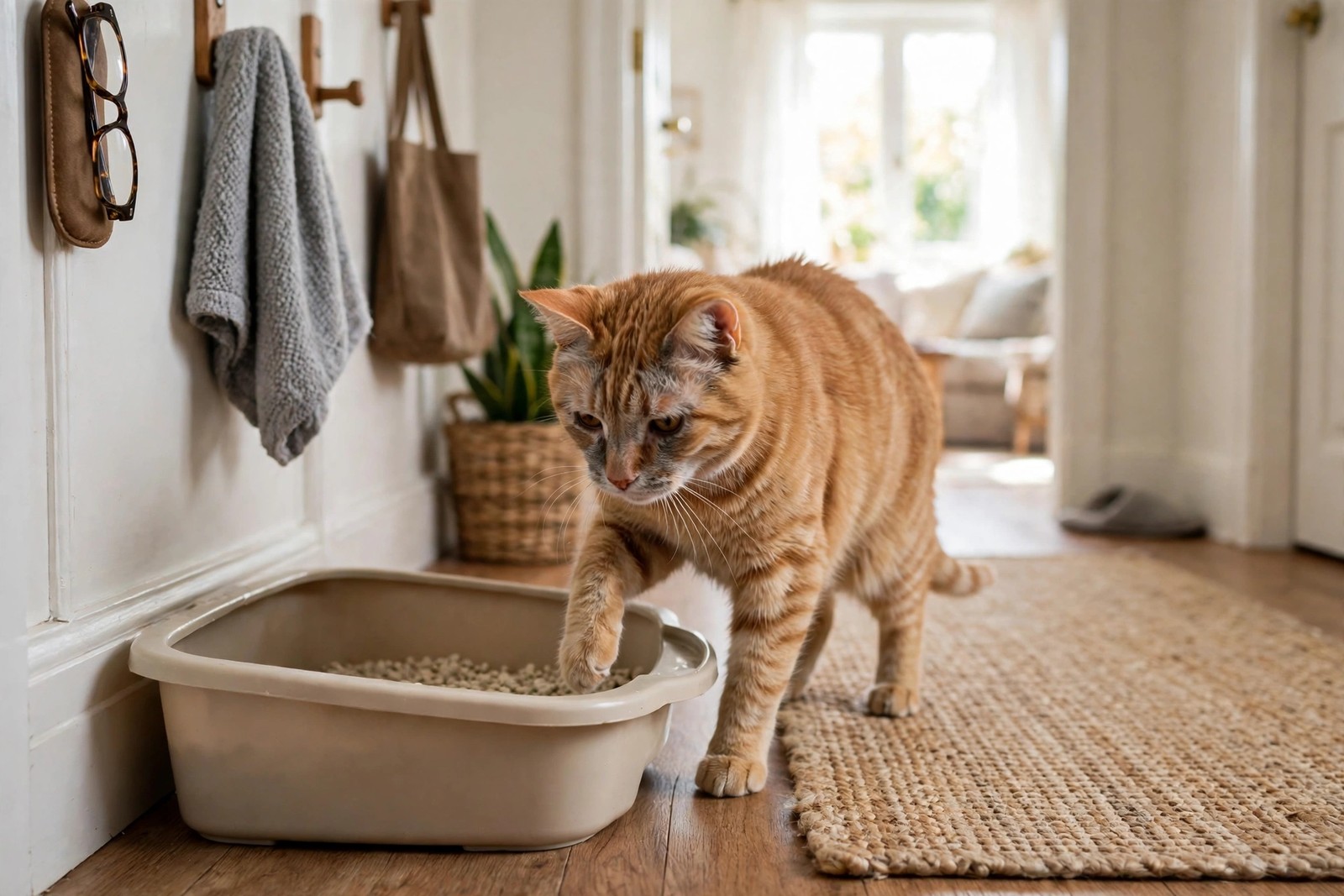
The easiest fix for a senior cat who struggles with the litter box is height: choose a box with one low entry side, about two to three inches high, while keeping the other sides tall enough to contain litter when she digs. Many cats do not need a brand-new specialty box — you can cut an entrance into a standard storage-style box, smooth every cut edge with sandpaper or tape so nothing sharp touches sore skin, and keep the rest of the wall high for a cat who still aims imperfectly.
Placement matters as much as the box itself
Put a box on every floor your cat actually uses, so there is never a long, painful trip down stairs between her favourite sleeping spot and the nearest toilet. Place it in a quiet, well-lit corner she can reach without squeezing behind furniture, jumping over barriers or passing the dog's bed. If she sleeps in your bedroom and the only box is in the basement laundry room, the location — not stubbornness — may be the whole problem.
Keep the approach clear. A non-slip mat outside the entry helps unsteady paws, but avoid thick, wobbly rugs that catch claws. Night traffic matters too; senior cats with reduced vision benefit from a clear, familiar route that does not change when someone moves a laundry basket or closes a door she relied on.
Litter depth, texture and cleanliness
Aim for a shallow-to-moderate layer, roughly two inches, deep enough to dig lightly but not so deep that arthritic legs sink and wobble with every step. If you change litter type, do it gradually over a week. Many older cats prefer a softer, finer texture under tender paws, and unscented litter is usually better tolerated than strongly perfumed varieties.
Scoop at least once a day, and twice if you can. Sore, stiff cats are pickier about cleanliness because crouching in a soiled box is uncomfortable and balancing while avoiding wet patches is hard work. Wash the box with mild, unscented soap on a regular schedule, rinse well, and replace boxes that stay scratched and odour-holding even after cleaning.
Watch how she uses it, not just whether she does
For a week, notice the details: Does she hesitate at the entry, step in with only the front paws, cry, or go right beside the box? Those clues tell you whether the entry is still too high, the surface hurts, or the box is simply too small for a stiff cat who can no longer turn comfortably. A larger footprint often helps more than owners expect.
If accidents start suddenly, she strains, cries while urinating, produces very small amounts, or you see blood, contact your veterinarian promptly rather than just changing boxes — access problems and medical problems can look alike, and both deserve attention.
Sharing the routine with a sitter through Care Pass
When someone else cares for your cat, the litter setup is exactly the kind of detail that gets lost in a hallway conversation. KinsLe's Care Pass is a temporary, scoped link you can share with a sitter or house-sitter — they do not need an account or the app to open it — where you can note where each box lives, which entry she uses, how deep the litter should be and how often to scoop.
That means your cat keeps the easy setup she relies on while you are away, and your sitter is not guessing. Care Pass on KinsLe gives your named sitter time-limited access to those box locations, entry notes, and scooping times, and that access closes when the sitting ends.