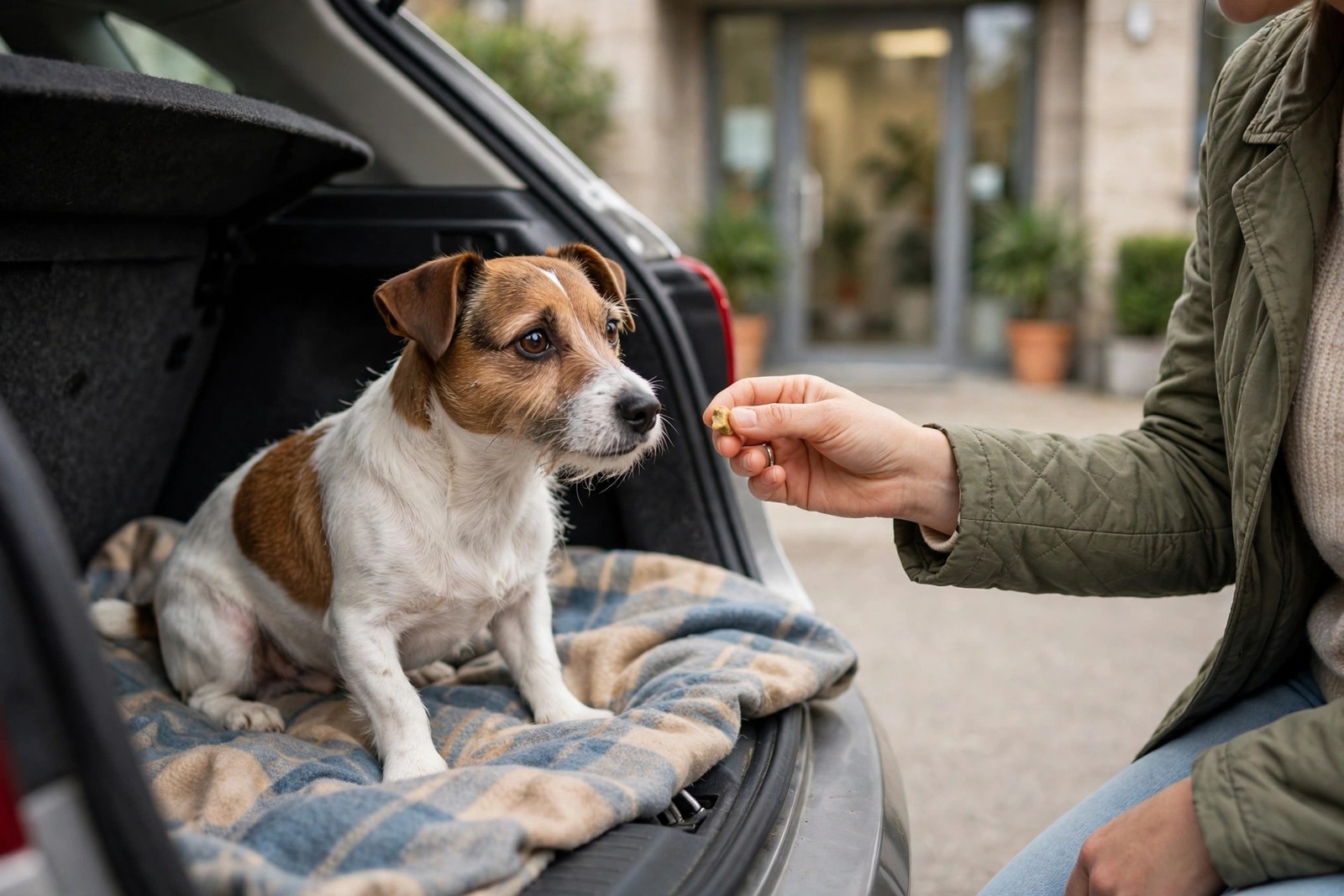
A dog who trembles from the car park onward is not being difficult. That dog has connected the whole sequence — lead, car, car park, waiting room, examination table — with experiences that felt frightening or uncomfortable, and the shaking starts at the first link in that chain. Undoing it takes rehearsal that changes what each link predicts, started weeks before a real appointment rather than in a rush on the morning itself.
Happy Visits That Change What the Building Means
Ask your practice whether you can drop in briefly with no procedure booked. Walk your dog around the car park, let the dog sniff, reward calm behaviour with high-value food, step into reception for a weigh-in and a treat from the team, and then leave while the experience is still easy. Keep early visits short, repeat them, and let staff greet your dog without reaching over the head or crowding. If the waiting room is the hardest part, ask whether you can wait in the car and be called in when the room is ready, because many practices will agree once they understand the problem.
Rehearsing the Examination at Home
Practise the pieces of an examination in short, rewarded sessions on ordinary days. Touch and hold each paw, lift an ear flap and let go, lift a lip briefly, run a hand along the ribs and belly, and ask your dog to stand still on a non-slip mat while you count slowly. Reward after each small step and stop while your dog is still coping, so that sessions end with success rather than escape. Add gentle restraint practice, such as a helper holding your dog softly against a side while you touch a paw, because that position is often the moment fear spikes at the clinic. A dog that has rehearsed these touches at home meets familiar handling instead of a stranger's first attempt.
Fixing the Car's Reputation Too
If every car trip ends at the clinic, the car itself becomes a warning. Mix in short drives that end at a favourite walk, a drive-through treat, or a friend's garden, and end some drives by coming straight home to a meal. Practise sitting in the parked car in the clinic car park, sharing a chew, and leaving without going inside. On appointment day, leave early enough that you are calm, because a rushed owner, a tight lead, and a hurried voice confirm a worried dog's reading of the situation. Bring a familiar blanket with home smells for the table or the car, and a lick mat or favourite food if your practice allows it.
Planning the Appointment Itself With the Practice
Phone ahead and describe the fear honestly, then ask practical questions: whether the first or last appointment of a session is quieter, whether fasting is needed for any planned test, whether you can stay with your dog throughout, and what will happen step by step. For a dog whose fear stays severe despite rehearsal, discuss options with your veterinarian in advance rather than hoping determination will carry the visit, because the clinic may suggest a different appointment structure or other support. Write down what you agree so that everyone at home follows the same plan.
Building on Each Visit Instead of Starting Again
After each appointment, note what helped, what spiked the fear, which staff member your dog liked, and whether waiting in the car worked better than the waiting room. Share that note with the practice at the next booking so that the successful setup is repeated deliberately. Keeping those visit-by-visit findings in KinsLe's Pet Passport means your dog's fear plan, handling notes, and medical record travel together to any new practice.