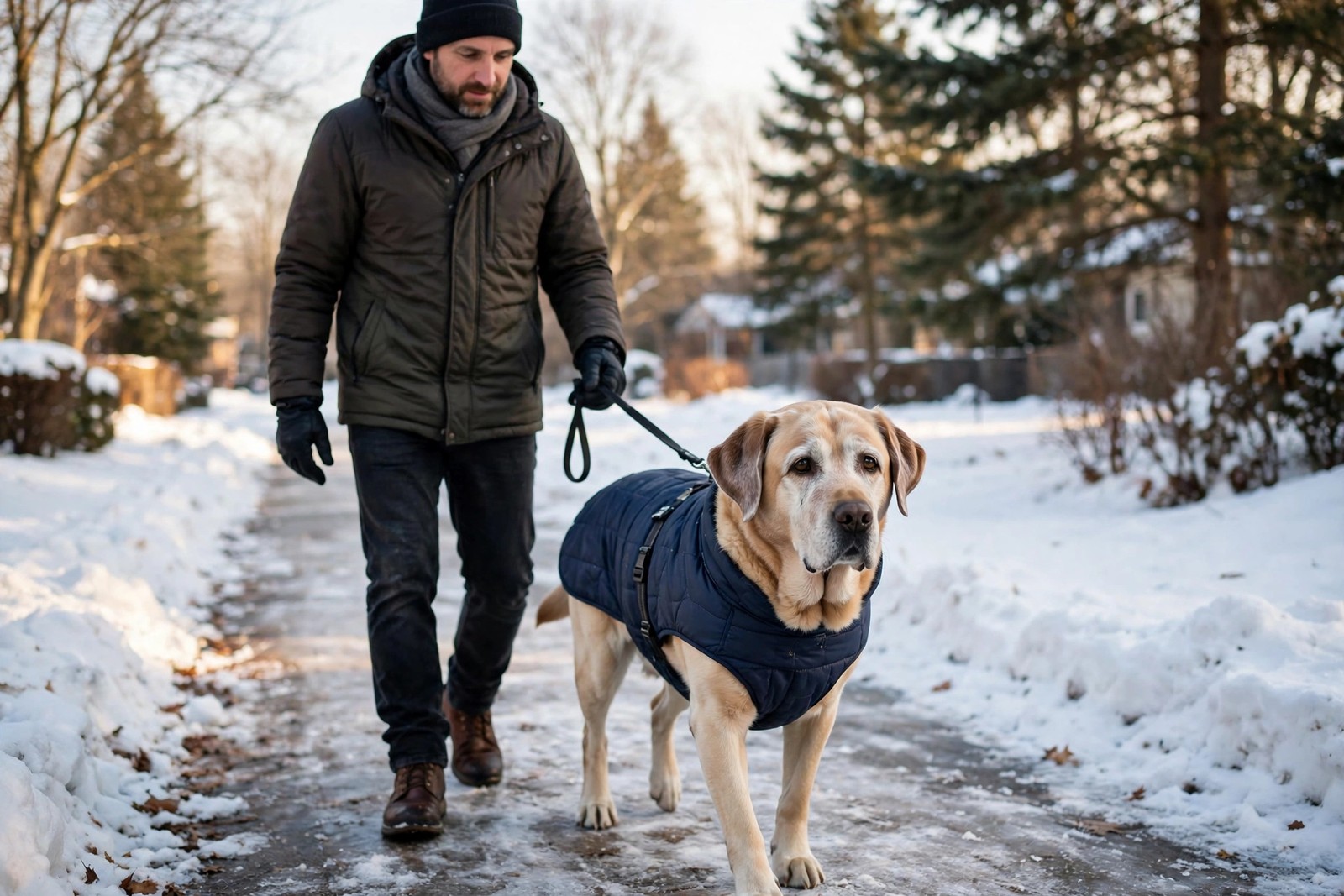
Many arthritic dogs are noticeably stiffer in winter: cold muscles, damp air, icy footing, and longer indoor inactivity all work against sore joints. You cannot change the season, but you can change almost everything about how your dog meets it — warmth at rest, shorter and safer walks, and a home layout that never asks him to jump, skid, or scramble.
Warmth Starts With the Bed
Place a thick, supportive bed somewhere genuinely warm, away from door drafts and cold tiled floors, and consider a second bed in the room where the family spends the evening so he is not choosing between company and comfort. A well-fitting dog coat makes a real difference outdoors for lean, short-coated, and elderly dogs: it should cover the chest and back without restricting the shoulders or slipping sideways. Dry him properly after wet walks, since a damp coat on stiff joints keeps him cold long after he is back indoors. Gentle warmth at rest, such as a bed in a warm spot, suits most arthritic dogs; anything heated should be made for pets, used supervised, and easy for him to move away from.
Rethink the Winter Walk
Swap one long walk for two or three shorter ones. Ten comfortable minutes, three times a day, keeps joints moving without the payback of a single long slog, and movement itself eases stiffness better than total rest. Build in a slow first five minutes indoors or in the garden so cold muscles warm up before pavements. Choose cleared, gritted paths over icy ones, avoid steep slippery banks and frozen fields where a fall could injure him, and turn back early on days when he is lagging, lip-licking, or sitting down. On the worst days, indoor sniffing games, gentle trick practice, and a slow garden potter are a kinder plan than forcing the usual route.
Slips, Steps, and Salt
Most winter setbacks happen at thresholds: the skid across a wet hallway, the jump down from the car, the icy step at the back door. Lay non-slip runners on hard floors along his main routes, fit a ramp or wide step at the car and at any steps he uses daily, and keep nails trimmed and the hair between his pads short so his feet grip properly. After walks on salted pavements, rinse or wipe his paws and dry between the toes, because salt irritates cracked pads and he will lick it off otherwise. Booties help some dogs on salt and ice once they have practised indoors.
Weight and the Vet Conversation
Every extra kilo is carried by sore joints, so keep an arthritic dog lean and weigh him monthly through winter, when walks shrink and treats creep up. Never give human painkillers — some are dangerous for dogs — and if stiffness suddenly worsens, he stops wanting to walk, or he struggles to settle at night, book a vet visit rather than simply waiting for spring. Your vet can review his overall pain plan and whether his current support is still enough. KinsLe's Pet Passport keeps the pieces of that plan in one portable packet — recent weights, vet notes, what helps on bad days — so a sitter, family member, or a different vet clinic sees the full winter picture at a glance.