
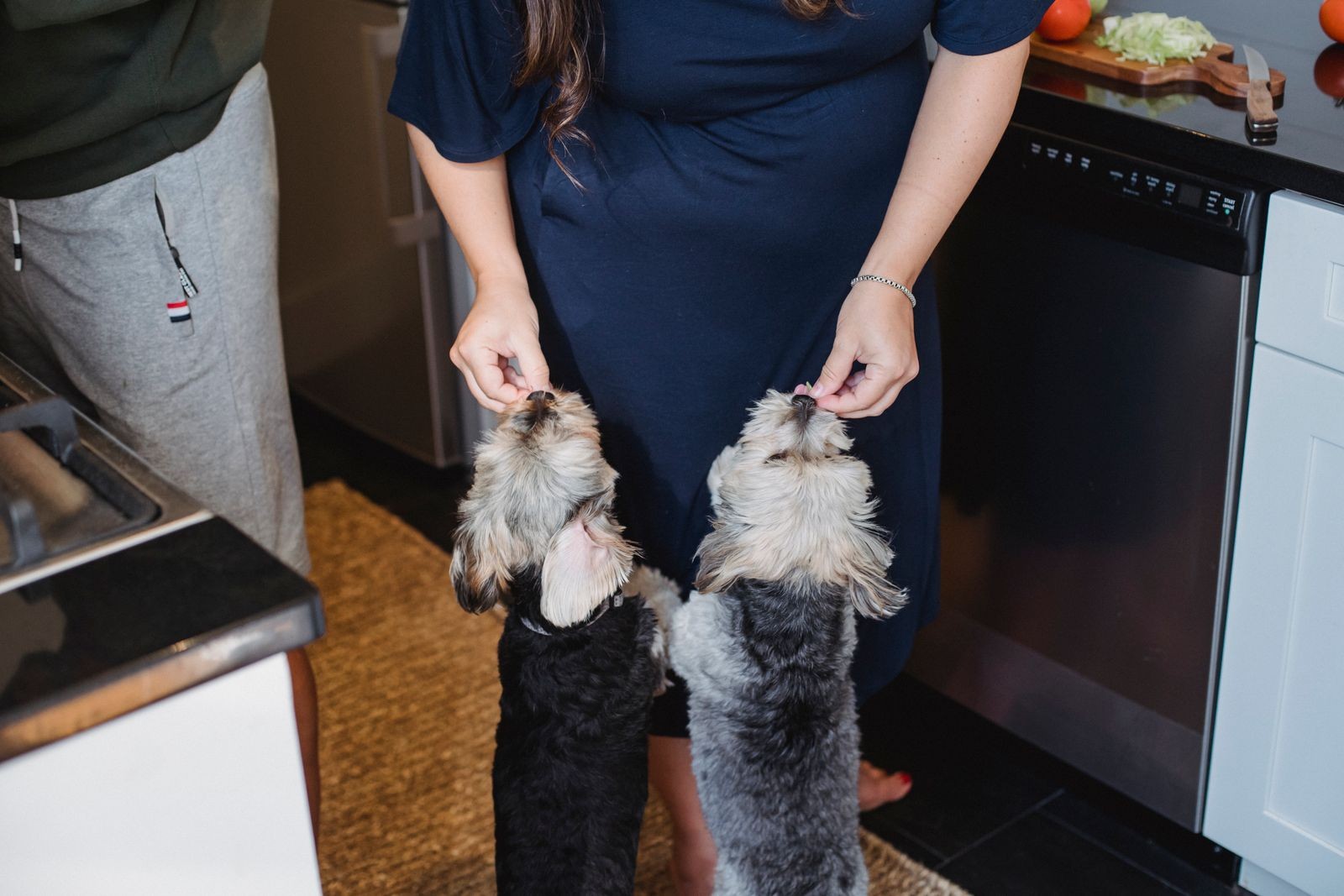
The simplest way to prevent mealtime stress in a multi-dog home is to feed every dog in their own separate spot — different rooms, crates, or behind gates — every single meal, and pick the bowls up when they're done. It can feel like overkill when your dogs currently eat side by side without incident, but resource guarding often develops quietly over months, and separate feeding removes the pressure entirely before it ever becomes a problem.
Why shared mealtimes create pressure
Dogs experience a nearby eater as competition even when no one has ever growled. The fast eater finishes and hovers over the slow one, who starts inhaling food, eating while tense, or leaving meals unfinished. A dog who feels watched may eat less at the bowl and guard more fiercely over chews later. Puppies raised eating shoulder-to-shoulder with adult dogs sometimes learn to guard early and seriously. None of this requires a "dominant" dog — just normal animals and a resource that matters. Separation isn't a punishment or an admission of failure; it's management that lets every dog eat in peace.
Setting up a feeding system that runs itself
Give each dog a designated station and make it routine: same spots, same order, same quiet energy at every meal. Practical setups that work in real homes:
- Crates, if your dogs are crate-comfortable — many dogs genuinely prefer dining in their den
- Different rooms with doors closed, or a baby gate for dogs who relax when they can see out
- One dog inside, one in a gated hallway or laundry room for small spaces
- Slow-feeder bowls at the station for the speed eater, so finishing times even out
Feed, wait calmly, and pick up all bowls — including any leftovers — once meals end. Food left down between meals keeps low-level competition simmering all day and makes it impossible to notice if one dog's appetite drops, which is often the first sign of illness.
Special situations that need extra separation
New dogs should always start fully separated, for weeks, while you learn who they are. Puppies need their own space so adults can't steal their food and teach them desperation. Dogs on prescription or weight-loss diets must eat only their own ration — a stolen cup of the wrong food can undo a vet's plan. And high-value extras like bones, chews, and stuffed food toys deserve the same separation as meals, since guarding intensity usually scales with value.
Watch for the early, quiet signs
Stress at mealtimes whispers before it shouts: eating faster when a housemate passes, hovering or hard staring, body-blocking the bowl, freezing over food when approached, or growling at chews. If you see these, increase distance and barriers immediately and mention it to your veterinarian — pain and nausea can lower a dog's tolerance sharply. Persistent guarding is a job for a certified behavior professional, and it's far easier to address early.
Keeping every feeder consistent
The system breaks when a partner, teen, or pet sitter feeds both dogs together "because they seemed fine," or double-feeds one dog and misses another. KinsLe's Care Teams can assign each dog's feeding separately, and every completed feeding is timestamped — so the morning person, the evening person, and the sitter all see exactly who ate what, and when. Care Teams through KinsLe assign a named feeder to each dog's own station and timestamp every finished meal, so no slower eater gets doubled or missed.