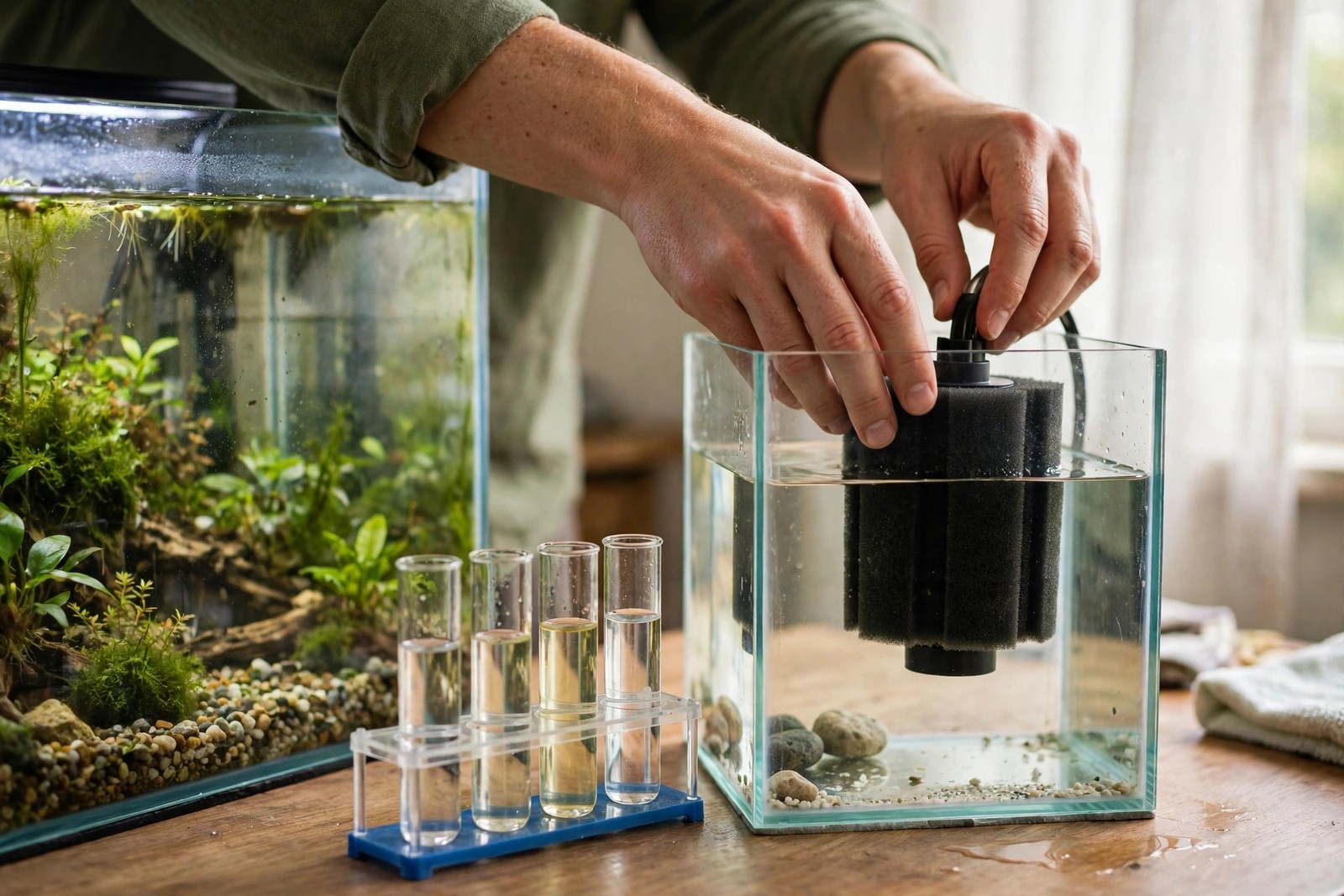
You cannot skip the nitrogen cycle, but you can shorten it from six or eight weeks to sometimes under two. The cycle is simply two colonies of bacteria establishing in your filter: one converts ammonia to nitrite, the other converts nitrite to nitrate. Every genuine shortcut works the same way — it gives those colonies a head start, the right conditions, and a steady food supply.
Borrow Bacteria From an Established Tank
Seeded media is the single biggest accelerator. Take spare sponge, ceramic rings, or a section of filter floss from a healthy, disease-free tank that has been running for months and place it inside your new filter, in the water flow. No established tank of your own? A trusted local fish shop or fellow keeper may provide media — only accept it from a tank you would happily buy fish from, since media can carry disease as well as bacteria. Rinsing your new media in water wrung from an established sponge is a weaker version of the same trick.
Add Bottled Starter Bacteria
Bottled nitrifying-bacteria products add live cultures on day one and are most useful alongside, not instead of, seeded media. Follow the bottle's dosing schedule, check the use-by date, and store it as directed — an expired or heat-damaged bottle adds little. Even with both shortcuts, expect the ammonia-eating colony to establish noticeably before the nitrite-eating one; a phase where ammonia falls but nitrite lingers is normal, not a failure.
Feed the Cycle and Keep It Warm
In a fishless cycle, dose a measured ammonia source to roughly 2 parts per million and re-dose when it falls, so the colonies always have food. Bacteria multiply faster warm — running the heater around the upper 70s to low 80s Fahrenheit during cycling speeds growth, and you can turn it back to your fish's preferred temperature before stocking. Keep the filter running continuously with good surface movement, since these bacteria need oxygen, and avoid cleaning the media while the cycle establishes.
Test Your Way to 'Done'
Test ammonia, nitrite, and nitrate every day or two and write the numbers down; memory blurs a two-week trend into a guess. Nitrate rising is the encouraging sign that both colonies are working. The practical finish line: dose ammonia to about 2 parts per million and, roughly 24 hours later, test at zero ammonia and zero nitrite, with nitrate present. Then do a large water change to bring nitrate down, match temperature, and stock gradually rather than filling the tank in one day.
Daily testing only shortens anything if it actually happens daily, and KinsLe Care Teams can carry that discipline for you — test days, ammonia doses, and the final water change become assigned, timestamped duties, so a cycling tank shared by a household never misses the reading that would have shown it was ready.