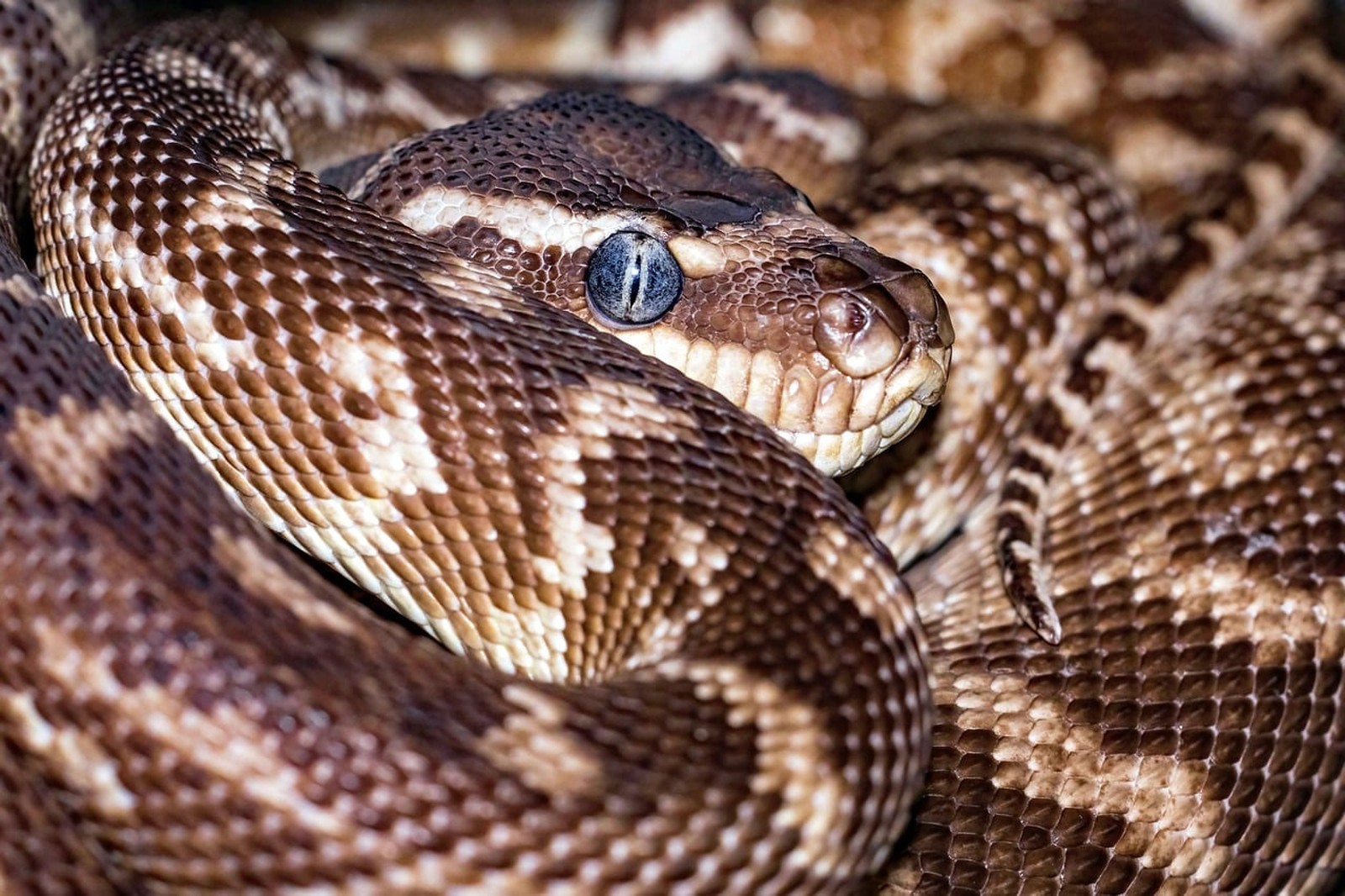
A ball python tells you how it feels through posture, movement, and tongue behaviour, and the signs make sense once you know what this shy, ground-dwelling species does when it feels safe. Read several signs together over a few minutes rather than judging from a single flinch, because a relaxed snake may still startle when a shadow passes overhead, and a stressed snake may sit very still.
Signs of a Relaxed Ball Python
A settled ball python shows a recognisable pattern:
- Slow, smooth movement when exploring, with the body flowing rather than jerking
- Steady tongue-flicking in bursts, tasting the air while moving calmly
- A loose coil at rest, sometimes with the head resting on its own coils
- Breathing that looks slow and even, without visible effort
- Calm acceptance of gentle handling, draping over hands without gripping tightly
- Regular feeding on its usual rhythm and use of both the warm hide and the cool hide
Tongue-flicking deserves a careful reading. Unhurried flicks while the snake cruises around its enclosure mean it is gathering information in a place it finds interesting. That is investigation, not agitation. A snake that explores for a while after lights-out, then settles into a hide, is following a normal evening pattern for this nocturnal species.
Signs of a Stressed Ball Python
Stress shows in defence, escape, and shutdown. The species is named for its classic defence: curling into a tight ball with the head tucked into the centre. A snake that balls up whenever you open the enclosure, and stays balled for a long time after you put it down, is asking to be left alone. Other warning signs include hissing, pulling the neck back into a tense S-shape, striking at movement near the glass, and rapid, jerky attempts to flee during handling that do not settle.
Behaviour over days matters as much as behaviour in the hand. Repeated refusal of food outside a known seasonal pause, restless roaming and pushing at the lid night after night, spending long hours soaking in the water bowl, and hiding pressed tightly into one corner all suggest that something in the setup or routine needs review. Check temperatures, humidity, hide size, and recent changes first, because a new room, a new enclosure, a recent move home, or handling that suddenly became longer or more frequent can explain a change that looks like temperament.
Handling That Keeps Stress Low
Keep early sessions short, support the snake's body fully, and let it move from hand to hand rather than holding it in one tight grip. Approach from the side rather than from above, move slowly, and put the snake back while the session is still calm, so handling ends on a settled note. Skip handling for two days after a meal, during a shed cycle when the eyes look cloudy and blue, and on arrival days in a new home.
If a snake balls up, hisses, or strikes, end the session quietly rather than persisting to prove a point. Persistence teaches the snake that its clearest signals do not work, and the next signals tend to be stronger ones.
Keeping a Useful Behaviour Log
Write down feeding dates and refusals, shed dates, handling sessions and how the snake behaved, and any setup change you made. A month of short notes separates a single bad day from a real trend, and it gives a veterinarian who treats reptiles something solid to work from if appetite or behaviour stays wrong. Change one variable at a time, such as adding a second snug hide, covering three sides of a glass enclosure, or moving the enclosure away from a busy doorway, and give each change a week before you judge it.
Shared notes keep handling consistent between keepers, and KinsLe Care Teams lets you assign feeding and handling duties to each person and mark every session complete with a timestamp, so your ball python gets the same calm routine whoever is on duty.