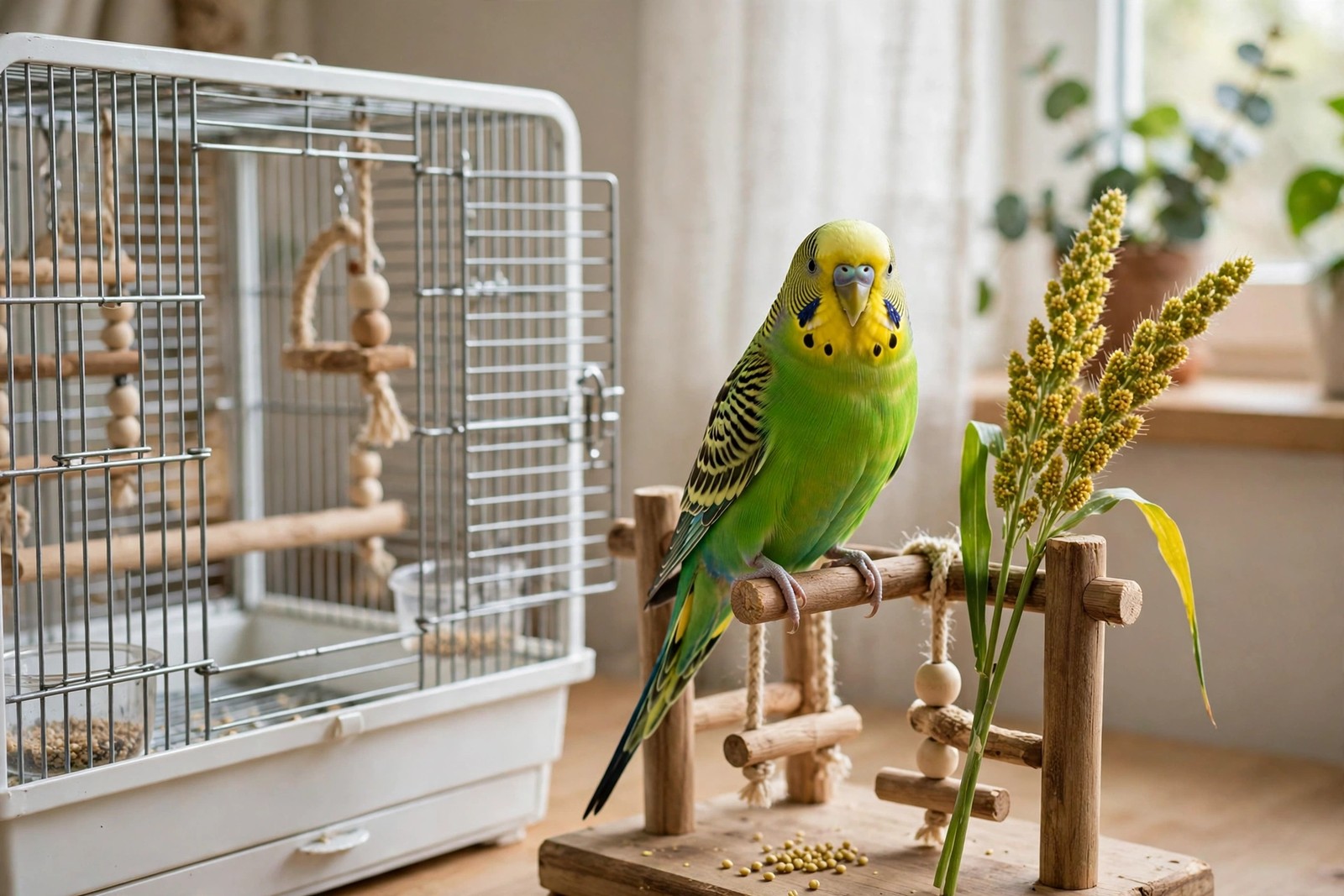
The most useful health check a budgie gets is folded into an ordinary morning: before food or cleaning, just look — is this bird, today, exactly itself? Start from what a healthy budgie looks like on an ordinary morning: bright, alert, and active, feathers smooth and held sleek to the body, clear eyes with no discharge, clean nostrils (cere), a clean vent, normal droppings (firm green-brown with white urates, though diet changes the colour), regular eating, and normal vocalising and movement. Birds hide illness instinctively, so the sickness signs are subtle at first: sitting fluffed up for long periods, sleeping much more (especially on two feet or on the cage floor), tail bobbing with each breath, reduced appetite or voice, discharge from nostrils or eyes, messy vent, changed droppings, or sitting at the bottom of the cage.
Daily Habits That Catch Problems Early
Weigh your budgie weekly on a gram scale — a drop of a few grams is significant in a bird this small and often the first measurable sign. Watch droppings daily when you clean the cage base; count and consistency changes are early data. Know your bird's normal noise and activity pattern, since quietness is often the first sign an owner notices. Keep the environment steady — drafts, fumes (non-stick pan fumes, aerosols, scented candles are dangerous to birds), and poor sleep unsettle budgies. Quarantine genuinely matters: new birds should live separately for several weeks before joining an existing bird.
Working With Your Vet
With a bird this small, your observations carry unusual weight, because a budgie hides illness until it is advanced and cannot be examined for long. Write down when you first saw the change — the morning the droppings turned watery, the day the chirping stopped, the weigh-in that dropped a few grams — and what else shifted alongside it, such as a new bird, a moved cage, or a different seed mix. An avian vet will build on that timeline; a general impression that he seems 'off' gives the vet far less to work from.
Take the evidence with you where you can: a photo of the cage floor before cleaning shows droppings as they really were, and a short phone video of tail-bobbing or fluffed sitting shows the vet behaviour a stressed budgie may not repeat in the clinic.
Birds decline fast once signs are obvious, so a fluffed, quiet budgie who is not eating should be seen by an avian or exotics vet the same day where possible. Keep the bird warm and quiet on the way, and mention food, recent changes, and anything new in the room — fumes, sprays, or a new cage mate — since setup details genuinely help a bird vet.
Between visits, keep the weigh-ins and droppings notes coming, because a budgie's own baseline is the comparison every later reading needs. With KinsLe's Pet Passport holding those dated weigh-ins, droppings observations, and clinic summaries in a single record you can carry anywhere, each new consultation starts from evidence gathered over weeks instead of a hurried recollection offered at the examination table.