
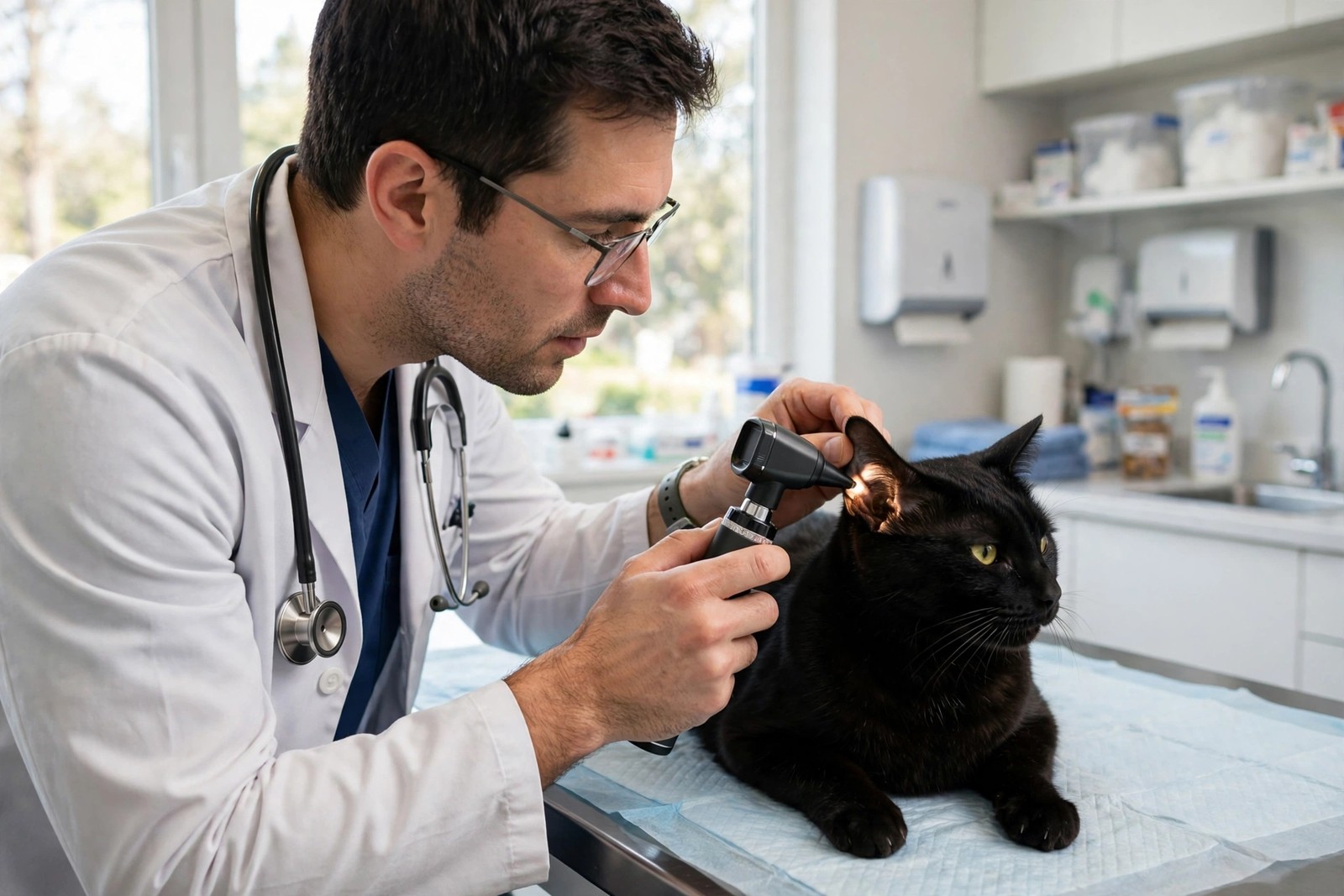
You usually cannot tell ear mites from an ear infection by looking at home — and you do not need to. What you can do is recognize the signs that something is wrong: frequent head shaking, heavy scratching at the ears, redness, odor, or dark, crumbly debris inside the ear. Any of those means your cat needs a veterinarian, because the causes look alike but are treated very differently.
The signs worth acting on
Healthy ears are quiet — your cat mostly ignores them. Pay attention when that changes:
- Head shaking or tilting, sometimes after every nap or play session
- Scratching at one or both ears, occasionally hard enough to scuff the skin behind the ear
- Dark, dry, crumbly debris that looks like coffee grounds — classically associated with ear mites
- Waxy, moist discharge that is yellow, brown, or bloody
- A sour, yeasty, or simply strong odor from the ear
- Redness or swelling of the visible ear, or pain when you touch it
- Behavior changes — hiding, irritability, reduced appetite, or a usually social cat going quiet
Kittens and cats who go outdoors or live with other animals pick up mites more often, since mites spread by close contact. Indoor-only cats get ear problems too, though — allergies, yeast, bacteria, and even growths in the canal can all be behind the same scratching.
Why guessing goes wrong
Ear mites, yeast infections, bacterial infections, allergies, and foreign material can produce nearly identical symptoms. The treatments, though, are not interchangeable, and the wrong one wastes money while your cat stays uncomfortable. Worse, some popular home remedies — oils, alcohol, peroxide, over-the-counter drops chosen at random — coat the ear, irritate inflamed tissue, and can obscure what the vet needs to see. If there is any chance the eardrum is affected, putting the wrong thing in the ear can do real harm.
The honest home toolkit is observation and speed, not treatment. Note which ear, when the signs started, and whether other pets are scratching too, and bring that timeline with you.
What the vet visit looks like
A veterinarian will typically look into the canal with an otoscope and may examine a sample of the debris under a microscope — mites and their eggs are visible that way, which turns a guess into a diagnosis in minutes. From there they can prescribe the appropriate medication, explain how to give it, and tell you whether housemate pets should be checked as well. They will also say whether a recheck is needed; ear problems that seem cured can linger deeper in the canal.
Book promptly rather than watching and waiting for a week. Ear problems rarely clear up on their own, and a cat scratching for days can add a skin wound or an ear-flap hematoma — a painful swelling from vigorous shaking — to the original problem.
Finding help quickly when something looks off
When your cat is shaking her head at midnight, you do not want to start researching clinics from scratch. KinsLe's Pet Services Directory helps you find veterinarians in your area, along with groomers, sitters, and trainers, so you can line up care fast when something looks off. Having a regular vet already chosen — before any problem — is one of the simplest forms of preparation a cat owner can do. For that midnight head-shaking worry, line up an area clinic equipped for ear exams beforehand through the Pet Services Directory on KinsLe.