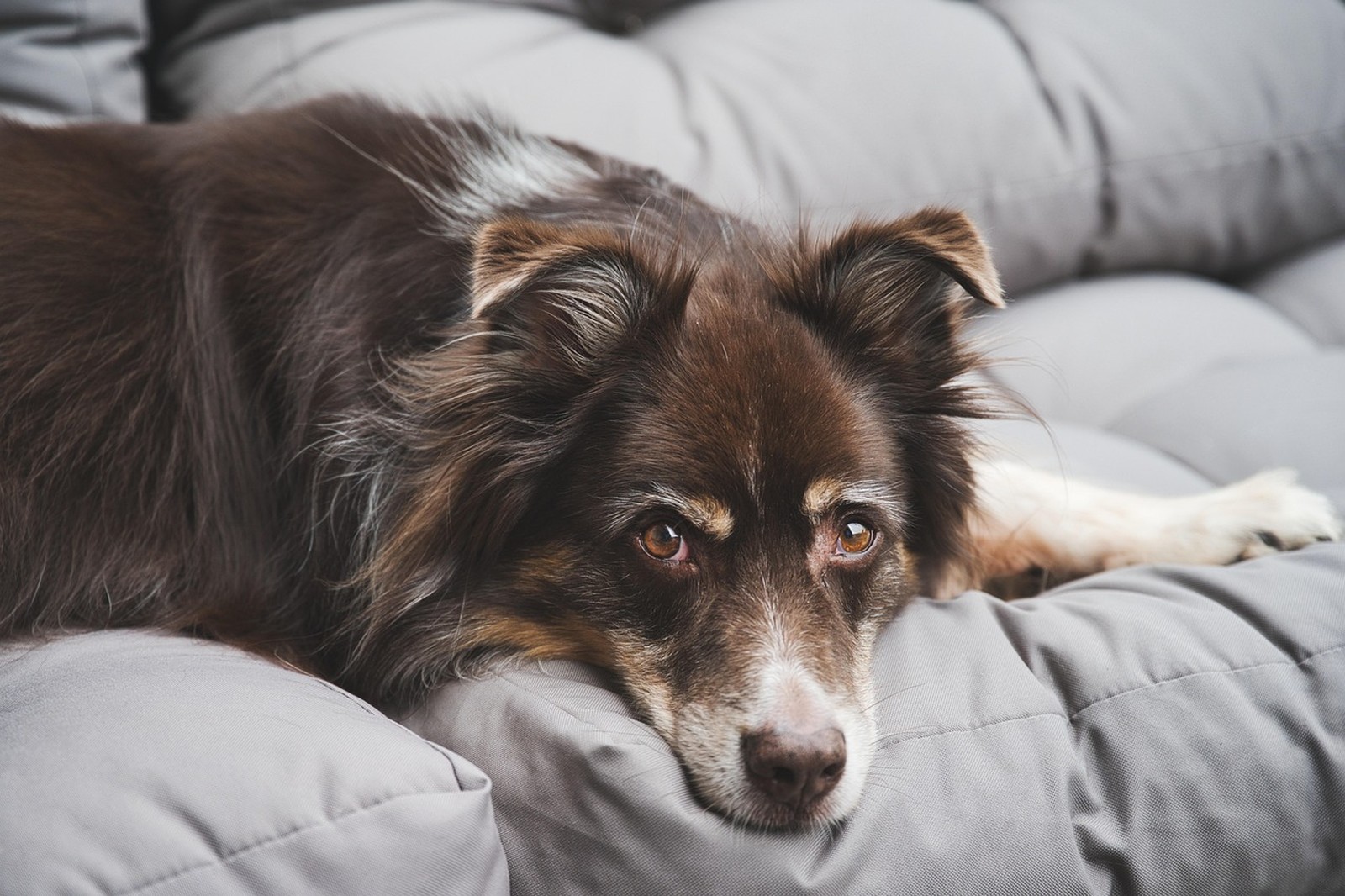
Check three things together — gums, skin, and behaviour — because no single sign is reliable on its own and the combination is what should drive your next step. Dehydration is a sign with a cause behind it, such as vomiting, diarrhoea, heat, fever, pain, or simply not drinking, so a positive check is a prompt to look for the reason and, where the picture is more than mild, to involve your vet the same day.
The Gum Check and What Your Fingers Feel
Lift your dog's lip and press a clean fingertip to the gums. A hydrated dog's gums feel moist and slippery, and the pink colour returns quickly after a gentle press blanches a small spot. Dry gums that feel tacky or sticky, where your fingertip drags instead of gliding, are an early dehydration sign that owners often notice before anything else changes. Thick, stringy saliva that ropes between the lips points the same way. Pale, grey, or muddy gum colour is more worrying than dryness alone and deserves prompt veterinary advice, because gum colour reflects circulation as well as hydration.
The Skin-Tent Test, Done and Read Properly
Gently gather the loose skin over the shoulder blades between your fingers, lift it into a small tent, and let go. In a hydrated dog the skin snaps back flat almost instantly. Skin that sinks back slowly, or that stays standing in a tent for a moment, supports a dehydration reading. Read the test with its limits in mind: elderly dogs and very lean dogs have less elastic skin and can tent slightly while normally hydrated, while dogs with abundant loose skin can mask early losses. That is why the skin result should always be weighed beside the gums and the dog in front of you, never treated as a verdict by itself.
Behaviour and Output Signs That Complete the Picture
A dehydrating dog often becomes quieter, less interested in food and play, and reluctant to exercise, with eyes that look dull or slightly sunken and a nose and mouth that look dry. Urine becomes scant and dark, and a dog that usually drinks eagerly may lap weakly or, confusingly, may drink and then vomit. Panting after heat or exercise can dry the mouth briefly without true dehydration, so recheck a cooled, rested dog before you conclude. Weigh the whole pattern: tacky gums plus tenting skin plus lethargy is a very different finding from one dry mouth after a run.
What to Do, and Who Cannot Wait
Offer fresh water and let your dog drink at a comfortable pace, and if your dog has been vomiting, offer small amounts often rather than one large bowl that invites gulping and further sickness, following any advice your vet gives. Puppies, seniors, small dogs, and any dog with ongoing vomiting or diarrhoea can dehydrate in hours and should not be watched at home for long. A dog that cannot keep water down, is too weak to drink, has sunken eyes with a dry mouth, or has collapsed needs a vet urgently, because fluids given by the clinic may be needed and home encouragement cannot substitute. Never delay that visit to see whether a seriously unwell dog turns a corner alone.
Noting the Episode So the Cause Gets Found
Write down when signs started, what your dog ate and drank, any vomiting or diarrhoea with its frequency, exercise and heat exposure, and what you found on each check. That record turns a single worried phone call into a pattern a vet can act on, especially if episodes repeat after hot walks, stomach upsets, or changes in drinking. Keeping those dated hydration notes in KinsLe's Pet Passport means repeat episodes are visible across months, which is often how an underlying cause finally gets investigated.