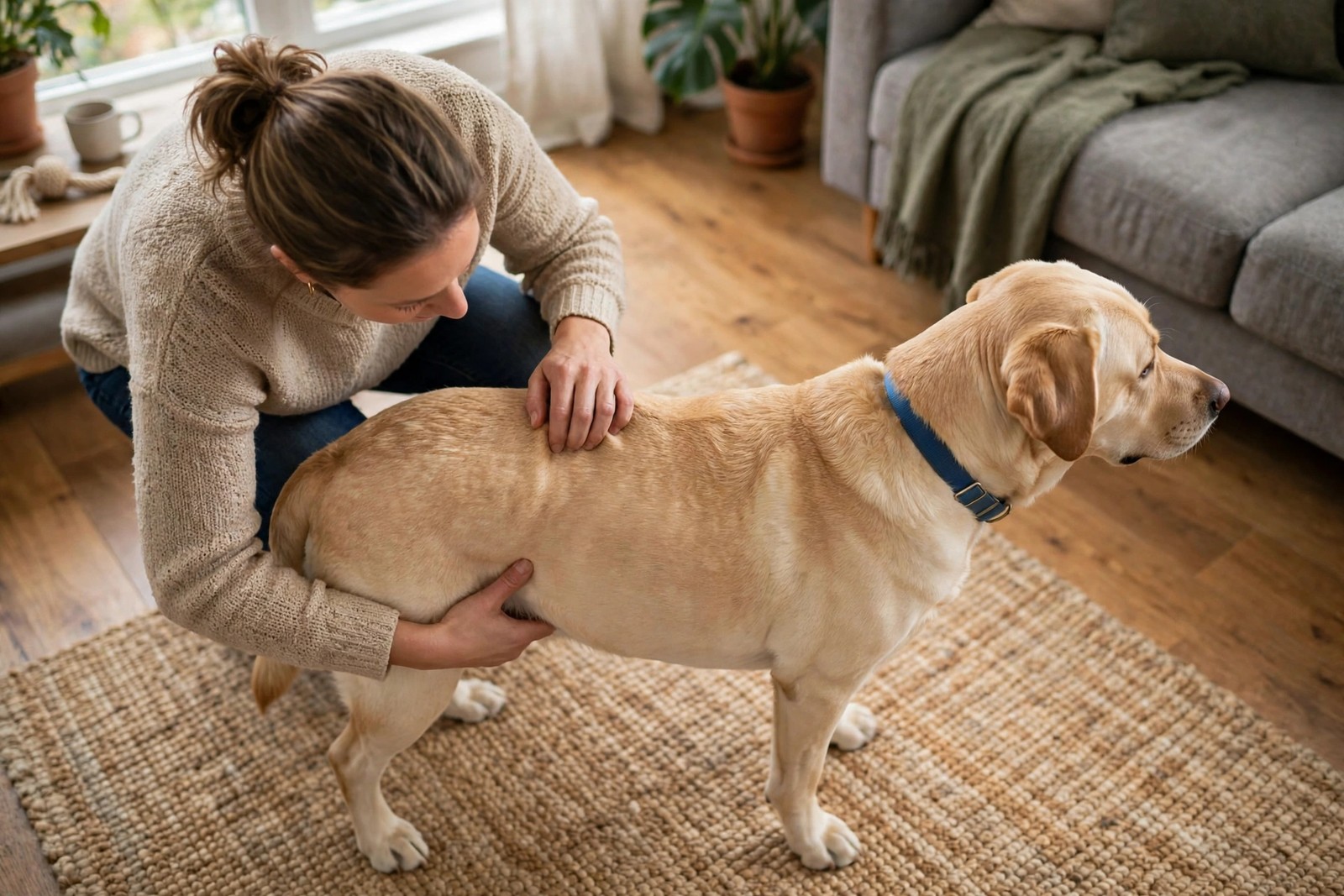
Scales alone will not tell you whether your dog is carrying too much weight — your hands will. Rest your palms flat against the ribcage and move them slowly backward with gentle pressure. Ribs that surface easily beneath a slim fat layer are what you want to feel, much like the bones across the back of your own hand; needing to push in to locate them signals excess coverage. From above, look for a visible waist behind the ribs; from the side, the belly should tuck upward behind the ribcage rather than sagging level or hanging down.
Using Body Condition Honestly
Vets score body condition on a 9-point scale, with 4–5 ideal; you can use the same feel test monthly and photograph your dog from above and the side to make slow change obvious. Weight gain creeps in through measured-food drift (heaped scoops, uncounted treats and chews, tidbits from children's plates) and reduced exercise in bad weather or as dogs age. If your dog is carrying extra, the fix is gradual: accurate measured portions of a complete food, treats swapped partly for vegetables like carrot or green beans, and exercise built up gently — crash diets are never appropriate for dogs.
Working With Your Vet
Weight calls for the same honesty at the surgery. Tell the vet what actually goes into the bowl each day — measured food, chews, treats, and scraps included — and when you first noticed the waist disappearing, then let the veterinarian weigh your dog, score body condition hands-on, and judge whether the gain is feeding, age, or something medical underneath. General guidance can show you how to run the rib test at home, but it cannot set a target weight or rule out causes like an underactive thyroid; that judgement belongs to an examination. Photographs taken from above and from the side, a month apart, give the vet change they can see rather than a guess from memory.
Ask your vet to confirm your dog's ideal weight at the next visit — they will weigh, score condition, and set a target. Book sooner if weight has changed quickly in either direction without an obvious cause, because unexplained change can be a health sign as well as a feeding issue.
Keep the numbers where you can see them drift. Weigh your dog monthly — at the vet's scales or a pet shop's — and write the figure down beside portion sizes, daily treats and chews, and minutes of exercise. A two-pound creep across three quiet months is easy to miss on a dog you see every day and impossible to argue with on paper. Recheck the picture whenever life shifts the equation: neutering, a slower senior routine, winter weather cutting walks short, or a new household member whose treat habits differ from yours.
Store those weigh-ins with vaccination dates and visit summaries, and each appointment starts from evidence instead of recollection. Pet Passport in KinsLe gathers a dog's weight record, vet history, and feeding notes into a single portable packet, ready for appointments, travel, boarding stays, and handoffs to sitters.